

What Is Operations Management and How Does It Work in a Business?
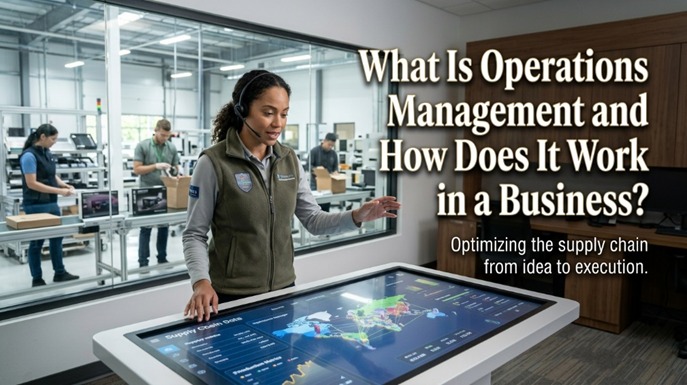
Every business needs an effective system to ensure that its daily activities run smoothly and achieve the desired goals. From managing employees and production processes to controlling inventory and delivering products to customers, every activity requires proper planning and coordination. This is where Operations Management becomes important.
Operations management is a fundamental part of business management because it focuses on organizing and improving the processes used to produce goods or provide services. Without effective operations management, businesses may experience production delays, higher costs, poor product quality, and customer dissatisfaction.
Understanding how operations management works can help business owners and employees make better decisions, use resources efficiently, and maintain business performance. So, what exactly is operations management, and how does it work in a business? Here is a complete explanation.
1. UNDERSTANDING THE DEFINITION OF OPERATIONS MANAGEMENT
Operations Management is the process of planning, organizing, directing, and controlling business activities that transform resources into products or services. These resources may include employees, raw materials, equipment, technology, information, and financial resources.
The main purpose of operations management is to ensure that business processes operate efficiently while meeting customer expectations. For example, a food manufacturing company needs to manage ingredients, production equipment, workers, and packaging to produce products that meet quality standards. By coordinating these activities properly, businesses can maintain consistent results and improve their overall performance.
2. THE MAIN OBJECTIVES OF OPERATIONS MANAGEMENT
Operations management has several important objectives that support business success. One of its primary goals is to improve operational efficiency by reducing unnecessary activities, minimizing waste, and using available resources effectively.
Another objective is maintaining product or service quality so customers receive what they expect. Operations management also aims to control production costs, increase productivity, ensure timely delivery, and maintain customer satisfaction. When these objectives are achieved, businesses can improve their competitiveness and build stronger relationships with customers.
3. HOW OPERATIONS MANAGEMENT WORKS IN A BUSINESS
Operations management works through a series of connected activities that help businesses transform resources into valuable products or services. The process generally begins with planning, where managers determine what needs to be produced, which resources are required, and how activities should be organized.
After planning, businesses arrange their employees, materials, equipment, and schedules to support daily operations. Managers then monitor production or service delivery to ensure that everything follows established procedures. Finally, they evaluate the results and make improvements when problems or inefficiencies are identified.
The process can be understood through three basic elements:
- Inputs: Resources used in business activities, such as raw materials, labor, technology, and capital.
- Transformation Process: Activities that convert inputs into finished products or services.
- Outputs: The final products or services delivered to customers.
For example, in a restaurant, ingredients and kitchen employees are inputs, cooking and food preparation are transformation processes, and prepared meals are outputs.
4. IMPORTANT FUNCTIONS OF OPERATIONS MANAGEMENT
Operations management consists of several functions that work together to maintain business activities. Each function has a specific responsibility, but all of them contribute to achieving organizational goals.
Some important functions include:
- Production Planning: Determining production targets, schedules, and required resources.
- Quality Control: Checking products or services to ensure they meet established standards.
- Inventory Management: Monitoring raw materials, supplies, and finished products.
- Supply Chain Management: Coordinating the movement of materials and products from suppliers to customers.
- Workforce Management: Organizing employees, responsibilities, and work schedules.
- Process Improvement: Identifying problems and finding better ways to complete business activities.
By managing these functions effectively, companies can reduce operational problems and maintain consistent business performance.
5. THE ROLE OF OPERATIONS MANAGERS IN BUSINESS
An operations manager is responsible for ensuring that business activities operate according to organizational plans and standards. This role involves coordinating employees, managing resources, monitoring workflows, and solving operational problems that may occur during daily activities.
Operations managers also analyze business performance to identify areas that need improvement. They work with other departments, such as finance, marketing, purchasing, and human resources, to ensure that operational decisions support the company's overall objectives. Good operational leadership helps businesses maintain productivity, control costs, and deliver better products or services.
6. THE IMPORTANCE OF QUALITY CONTROL IN OPERATIONS MANAGEMENT
Quality control is an essential part of operations management because it ensures that products and services meet customer expectations. Businesses need to establish quality standards and regularly evaluate their processes to prevent defects, errors, or inconsistent results.
For example, a clothing manufacturer may inspect fabric quality, stitching, sizes, and finished products before distribution. Meanwhile, a service company may evaluate customer feedback and employee performance to maintain service standards. Through effective quality management, businesses can reduce complaints, avoid unnecessary costs, and build customer trust.
7. HOW TECHNOLOGY SUPPORTS OPERATIONS MANAGEMENT
Technology has become an important tool for improving modern business operations. Companies can use digital systems to manage inventory, monitor production, organize schedules, track deliveries, and analyze operational performance.
For example, Enterprise Resource Planning (ERP) software can connect different business departments through a centralized information system. Inventory management applications can also help businesses monitor stock levels and reduce the risk of shortages or excess inventory. By using suitable technology, companies can improve operational accuracy, productivity, and decision-making.
8. EXAMPLES OF OPERATIONS MANAGEMENT IN DIFFERENT BUSINESSES
Operations management is used in almost every industry, although the activities may differ depending on the type of business. In manufacturing companies, it focuses on production schedules, raw materials, equipment maintenance, and product quality.
In retail businesses, operations management includes inventory control, product distribution, store organization, and customer service. Meanwhile, in restaurants, it involves managing ingredients, kitchen workflows, employee schedules, and food preparation. These examples show that operations management is essential for both product-based and service-based businesses.
9. THE BENEFITS OF EFFECTIVE OPERATIONS MANAGEMENT
Effective operations management provides several advantages that can improve a company's long-term performance. By organizing resources and business processes properly, companies can reduce operational costs and increase productivity without unnecessarily increasing their workload.
Other benefits include:
- Higher Efficiency: Business activities become more organized and productive.
- Better Quality: Products and services can meet consistent standards.
- Cost Reduction: Waste and unnecessary expenses can be minimized.
- Customer Satisfaction: Customers receive products or services that meet their expectations.
- Improved Productivity: Employees and equipment can be used more effectively.
- Business Competitiveness: Companies can respond more effectively to market demands.
These benefits demonstrate why operations management is an important part of sustainable business development.
10. CHALLENGES IN IMPLEMENTING OPERATIONS MANAGEMENT
Although operations management provides many benefits, businesses may face several challenges when implementing it. Common problems include fluctuating customer demand, supply chain disruptions, rising material costs, equipment failures, and employee shortages.
Another challenge is adapting to technological changes and maintaining consistent product or service quality. Businesses need to evaluate their operations regularly and develop flexible strategies to respond to unexpected situations. Effective planning, communication, employee training, and continuous improvement can help companies overcome these challenges and maintain stable operations.
CONCLUSION
Operations Management is an essential business function that focuses on planning, organizing, and controlling the processes used to produce goods and deliver services. It works by coordinating inputs, transformation activities, and outputs to ensure that business resources are used efficiently and organizational goals can be achieved.
Through production planning, quality control, inventory management, workforce coordination, and technology utilization, businesses can improve productivity and customer satisfaction. Although operational challenges may occur, effective management and continuous improvement can help companies maintain their performance and competitiveness. Therefore, understanding operations management is important for anyone who wants to build, manage, or develop a successful business.
Recent Posts

Bagaimana Sistem SKS pada Program Kuliah... 22.11.2026/21 View

How Does Technology Make Daily Evaluation... 21.11.2026/63 View

Apa Strategi Menghadapi Kesenjangan antara Kompetensi... 21.11.2026/65 View

Mengapa Inventaris Aset Penting bagi Kelancaran... 21.11.2026/62 View

When Should Musicians Join a Record... 21.11.2026/60 View
