

Are National Assessment Results Utilized For School Self Evaluation?
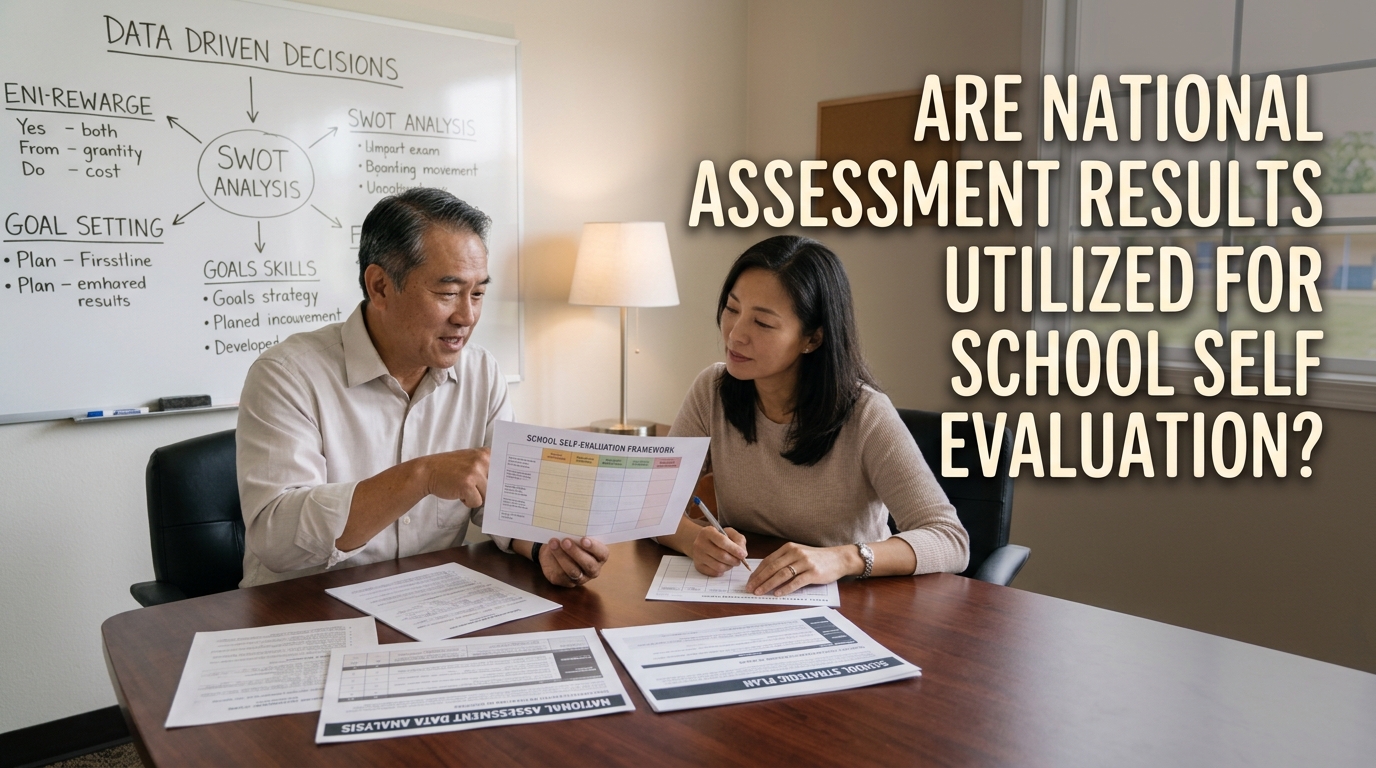
Modern educational systems increasingly rely on empirical data to drive continuous institutional improvement and accountability. Evaluating how schools perform on nationwide metrics offers a clear window into overall instructional effectiveness. Are national assessment results utilized for school self evaluation? This crucial question explores how educational institutions harness large-scale performance data to refine their internal policies and elevate teaching standards.
UNDERSTANDING SCHOOL SELF EVALUATION
School self evaluation serves as a vital internal mechanism where educational institutions critically assess their own operational and academic performance. Instead of waiting for external audits, proactive leadership teams regularly review classroom practices, administrative workflows, and student engagement metrics. This reflective process allows schools to pinpoint specific areas requiring enhancement without relying entirely on outside interventions. Engaging in comprehensive internal reviews fosters a culture of transparency and shared responsibility among all faculty members.
Furthermore, a structured self evaluation framework helps educational leaders align daily classroom activities with broader institutional goals and values. Teachers and administrators collaborate closely to establish measurable targets that directly benefit student learning outcomes and overall campus culture. By taking ownership of their performance data, schools transition from passive compliance to active, self-driven progression. Consequently, internal reflection becomes the cornerstone of sustainable academic development and long-term institutional resilience.
THE ROLE OF NATIONAL DATA IN INSTITUTIONAL REVIEW
Integrating nationwide testing data into internal reviews provides schools with an objective, standardized baseline for measuring their academic standing. While classroom quizzes offer localized feedback, national assessment results reveal how a student body compares to regional or national benchmarks. Educational leaders utilize these empirical insights to validate their internal assumptions and eliminate subjective biases in performance reporting. Access to high-quality external data transforms casual observations into concrete evidence for institutional planning.
Moreover, incorporating national metrics into school self evaluation bridges the gap between macro-level educational policy and micro-level classroom reality. Administrators can cross-reference their internal grading standards with external performance indicators to identify potential discrepancies in rigor. This comparative analysis ensures that schools do not operate in an isolated bubble, blind to broader educational trends. Leveraging national data ultimately empowers institutions to adopt industry best practices and elevate their overall academic competitiveness.
IDENTIFYING STRENGTHS AND WEAKNESSES
Detailed score reports from large-scale evaluations enable schools to dissect performance across various subjects and demographic subgroups with precision. Educational staff can analyze specific domain breakdowns, such as reading comprehension, mathematical reasoning, or scientific inquiry, to locate foundational deficiencies. Recognizing these granular strengths and weaknesses prevents institutions from applying generalized solutions to unique learning challenges. Instead of guessing where students struggle, teachers receive empirical proof pointing directly to specific curriculum gaps.
This targeted diagnostic clarity allows leadership teams to reallocate resources toward programs that address urgent academic vulnerabilities. For instance, if assessment reports highlight a widespread dip in quantitative reasoning among middle grades, schools can immediately introduce specialized tutoring initiatives. Celebrating institutional strengths is equally valuable, as it allows successful teaching methodologies to be replicated across other departments. Ultimately, precise identification of academic performance drives efficient resource distribution and targeted pedagogical intervention.
ACTION PLANNING AND CURRICULUM REFORM
Raw data holds little value unless it is systematically translated into actionable school improvement plans and practical curriculum reforms. Following the release of national scores, administrative committees convene to draft comprehensive strategic initiatives aimed at resolving identified learning gaps. These actionable plans outline clear timelines, assign specific responsibilities to department heads, and establish benchmarks for future progress. Effective planning ensures that assessment insights lead to tangible changes in daily classroom instruction rather than sitting unused in filing cabinets.
Curriculum refinement must accompany these strategic plans to ensure that teaching materials match the cognitive demands of modern educational standards. Teachers collaborate to update lesson templates, integrate critical thinking exercises, and incorporate diverse question formats into routine coursework. Professional development sessions are subsequently scheduled to train educators on delivering these updated instructional frameworks effectively. Continuous curriculum alignment guarantees that student preparation remains dynamic, relevant, and fully responsive to empirical performance feedback.
CHALLENGES IN DATA UTILIZATION
Despite the clear benefits of utilizing external test scores, many schools encounter substantial hurdles when attempting to integrate them into self evaluations. A primary obstacle is the widespread lack of advanced data literacy among teaching staff, making complex statistical reports difficult to interpret. Without proper training, educators may misread performance indicators or draw incorrect conclusions about their students actual capabilities. This confusion can lead to misguided interventions that fail to resolve underlying academic issues.
Additionally, bureaucratic inertia and institutional resistance to change frequently impede the effective implementation of data-driven reforms. Some educators view standardized evaluations with skepticism, arguing that test scores fail to capture the true breadth of student intelligence and creativity. Overcoming these barriers requires strong administrative leadership, continuous professional training, and open communication channels across the entire school community. Cultivating a positive, data-informed culture ensures that assessment results are embraced as constructive development tools rather than punitive threats.
CONCLUSION
In summary, national assessment results serve as a powerful catalyst when integrated into comprehensive school self evaluation frameworks. By leveraging objective benchmarks, identifying precise learning gaps, planning targeted reforms, and overcoming data literacy hurdles, institutions can achieve lasting academic excellence. Collaborative engagement among teachers, leaders, and policymakers ensures that large-scale evaluations drive meaningful, continuous improvement across all educational environments.
Recent Posts

Bagaimana Sistem SKS pada Program Kuliah... 22.11.2026/53 View

How Does Technology Make Daily Evaluation... 21.11.2026/82 View

Apa Strategi Menghadapi Kesenjangan antara Kompetensi... 21.11.2026/81 View

Mengapa Inventaris Aset Penting bagi Kelancaran... 21.11.2026/77 View

When Should Musicians Join a Record... 21.11.2026/82 View
