

Are OTP Codes Still Secure Enough to Protect Accounts Against Modern Cyber Threats?
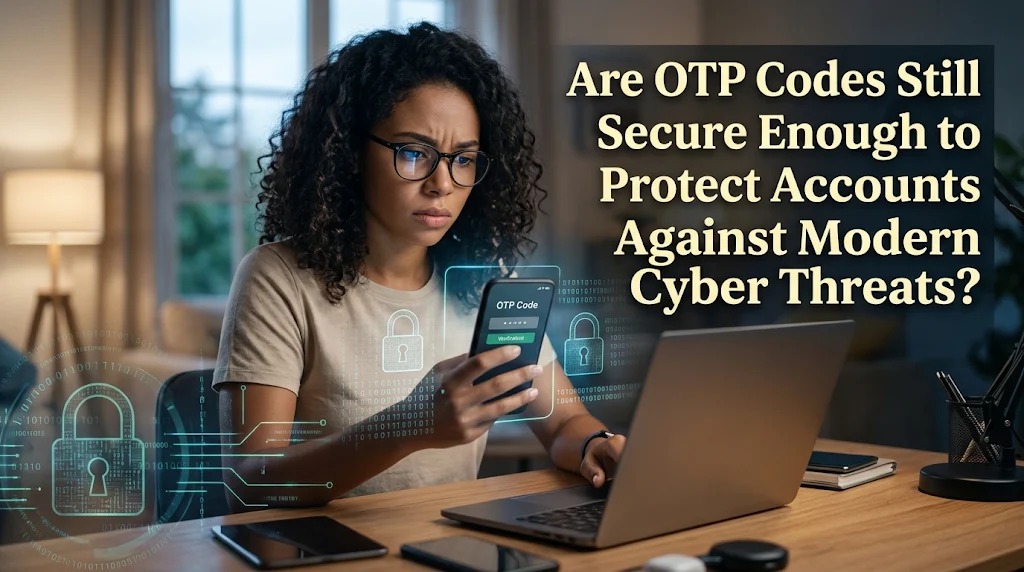
OTP (One-Time Password) codes have become a common security feature for protecting digital accounts. They provide an additional verification step by requiring users to enter a temporary code before accessing an account or completing certain transactions. This method helps prevent unauthorized access, even when someone knows the account password. However, as cyber threats become more sophisticated, many people question whether OTP codes are still reliable enough to protect personal information.
Although OTP codes offer important security benefits, they are not completely immune to attacks. Cybercriminals continue to develop methods such as phishing, SIM swapping, and social engineering to steal verification codes. Therefore, understanding the strengths and weaknesses of OTP authentication is essential for anyone who uses digital banking, social media, email, or other online services.
HOW OTP CODES PROVIDE AN ADDITIONAL SECURITY LAYER
OTP codes improve account security by adding another verification requirement beyond a regular password. When users attempt to log in or perform a sensitive activity, the system generates or requests a temporary code. The user must enter the correct code to confirm their identity. This additional step makes unauthorized access more difficult because knowing the password alone may not be sufficient.
Most OTP systems are designed to accept a code only once or within a limited period, depending on the authentication method. Some codes are delivered through SMS or email, while others are generated by authenticator applications. These methods help reduce the risk of attackers reusing old verification information. However, the protection they provide depends on how securely the code is delivered, generated, and entered.
OTP authentication is particularly useful when protecting accounts that contain sensitive information. For example, online banking platforms may require additional verification before approving certain transactions. Email services may also request an OTP when users sign in from unfamiliar devices. By combining passwords with temporary verification codes, services can create a stronger barrier against unauthorized access.
MODERN CYBER THREATS THAT CAN BYPASS OTP PROTECTION
Despite its advantages, OTP authentication has weaknesses that cybercriminals can exploit. One common threat is phishing, in which attackers create fake websites or messages that imitate legitimate services. Victims may enter their passwords and OTP codes without realizing that the information is being sent directly to criminals. Some attackers use the stolen code immediately before it expires.
Another threat is SIM swapping, where criminals attempt to transfer a victim's mobile number to a SIM card they control. If successful, they may receive SMS-based OTP codes intended for the account owner. This can allow attackers to bypass verification systems that rely entirely on text messages. SMS-based OTP authentication is therefore vulnerable when the phone number or mobile network account is compromised.
Social engineering is also a serious problem because it targets human behavior rather than technical weaknesses. Attackers may pretend to be customer service representatives, bank employees, or trusted contacts to persuade users to reveal their verification codes. They may create a false emergency to make victims act quickly without checking the situation. These methods show that even a technically valid OTP system can be defeated when users are manipulated into sharing their codes.
FACTORS THAT DETERMINE THE SECURITY OF OTP AUTHENTICATION
The security of an OTP system depends on several factors, including the method used to generate and deliver the code. SMS-based codes are convenient, but they can be exposed through SIM swapping, message interception, or compromised devices. Email-based codes may also become vulnerable if someone gains access to the user's email account. Authenticator applications can reduce dependence on mobile networks, although their security still depends on protecting the device and recovery information.
The expiration period is another important factor. Short-lived codes reduce the opportunity for criminals to reuse stolen verification information. However, a short expiration time cannot fully prevent attacks in which victims are tricked into entering codes on fraudulent websites in real time. The effectiveness of OTP authentication depends on more than the code's expiration time.
Account security also depends on how service providers manage authentication systems. They should use secure code-generation processes, limit repeated verification attempts, monitor unusual login behavior, and protect account recovery procedures. Users also need to maintain updated devices and avoid suspicious applications. When these protections work together, OTP authentication becomes more effective against many common threats.
SAFER AUTHENTICATION METHODS FOR PROTECTING DIGITAL ACCOUNTS
As cyber threats evolve, many digital services are introducing authentication methods that offer stronger protection than traditional OTP systems. Authenticator applications, for example, generate temporary codes directly on a user's device instead of relying on SMS delivery. This can reduce risks associated with mobile network attacks. However, users must still protect their devices and avoid sharing generated codes.
Security keys and passkeys provide other options for improving account protection. Security keys use physical devices to verify a user's identity, while passkeys rely on cryptographic technology and can use device-based authentication such as biometrics or a screen lock. Passkeys are not OTP codes, but they can offer stronger resistance to phishing because authentication is linked to the legitimate website or service.
Some platforms also combine multiple security features, including device recognition, login notifications, biometric verification, and suspicious-activity detection. These systems help identify unusual behavior that a password or OTP code alone may not detect. Users should choose the strongest authentication option supported by their important accounts. A combination of secure authentication methods can provide better protection than depending on a single verification method.
PRACTICAL WAYS TO MAKE OTP AUTHENTICATION MORE SECURE
Users can improve OTP security by following simple but important digital safety habits. First, never share an OTP code with anyone, including people claiming to represent banks, online marketplaces, or technical support teams. Legitimate services should not ask users to disclose their private verification codes through calls or messages. If someone requests an OTP unexpectedly, users should treat the request as suspicious.
Second, always check the website or application before entering a verification code. Avoid clicking unfamiliar links sent through email, SMS, or social media messages. Open the official application or type the service's known address directly instead. This reduces the risk of entering an OTP on a fake website designed to steal account information.
Users should also secure their phone numbers, email accounts, and devices because these may be connected to account recovery and OTP delivery. Enable a strong screen lock, use unique passwords, and activate additional security features whenever available. If an OTP arrives without a login attempt, review account activity and change the password if there are signs of unauthorized access. Good security habits are essential because technology alone cannot prevent every form of cyberattack.
THE FUTURE OF OTP CODES IN DIGITAL SECURITY
OTP codes are likely to remain part of digital security systems because they are familiar, relatively easy to implement, and supported by many online services. They can provide useful protection for users who need an additional verification step beyond passwords. However, their role may gradually change as stronger authentication technologies become more widely adopted. Organizations must evaluate whether their existing OTP systems are suitable for the risks they face.
The growing use of passkeys, security keys, and risk-based authentication may reduce dependence on traditional OTP methods. These technologies can provide more effective protection against certain attacks, particularly phishing and credential theft. Nevertheless, no authentication method should be treated as completely risk-free. Security systems must continue to improve as attackers discover new ways to exploit digital accounts.
For everyday users, the most important step is to understand that an OTP code is a security tool, not a guarantee of complete protection. It should be combined with careful online behavior, strong passwords, and secure devices. OTP codes are still useful, but their effectiveness depends on the authentication method, the service provider's security measures, and the user's awareness of cyber threats.
CONCLUSION
OTP codes are still valuable for protecting digital accounts because they add an extra verification layer beyond passwords. However, modern cyber threats such as phishing, SIM swapping, and social engineering can weaken their effectiveness. SMS and email codes may be convenient, while authenticator applications can offer protection against some delivery-related risks. Stronger alternatives such as passkeys and security keys may provide better resistance to certain attacks. Ultimately, users should combine appropriate authentication methods with safe digital habits to protect their accounts and personal information.
Recent Posts

Bagaimana Sistem SKS pada Program Kuliah... 22.11.2026/33 View

How Does Technology Make Daily Evaluation... 21.11.2026/67 View

Apa Strategi Menghadapi Kesenjangan antara Kompetensi... 21.11.2026/67 View

Mengapa Inventaris Aset Penting bagi Kelancaran... 21.11.2026/66 View

When Should Musicians Join a Record... 21.11.2026/66 View
