

Are Professional Certifications Adequately Embedded In Vocational Curriculum?
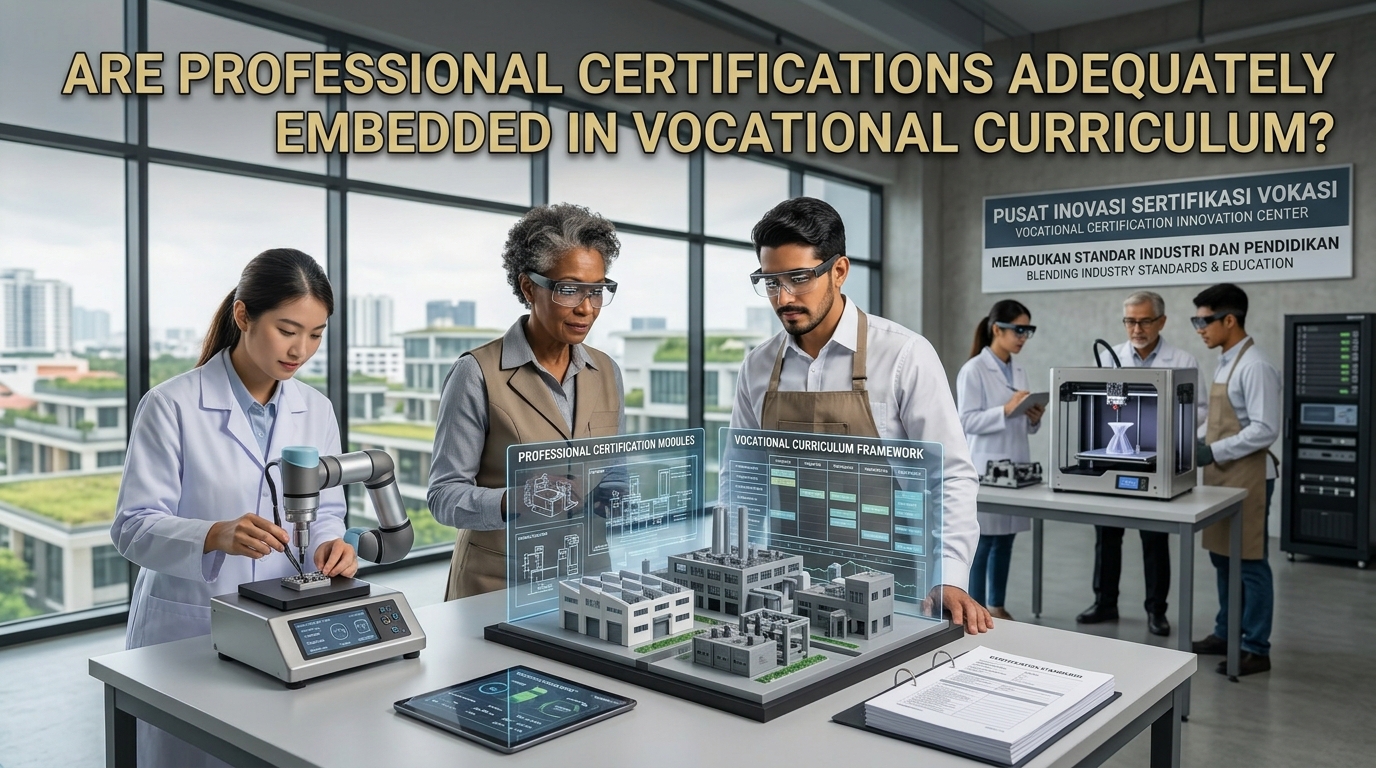
The global job market increasingly demands verified technical expertise, making industry credentials essential for job seekers. High schools, technical colleges, and vocational academies must evaluate whether their academic programs align with modern employment standards. Integrating professional certifications into standard learning tracks helps students demonstrate proven technical competence before entering the workforce. Academic institutions that successfully bridge classroom instruction with practical credentials provide graduates with a distinct competitive advantage. However, many traditional educational models still struggle to incorporate standardized skill assessments seamlessly into their daily coursework.
THE IMPORTANCE OF EMBEDDING CERTIFICATIONS IN VOCATIONAL STUDY
Integrating recognized credentials into educational frameworks guarantees that students master industry-aligned skills required by modern employers. Traditional diplomas provide broad academic foundations, whereas specialized credentials validate specific technical capabilities and operational knowledge. When schools embed these assessments directly into the learning process, students graduate with both theoretical understanding and practical validation.
Furthermore, certified graduates experience smoother transitions into professional career paths with significantly higher starting salaries. Companies actively seek candidates who possess verified qualifications because it reduces corporate onboarding time and training costs. Therefore, embedding professional credentials elevates overall educational value and directly boosts graduate employability in competitive markets.
CHALLENGES IN INTEGRATING INDUSTRY CREDENTIALS INTO CLASSROOMS
Despite clear benefits, many vocational institutions face financial and operational obstacles when adopting professional credentialing systems. High examination fees and expensive software licenses often create financial barriers for both students and educational centers. Without external funding or institutional subsidies, many qualified learners cannot afford mandatory certification assessments.
Additionally, rigid academic scheduling and outdated facility equipment make hands-on preparation quite difficult for instructors. Aligning state curriculum standards with dynamic private sector credentials requires extensive administrative approvals and continuous syllabus adjustments. As a result, many schools fail to offer updated certification preparation within standard class hours.
STRATEGIES FOR SUCCESSFUL CURRICULUM INTEGRATION
Educational leaders can overcome these challenges by establishing strategic industry partnerships with global tech firms and professional associations. Collaborating with private enterprises often yields discounted exam vouchers, updated learning software, and specialized teacher training programs. These partnerships ensure that classroom instruction directly mirrors current workplace requirements and certification standards.
Moreover, adopting flexible modular learning units allows educators to embed exam prep seamlessly into regular coursework. Instead of treating professional exams as separate extracurricular tasks, institutions should substitute traditional final exams with industry tests. This integrated approach maximizes student participation while optimizing instructional time and institutional resources.
EMPOWERING EDUCATORS AND MODERNIZING LEARNING FACILITIES
A successful certification framework relies heavily on certified teaching staff who understand current technological trends. Schools must prioritize faculty skill development by sponsoring teacher credentials and specialized industrial training workshops. Knowledgeable instructors can effectively guide students through complex practical exercises and rigorous certification requirements.
Simultaneously, vocational centers must continuously upgrade laboratory infrastructure, software applications, and specialized hardware. Practicing on modern, industry-standard equipment ensures students build confidence and practical mastery before taking their exams. Investing in both faculty expertise and physical facilities guarantees sustainable, long-term educational success for all enrolled students.
CONCLUSION
Professional certifications serve as vital bridges between traditional vocational education and real-world employment demands. While financial constraints and administrative hurdles exist, proactive collaboration between academic institutions and corporate partners offers practical solutions. Embedding recognized credentials, training qualified educators, and modernizing campus facilities ensure that students enter the workforce fully prepared. Ultimately, aligning vocational curriculums with industry standards empowers graduates to secure sustainable, high-paying technical careers worldwide. Educational institutions must act decisively today to ensure their learning programs remain relevant, effective, and future-ready.
Recent Posts

Bagaimana Sistem SKS pada Program Kuliah... 22.11.2026/54 View

How Does Technology Make Daily Evaluation... 21.11.2026/83 View

Apa Strategi Menghadapi Kesenjangan antara Kompetensi... 21.11.2026/82 View

Mengapa Inventaris Aset Penting bagi Kelancaran... 21.11.2026/78 View

When Should Musicians Join a Record... 21.11.2026/84 View
