

Can Campus Buses Help Students Arrive on Time?
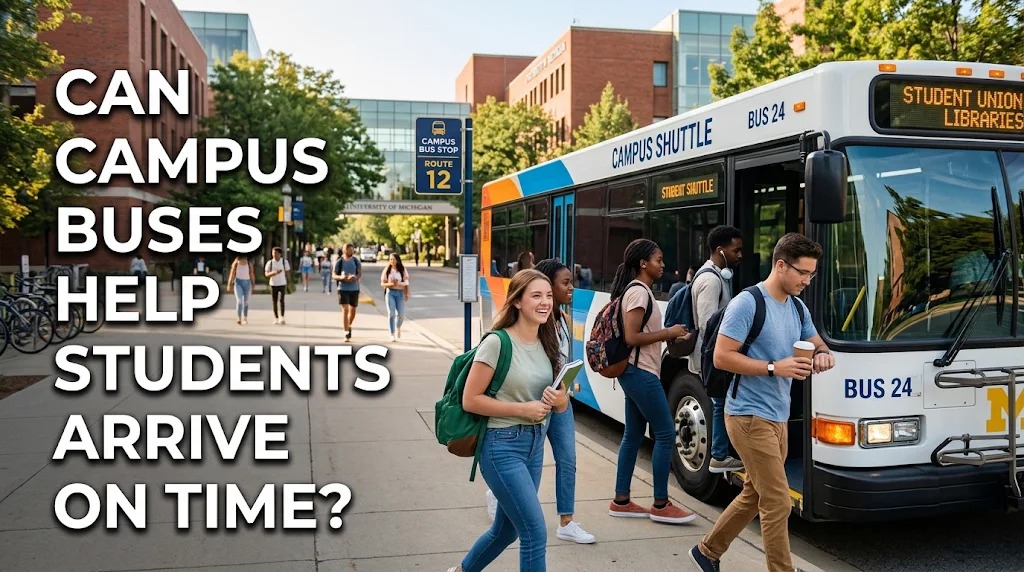
Arriving on time is important for students because it helps them attend classes, participate in academic activities, and manage their daily schedules effectively. However, transportation problems such as traffic congestion, limited parking spaces, and long walking distances can make students arrive late. Campus buses offer a practical transportation solution by connecting different university areas and making student mobility more convenient.
With organized schedules and designated routes, campus buses can help students reach classrooms and other campus facilities more efficiently. Although transportation services cannot completely eliminate delays, using them properly can improve punctuality and reduce the difficulties associated with daily travel.
REDUCE TRAVEL TIME BETWEEN CAMPUS LOCATIONS
Campus buses can help students save time when traveling between different university buildings and facilities. Large universities often have classrooms, laboratories, libraries, and administrative offices located far apart. Walking between these locations may take considerable time, especially when students have several activities in different areas. Campus buses provide a convenient alternative that allows students to reach their destinations more quickly.
Regular transportation services also make it easier for students to move between campus locations without depending on private vehicles. Instead of searching for parking spaces or arranging individual transportation, students can use designated bus stops. This can make travel more predictable and help students manage their time between classes. As a result, campus buses can support better punctuality throughout the academic day.
PROVIDE ORGANIZED SCHEDULES AND ROUTES
An organized bus schedule is one of the main factors that helps students arrive on time. Universities that provide regular departure times allow students to plan their journeys according to their class schedules. Knowing when a bus will arrive makes it easier to determine the appropriate departure time. Students can also choose the most suitable route based on their destination.
Clearly marked bus stops and consistent routes help reduce confusion, particularly for new students who are unfamiliar with the campus environment. Some universities also provide digital schedules and transportation announcements to help passengers monitor service information. However, students should check for schedule changes and avoid depending entirely on estimated arrival times. Proper planning combined with reliable transportation information can improve daily travel efficiency.
HELP STUDENTS AVOID PARKING AND TRAFFIC PROBLEMS
Finding parking spaces can be difficult at universities with large student populations. Students who bring private motorcycles or cars may spend additional time searching for available parking areas before attending classes. Traffic congestion around campus entrances can also create unexpected delays, especially during busy morning hours. Campus buses can reduce these difficulties by providing shared transportation for multiple passengers.
When more students use campus buses, the number of individual vehicles entering campus may decrease. This can help reduce competition for parking spaces and improve traffic movement within university areas. Students can also avoid some of the stress associated with driving and parking. Although buses may still experience traffic delays, they offer a practical alternative for students who want to make their daily journeys more organized.
IMPROVE STUDENT TIME MANAGEMENT
Campus bus services can encourage students to develop better time management habits. Having a fixed transportation schedule motivates students to prepare earlier and organize their daily activities more carefully. For example, students can calculate how much time they need to reach the bus stop, wait for the vehicle, and walk to their classrooms. This preparation helps them avoid last-minute decisions that may cause lateness.
Students can also use their travel time to review study materials, check assignments, or prepare for upcoming classes when conditions allow. However, they should remain aware of their surroundings and be ready to leave the bus at the correct stop. Developing consistent travel habits can make students more disciplined in managing their academic responsibilities. Over time, these habits can support better punctuality and productivity.
UNDERSTAND THE FACTORS THAT CAN CAUSE DELAYS
Although campus buses can improve punctuality, several factors may still affect their performance. Heavy traffic, vehicle maintenance, overcrowding, unfavorable weather, and unexpected operational problems can delay departure or arrival times. Students should understand these possibilities instead of assuming that every bus will always operate according to its schedule. Preparing for potential delays is important for maintaining reliable daily routines.
Universities can improve transportation reliability by maintaining vehicles, evaluating passenger demand, adjusting routes, and providing timely service announcements. Students can also contribute by arriving at bus stops earlier and checking transportation updates before leaving. If a delay occurs, having an alternative transportation plan can help prevent missed classes. Cooperation between students and university management is essential for making campus bus services more dependable.
CONCLUSION
Campus buses can help students arrive on time by reducing travel difficulties, providing organized routes, and improving access to different university facilities. These services can also reduce parking problems and encourage better time management habits. However, factors such as traffic congestion, weather conditions, and vehicle maintenance can still cause delays. Students should combine campus bus transportation with proper planning and early departure habits to achieve better punctuality and enjoy a more efficient academic routine.
Recent Posts

Bagaimana Sistem SKS pada Program Kuliah... 22.11.2026/30 View

How Does Technology Make Daily Evaluation... 21.11.2026/66 View

Apa Strategi Menghadapi Kesenjangan antara Kompetensi... 21.11.2026/65 View

Mengapa Inventaris Aset Penting bagi Kelancaran... 21.11.2026/64 View

When Should Musicians Join a Record... 21.11.2026/64 View
