

Can Color Blindness Affect Daily Activities?
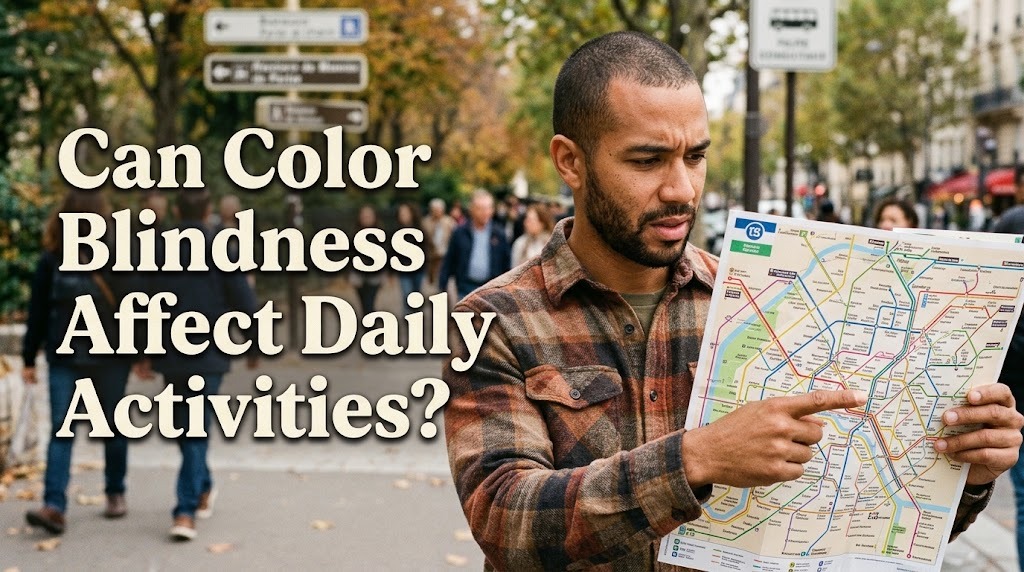
Color blindness can affect daily activities because it changes how a person recognizes and distinguishes certain colors. Although many people with this condition can see objects clearly, they may have difficulty identifying specific colors, especially when two shades look similar. These challenges can occur in different situations, such as choosing clothes, reading color-coded information, preparing food, or recognizing traffic signals.
The impact of color blindness depends on its type and severity. Some people experience only minor difficulties, while others may need additional assistance when performing activities that require accurate color recognition. Understanding how color blindness affects everyday life can help individuals find practical solutions, improve safety, and maintain independence.
HOW DOES COLOR BLINDNESS AFFECT EVERYDAY ACTIVITIES?
Color blindness can make simple daily activities more challenging, particularly when people need to distinguish between colors that appear similar. For example, someone with red-green color blindness may have difficulty identifying certain shades of red, green, brown, and orange. This can create confusion when selecting objects, organizing personal belongings, or following instructions that rely entirely on color differences.
However, the condition does not mean that someone cannot perform normal daily activities. Most people with color vision deficiencies can read, write, work, study, and participate in social activities without major limitations. They may simply need to use additional visual information, such as labels, shapes, patterns, or brightness differences. With appropriate adjustments, many everyday challenges can be managed effectively.
DIFFICULTIES WHEN CHOOSING CLOTHES AND MATCHING COLORS
Choosing clothes can become more complicated for people with color blindness, especially when coordinating different colors. Someone who has difficulty distinguishing red and green may confuse certain clothing combinations, such as dark green with brown or red with similar shades. This can make it harder to determine whether two clothing items match. The problem may become more noticeable when shopping in stores with different lighting conditions.
To make clothing selection easier, individuals can organize their wardrobes according to labels, clothing types, or predefined combinations. Asking someone for assistance when necessary can also help avoid confusion. Some people use smartphone applications that identify colors through a camera. These simple strategies can make choosing clothes more convenient without depending entirely on color perception.
CHALLENGES WHEN READING CHARTS AND DIGITAL INFORMATION
Color blindness can affect how people interpret information presented through charts, graphs, maps, and digital interfaces. Many websites, applications, and educational materials use different colors to represent categories, warnings, or important information. If two colors appear similar to someone with a color vision deficiency, understanding the information may become difficult. This can affect students, office workers, and professionals who regularly use digital tools.
Designing information with accessibility in mind can reduce these difficulties. Charts should include labels, symbols, patterns, or different line styles instead of relying only on color differences. Digital applications can also provide accessible color settings and alternative visual indicators. These adjustments allow people with different levels of color perception to understand information more easily.
CAN COLOR BLINDNESS AFFECT DRIVING AND TRAFFIC SAFETY?
Color blindness may create challenges when recognizing traffic signals, warning lights, and certain road signs. People with red-green color vision deficiency may find it more difficult to distinguish the colors of traffic lights, particularly when visibility is poor or the signals are unfamiliar. However, traffic lights generally use standardized positions, with red at the top or left, yellow in the middle, and green at the bottom or right, depending on the design.
People with color blindness can often recognize traffic signals by considering their positions, brightness, and surrounding visual information. Nevertheless, driving requirements vary depending on local regulations and the severity of the condition. Individuals should understand the applicable licensing standards and seek professional advice if they have concerns about their ability to recognize road signals. Safe driving should always involve attention to the entire traffic environment rather than relying only on color recognition.
EFFECTS OF COLOR BLINDNESS ON EDUCATION AND WORK
Color blindness can influence certain learning and workplace activities, particularly when tasks depend heavily on identifying specific colors. Students may experience difficulties when interpreting colored maps, scientific diagrams, laboratory materials, or classroom presentations. For example, a science experiment that uses color changes to demonstrate a reaction may be harder to understand without additional explanations. These challenges can affect learning if suitable adjustments are not provided.
In the workplace, color vision deficiencies may create limitations in occupations that require accurate color identification. Examples include electrical installation, aviation, transportation, laboratory work, and certain technical professions. However, not every job requires perfect color vision, and the actual requirements depend on specific responsibilities and safety regulations. Employers can also provide alternative labels, digital tools, and accessible visual instructions to support employees.
HOW CAN PEOPLE WITH COLOR BLINDNESS MANAGE DAILY ACTIVITIES?
People with color blindness can use several practical strategies to make everyday activities easier. One useful approach is to rely on labels, written descriptions, shapes, and patterns instead of identifying objects through color alone. For example, organizing household items with clear labels can reduce confusion when selecting similar-looking objects. Using consistent arrangements can also help people recognize familiar items more quickly.
Technology can provide additional support through color identification applications, accessibility settings, and specialized digital tools. Some smartphone applications can detect and describe colors captured by a camera, although their accuracy may depend on lighting and image quality. Individuals can also choose clothing combinations in advance or ask for assistance when handling tasks that require precise color recognition. These solutions can improve independence and make daily routines more comfortable.
CONCLUSION
Color blindness can affect daily activities, including choosing clothes, reading digital information, recognizing traffic signals, studying, and performing certain professional tasks. However, the level of difficulty varies depending on the type and severity of the condition.
Although color blindness cannot always be eliminated, people can manage many challenges through practical adjustments and accessible technology. Understanding individual visual needs is important for improving safety, independence, and quality of life. With appropriate support, most people with color blindness can participate in everyday activities and maintain an active lifestyle.
Recent Posts

Bagaimana Sistem SKS pada Program Kuliah... 22.11.2026/40 View

How Does Technology Make Daily Evaluation... 21.11.2026/71 View

Apa Strategi Menghadapi Kesenjangan antara Kompetensi... 21.11.2026/73 View

Mengapa Inventaris Aset Penting bagi Kelancaran... 21.11.2026/69 View

When Should Musicians Join a Record... 21.11.2026/73 View
