

Can Inspection Robots Detect Early Damage in Wind Turbines?
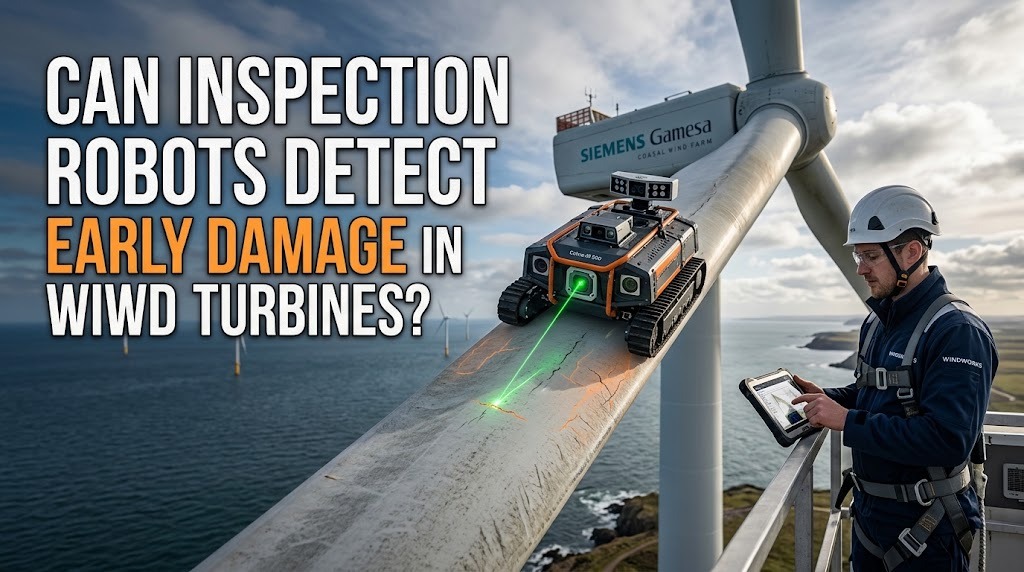
Wind turbines operate under demanding environmental conditions, including strong winds, rain, temperature changes, and constant mechanical stress. Over time, these conditions can cause cracks, corrosion, blade erosion, and other structural problems. Detecting damage early is essential for maintaining turbine performance, preventing unexpected failures, and reducing repair costs. Inspection robots offer an efficient way to examine difficult-to-reach components and identify potential defects before they become more serious.
HOW INSPECTION ROBOTS EXAMINE WIND TURBINES
Inspection robots use cameras, sensors, and specialized movement systems to examine wind turbine components. Some robots climb turbine towers, while others crawl along blade surfaces or operate inside confined areas. Drones can also inspect external structures from a distance without requiring workers to access every surface directly. These systems collect visual and sensor data that maintenance teams can analyze to determine whether a component needs further investigation or repair.
DETECTING EARLY BLADE DAMAGE
Wind turbine blades experience repeated aerodynamic forces and exposure to weather, making them vulnerable to surface erosion, cracks, delamination, and lightning-related damage. Inspection robots equipped with high-resolution cameras can capture detailed images of blade surfaces. Advanced systems may use thermal imaging or other nondestructive testing techniques to investigate defects that are not easily visible. Identifying these warning signs early helps maintenance teams assess damage before it compromises blade performance or structural integrity.
IDENTIFYING CORROSION AND STRUCTURAL DEFECTS
Metal components, including tower sections, bolts, and internal support structures, can develop corrosion or other defects over time. Inspection robots can examine these areas using cameras, ultrasonic sensors, or other suitable inspection instruments. Ultrasonic testing can help measure material thickness or detect certain internal flaws, while visual imaging is useful for identifying surface corrosion and coating deterioration. The inspection method must match the material and defect being investigated because no single sensor can detect every type of damage.
USING ARTIFICIAL INTELLIGENCE FOR DAMAGE ANALYSIS
Artificial intelligence can help analyze the large amounts of data collected by inspection robots. Image-processing systems may identify patterns associated with cracks, erosion, corrosion, or damaged protective coatings. Machine learning models can compare inspection results with previously labeled examples and highlight areas that require human review. This approach can make inspections more consistent and help maintenance teams prioritize potential problems. However, AI results depend on image quality, training data, and environmental conditions, so important findings should be verified by qualified inspectors.
REDUCING INSPECTION RISKS AND COSTS
Traditional wind turbine inspections may require technicians to climb towers, use rope-access equipment, or work at considerable heights. Robotic inspection can reduce the need for direct human access to hazardous areas. It may also shorten inspection time and limit the use of specialized access equipment. Detecting defects before they worsen can help prevent expensive component replacements and prolonged turbine shutdowns. Actual savings depend on the inspection technology, turbine design, accessibility, and the severity of any detected damage.
MONITORING TURBINE CONDITIONS OVER TIME
Regular robotic inspections create records that maintenance teams can compare across different inspection periods. Changes in crack length, surface erosion, or corrosion patterns may indicate that a defect is developing. Combining inspection images with vibration measurements, temperature readings, and operational data can provide a more complete understanding of turbine condition. This information supports condition-based maintenance, in which repairs are planned according to evidence of component deterioration rather than relying only on fixed schedules.
CHALLENGES IN ROBOTIC WIND TURBINE INSPECTION
Despite their advantages, inspection robots face several technical challenges. Strong winds, rain, poor lighting, and limited access can affect inspection quality, particularly when drones or external climbing robots are used. Battery life, communication reliability, sensor accuracy, and compatibility with different turbine designs can also limit performance. Some internal defects require specialized nondestructive testing or expert evaluation beyond standard visual inspection. Operators must therefore select suitable equipment and confirm that the collected data are reliable enough for maintenance decisions.
THE FUTURE OF WIND TURBINE INSPECTION ROBOTS
Future inspection systems may combine autonomous navigation, advanced sensors, AI-based analysis, and digital models of turbine components. Robots could follow repeatable inspection routes and automatically flag changes between inspection sessions. Improved climbing mechanisms and sensor integration may also help inspect complex blade geometries and internal structures. These developments could support more predictive maintenance and improve the reliability of wind energy infrastructure. Human expertise will remain essential for validating findings and deciding which repairs are necessary.
CONCLUSION
Inspection robots can detect many early signs of wind turbine damage, including surface cracks, blade erosion, corrosion, and selected internal defects. Cameras, specialized sensors, and AI-based analysis help maintenance teams identify problems and monitor their development. Although environmental conditions and sensor limitations remain important challenges, robotic inspections can improve worker safety and support more effective maintenance planning.
Recent Posts

Bagaimana Sistem SKS pada Program Kuliah... 22.11.2026/49 View

How Does Technology Make Daily Evaluation... 21.11.2026/77 View

Apa Strategi Menghadapi Kesenjangan antara Kompetensi... 21.11.2026/78 View

Mengapa Inventaris Aset Penting bagi Kelancaran... 21.11.2026/74 View

When Should Musicians Join a Record... 21.11.2026/79 View
