

Can Lecturers Without Certification Apply for Professional Certification?
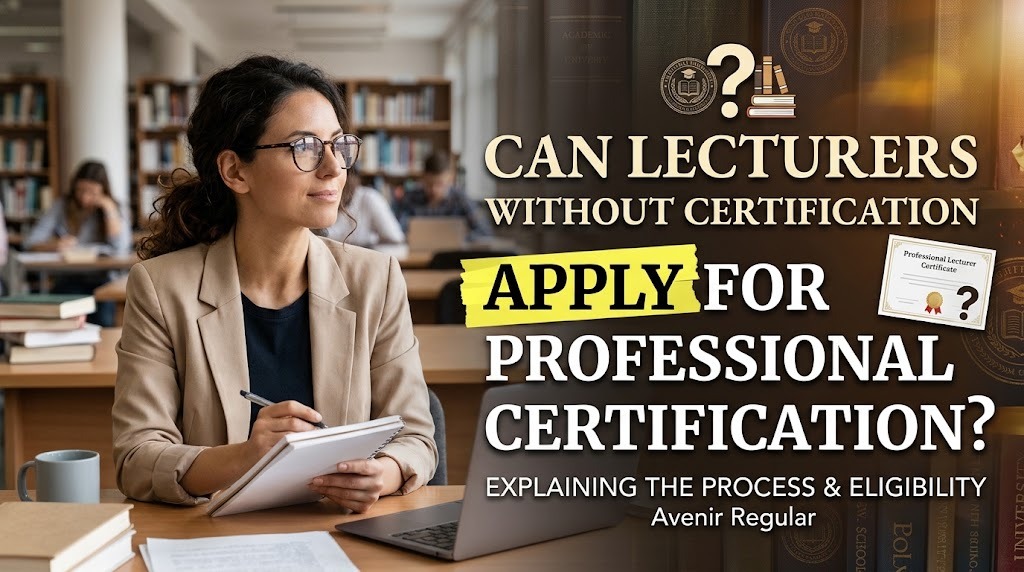
Lecturer certification is an important form of professional recognition for educators in higher education. It provides a way to assess whether lecturers meet the required academic and professional standards. However, not every lecturer has obtained certification, especially those who are new to the profession or have not yet fulfilled the applicable requirements.
Lecturers who do not have certification may still have an opportunity to participate in the professional certification process when they meet the eligibility criteria established by the government. The absence of a certificate does not automatically mean that a lecturer can never apply. Instead, applicants need to understand the requirements, procedures, and administrative conditions that apply to the certification program.
UNCERTIFIED LECTURERS MAY HAVE AN OPPORTUNITY TO APPLY
Lecturers without professional certification may be eligible to participate in a certification program if they fulfill the applicable requirements. Certification is generally intended for lecturers who have met certain academic, employment, and professional criteria. Therefore, eligibility is determined by the rules of the relevant program rather than simply by whether someone has previously received a certificate.
Lecturers should understand that being employed by a university does not automatically guarantee eligibility. They may need to meet conditions related to academic qualifications, lecturer registration, employment status, and other requirements. The university can help determine whether a lecturer is included in the eligible group for a particular certification period.
LECTURERS MUST MEET THE REQUIRED ELIGIBILITY CRITERIA
Before applying for lecturer professional certification, applicants need to review the eligibility criteria carefully. These requirements may include having the appropriate academic qualifications, being registered as a lecturer, and fulfilling professional responsibilities within a higher education institution. Additional conditions may apply depending on the certification scheme and current government regulations.
The requirements are important because certification is intended to recognize professional competence, not simply confirm employment at a university. Lecturers should therefore check the latest official guidelines before preparing an application. If certain requirements have not been fulfilled, they may need to complete the necessary academic or administrative steps before becoming eligible.
UNIVERSITIES HELP COORDINATE THE CERTIFICATION PROCESS
The university where a lecturer works generally plays an important role in coordinating lecturer certification applications. Institutional administrators can provide information about eligibility, required documents, registration procedures, and relevant schedules. They may also help verify lecturer information before it is submitted through the official system.
Lecturers should communicate with their university's academic administration, human resources department, or designated certification administrator. These units can explain the procedures that apply to their institution and provide guidance about the next steps. Coordination is particularly important because application procedures and administrative arrangements may differ depending on the certification program.
APPLICANTS NEED TO PREPARE DOCUMENTS AND PROFESSIONAL INFORMATION
Preparing complete and accurate documents is an important part of the lecturer certification application process. Depending on the applicable guidelines, applicants may need to provide information about academic qualifications, employment status, lecturer registration, teaching responsibilities, and other professional activities. The university or certification administrator can explain which documents are required for the relevant program.
Lecturers should ensure that their information is consistent across institutional records and official higher education systems. Inaccurate data or incomplete documentation can create difficulties during administrative verification. Applicants should also keep copies of important documents and monitor any requests for corrections or additional information. Careful preparation can help make the application process more organized.
CERTIFICATION REQUIREMENTS CAN CHANGE ACCORDING TO REGULATIONS
The professional certification requirements for lecturers may change as government policies and higher education regulations are updated. Eligibility conditions, application procedures, assessment methods, and administrative systems may therefore differ between certification periods. Information from previous years should not automatically be treated as the current standard.
Lecturers should follow official announcements from the Ministry of Higher Education, Science, and Technology and information communicated by their universities. They can also ask the designated certification administrator to clarify any changes that affect their eligibility. Checking current information is important to ensure that applicants follow the correct procedures and prepare the appropriate documents.
CONCLUSION
Lecturers without certification can apply for professional certification if they meet the eligibility criteria established by the applicable program. The absence of a certificate does not automatically prevent a lecturer from participating in a future certification process. However, applicants must fulfill the required academic, employment, professional, and administrative conditions.
Lecturers should begin by checking their eligibility through their university and reviewing the latest official guidelines. Preparing accurate documents, maintaining updated academic records, and following institutional instructions can help them complete the application process more effectively. By understanding the requirements, uncertified lecturers can identify the appropriate steps toward obtaining professional recognition.
Recent Posts

Bagaimana Sistem SKS pada Program Kuliah... 22.11.2026/44 View

How Does Technology Make Daily Evaluation... 21.11.2026/73 View

Apa Strategi Menghadapi Kesenjangan antara Kompetensi... 21.11.2026/75 View

Mengapa Inventaris Aset Penting bagi Kelancaran... 21.11.2026/70 View

When Should Musicians Join a Record... 21.11.2026/74 View
