

Can Musical Intelligence Be Trained and Developed?
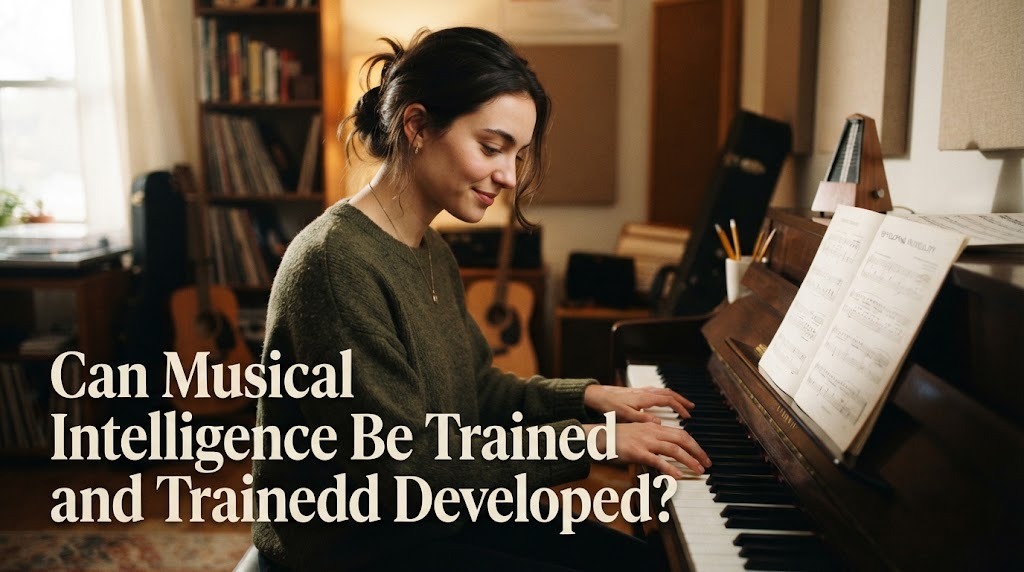
Musical intelligence is the ability to recognize, understand, remember, and create musical patterns, including melodies, rhythms, and sounds. It is one of the abilities described in Howard Gardner’s theory of multiple intelligences. Some people show an early interest in music, while others develop their musical abilities through practice and experience. This raises an important question: can musical intelligence be trained and developed? The answer is yes. Although people may have different starting abilities, musical skills can improve through regular practice, appropriate learning methods, and consistent exposure to music.
Developing musical intelligence does not mean that everyone must become a professional musician. It can also involve learning to recognize rhythms, sing more accurately, play an instrument, or understand different musical styles. These activities provide opportunities to improve listening, coordination, memory, and creative expression. With realistic goals and consistent effort, people of different ages can explore and strengthen their musical abilities.
UNDERSTANDING HOW MUSICAL INTELLIGENCE DEVELOPS
Musical intelligence involves several related abilities, such as recognizing pitch, identifying rhythms, remembering melodies, and noticing differences between sounds. These abilities can vary from person to person because of differences in experience, interest, environment, and individual characteristics. Some learners may recognize melodies easily but struggle with rhythm, while others may have strong rhythmic skills but need more practice with pitch. Therefore, musical intelligence should not be viewed as a single ability that everyone develops in exactly the same way.
Practice provides opportunities to improve specific musical skills over time. For example, repeated singing exercises can help learners practice pitch accuracy, while rhythm exercises can improve their ability to maintain a steady beat. Learning an instrument can also develop coordination between listening and movement. Progress may happen at different rates, so comparing individual achievements is less useful than recognizing personal improvement.
PRACTICING MUSIC REGULARLY
Regular practice is one of the most important ways to develop musical intelligence. Repeating musical exercises allows learners to become familiar with melodies, rhythms, and techniques that initially feel difficult. For example, someone learning the guitar can begin with basic chords before moving on to more complex songs. As practice continues, the learner can gradually improve finger coordination, timing, and sound accuracy.
Consistency is generally more helpful than practicing intensively only once in a while. Beginners can start with short sessions and gradually increase the duration as their skills and concentration improve. It is also useful to set specific goals, such as learning a short melody or maintaining a steady rhythm for an entire song. Reviewing progress regularly helps learners identify areas that need additional attention and maintain motivation.
LEARNING TO PLAY A MUSICAL INSTRUMENT
Learning a musical instrument can provide structured opportunities to develop musical intelligence. Instruments such as the piano, guitar, violin, and drums require different combinations of listening, movement, timing, and coordination. Beginners can start with simple exercises and gradually learn more complex techniques. Through repeated practice, they become more familiar with musical patterns and the relationship between sounds and physical movements.
Choosing an instrument that matches personal interests can make the learning process more enjoyable. People who enjoy melodies may prefer instruments such as the piano or guitar, while those who are interested in rhythm may enjoy percussion instruments. However, there is no single instrument that is necessary for developing musical intelligence. Singing, composing, and participating in rhythm activities can also provide valuable musical experiences.
TRAINING LISTENING AND RHYTHM SKILLS
Musical intelligence can be developed even without owning an instrument. Active listening helps learners recognize differences in pitch, tempo, rhythm, and musical structure. For example, a learner can listen to a song and identify when the melody changes, when the beat becomes faster, or which instruments are being played. These exercises encourage careful attention to sound and help learners become more aware of musical details.
Rhythm can also be practiced through clapping, tapping, or moving along with music. Beginners can start by following a simple beat and gradually try more complicated rhythmic patterns. Singing along to familiar songs can provide additional opportunities to practice pitch, timing, and melody recognition. These activities are accessible ways to explore music at home, in school, or during group learning sessions.
USING MUSIC EDUCATION AND GUIDANCE
Music lessons can help learners develop their abilities through structured instruction and feedback. A teacher can identify specific difficulties, demonstrate appropriate techniques, and recommend exercises suited to the learner's level. This guidance can be particularly useful when beginners struggle with rhythm, pitch, posture, or instrument technique. It can also help learners avoid developing habits that make future practice more difficult.
Formal lessons are not the only way to learn music. Online tutorials, educational applications, instructional videos, and community music groups can also provide learning opportunities. However, learners should choose resources that explain concepts clearly and allow them to practice progressively. Feedback from an experienced teacher or musician can still be valuable when a learner needs help correcting mistakes or improving technique.
DEVELOPING MUSICAL CREATIVITY
Musical intelligence involves more than reproducing existing songs. It can also include creating melodies, experimenting with rhythms, and arranging sounds in original ways. Beginners can start by inventing a short tune, changing the rhythm of a familiar melody, or combining different sounds to create a simple composition. These activities encourage exploration and help learners understand how musical elements work together.
Creativity develops through experimentation and reflection. A learner may try several musical ideas before finding a sound or pattern that feels suitable. Recording a short composition and listening to it again can help identify what works well and what could be improved. Over time, these experiences can increase confidence in expressing ideas through music without requiring advanced technical skills.
MAINTAINING MOTIVATION DURING THE LEARNING PROCESS
Developing musical intelligence takes time, and learners may experience frustration when progress feels slow. Difficult passages, inaccurate notes, or inconsistent rhythm are normal challenges during practice. Instead of expecting immediate perfection, learners should divide challenging tasks into smaller and more manageable steps. This approach makes progress easier to recognize and helps prevent unnecessary pressure.
Enjoyment is also important for maintaining motivation. Learners can choose familiar songs, explore different musical genres, or practice with friends to make activities more engaging. Celebrating small improvements can encourage continued effort. It is also helpful to take breaks when tired and return to difficult exercises with a clear mind.
CONCLUSION
Musical intelligence can be trained and developed through regular practice, active listening, instrument lessons, rhythm exercises, and creative musical activities. Although people begin with different abilities and experiences, many musical skills can improve with time, guidance, and consistent effort. Developing musical intelligence does not require expensive instruments or professional training because simple activities such as singing and clapping to a beat can also support musical learning.
The most important factors are choosing enjoyable activities, setting realistic goals, and practicing consistently. Learners should focus on their own progress rather than comparing themselves with others. By making music a regular part of learning and daily life, people can strengthen their musical abilities and gain opportunities to develop listening, coordination, memory, and creative expression.
Recent Posts

Bagaimana Sistem SKS pada Program Kuliah... 22.11.2026/27 View

How Does Technology Make Daily Evaluation... 21.11.2026/65 View

Apa Strategi Menghadapi Kesenjangan antara Kompetensi... 21.11.2026/65 View

Mengapa Inventaris Aset Penting bagi Kelancaran... 21.11.2026/62 View

When Should Musicians Join a Record... 21.11.2026/63 View
