

Can Non Accounting Graduates Become Professional Accountants?
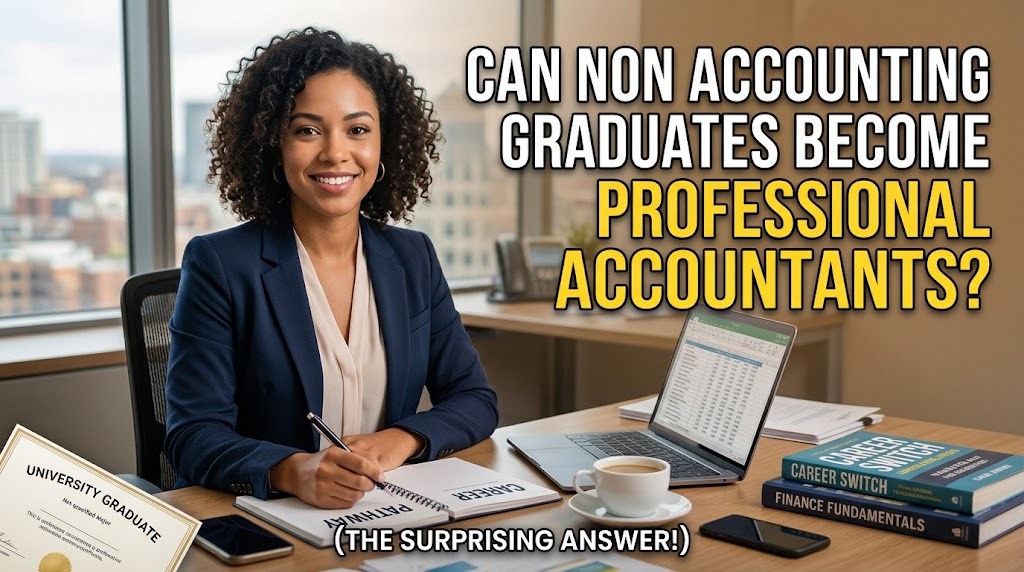
Transitioning into the financial sector from a non-accounting academic background is an increasingly common and entirely achievable career pivot. Many individuals who graduate with degrees in engineering, mathematics, computer science, or the humanities later discover a deep passion for financial accounting and corporate finance. While earning a specialized bachelor's degree in accounting is the traditional pathway, national accountancy bodies and professional associations recognize alternative entry routes. Bridging educational gaps through conversion programs, post-graduate diplomas, and rigorous professional board examinations allows non-accounting majors to earn official credentials. Dedicated determination and structured study bridge the gap between initial academic divergence and professional success.
However, entering the profession without a baseline business degree requires candidates to master fundamental financial concepts independently before attempting professional board exams. Aspiring accountants must acquire working knowledge of double-entry bookkeeping, financial statement analysis, corporate law, and local tax frameworks. Professional accountancy institutions across global markets have designed specialized conversion pathways and foundational bridging courses tailored specifically for non-traditional candidates. These structured pathways ensure that every practicing accountant meets uniform competence standards, regardless of their undergraduate major. Embracing a multidisciplinary background often gives alternative candidates a unique analytical edge in modern corporate environments.
WHAT ARE THE ACCREDITED CONVERSION PATHWAYS AND BRIDGING COURSES?
For graduates holding degrees in non-business disciplines, enrolling in structured conversion courses or a Master of Accountancy program is the most reliable entry strategy. Universities and professional institutes offer specialized post-graduate diploma programs that compress essential undergraduate accounting principles into intensive, accelerated study modules. These bridging courses cover core topics such as intermediate financial reporting, cost accounting, auditing standards, and corporate governance. Completing an accredited conversion program fulfills the foundational educational prerequisites required by major regulatory bodies. Structured academic preparation equips non-traditional students with necessary technical terminology.
In addition, many professional accountancy organizations provide modular bridging examinations that allow candidates to test out of preliminary educational requirements by demonstrating self-taught competence. These flexible learning structures accommodate working professionals who wish to transition careers without quitting their current employment. Online learning platforms and university extension courses make accessing foundational financial modules easier than ever before. Careful selection of accredited conversion programs ensures that your educational credits satisfy official state register guidelines. Bridging courses create a seamless transition into advanced professional certification studies.
HOW DO PROFESSIONAL CERTIFICATIONS ACCOMMODATE NON-TRADITIONAL MAJORS?
Major professional credentialing bodies, such as the Institute of Indonesia Chartered Accountants (IAI) or global equivalents, have established clear pathways for non-accounting graduates. Candidates are typically required to complete foundational examination tiers or supplementary competency modules before registering for advanced professional-level papers. These preliminary assessments ensure that candidates possess adequate numerical proficiency and an understanding of basic bookkeeping before tackling complex financial accounting standards. Professional associations evaluate each applicant's academic transcripts individually to determine which specific bridging modules are mandatory. Standardized testing guarantees that all credentialed members maintain uniform technical competence.
Furthermore, passing rigorous professional board exams—such as the certified public accountant (CPA) examinations—serves as the ultimate equalizer for non-traditional candidates. Once an individual passes the required professional exams and satisfies practical training rules, their undergraduate major becomes secondary to their certified expertise. Corporate employers and hiring managers prioritize active professional credentials and proven technical competence over initial university degrees. Professional bodies focus purely on a candidate's ability to apply current financial standards and ethical rules accurately. Earning recognized credentials completely validates a non-traditional accountant's market standing.
WHY IS PRACTICAL EXPERIENCE CRITICAL FOR NON-TRADITIONAL CANDIDATES?
Because non-accounting graduates lack theoretical exposure during their university years, accumulating hands-on practical work experience is an absolute necessity for career mastery. Working in junior accounting roles, such as accounts payable clerk, billing specialist, or audit assistant, provides invaluable real-world context. During this practical training phase, candidates learn how to maintain general ledgers, execute routine bank reconciliation, and organize source documentation properly. Mentorship from senior corporate accountants helps bridge textbook theories with daily operational realities. Practical immersion accelerates professional maturity and technical confidence.
Additionally, regulatory authorities in many jurisdictions mandate a minimum of two to three years of supervised practical accounting experience before granting full practicing licenses. Working within structured corporate finance departments or public accounting firms exposes non-traditional candidates to diverse business transactions and audit workflows. Performing daily tasks reinforces complex accounting rules and teaches candidates how to handle real-world financial discrepancies. Practical experience transforms academic converts into well-rounded, reliable financial practitioners. Fieldwork is the ultimate testing ground for professional competence.
HOW DO NON-TRADITIONAL SKILLS ENHANCE MODERN ACCOUNTING PRACTICE?
Non-accounting graduates frequently bring unique multidisciplinary perspectives and technical skills that greatly enrich modern corporate accounting teams. For example, candidates with computer science or data analytics backgrounds excel rapidly in modern digital accounting environments, cloud software integration, and financial automation. Engineers and mathematics majors possess advanced quantitative modeling skills that optimize cost accounting and capital budgeting procedures. Blending traditional financial principles with specialized technical expertise allows non-traditional accountants to master emerging digital tools faster than peers. Diverse intellectual backgrounds foster innovative corporate problem-solving.
Moreover, effective communication, project management, and strategic thinking developed in other academic fields translate smoothly into high-level financial advisory roles. Corporate employers increasingly value professionals who can combine technical accounting literacy with industry-specific operational insights. Non-traditional accountants often transition effortlessly into specialized niches such as forensic technology, environmental auditing, and Fintech financial modeling. Embracing your unique background as a professional asset rather than a disadvantage drives career differentiation. Multidisciplinary skills create versatile, highly sought-after financial leaders.
WHAT CHALLENGES MIGHT NON-TRADITIONAL ACCOUNTANTS ENCOUNTER?
While transitioning into accounting offers exciting career rewards, non-traditional candidates must be prepared to overcome distinct professional hurdles along the way. The steepest challenge involves mastering dense, highly technical regulatory frameworks, complex tax codes, and intricate financial reporting standards without prior background. Balancing rigorous professional exam preparation while working full-time demands immense personal discipline and time management. Furthermore, some traditional employers may initially harbor skepticism regarding non-accounting degrees, requiring candidates to prove their technical competence proactively. Persistence and continuous learning are essential to overcome initial structural friction.
Additionally, non-traditional candidates must navigate complex administrative requirements set by national licensing boards regarding educational equivalencies and required credit hours. Consulting with professional association advisors early in your transition journey helps clarify exact registration criteria and prevents wasted study efforts. Demonstrating unwavering commitment to ethical standards and continuous professional development quickly dispels any lingering doubts about your qualifications. Facing and conquering these early career challenges builds remarkable professional resilience. Determination paves the road to long-term financial leadership.
CONCLUSION
Non-accounting graduates can successfully become a professional accountant by completing accredited conversion courses, gaining practical experience, ensuring strict tax compliance, mastering financial accounting, and earning certified public accountant credentials.
Recent Posts

Bagaimana Sistem SKS pada Program Kuliah... 22.11.2026/53 View

How Does Technology Make Daily Evaluation... 21.11.2026/82 View

Apa Strategi Menghadapi Kesenjangan antara Kompetensi... 21.11.2026/81 View

Mengapa Inventaris Aset Penting bagi Kelancaran... 21.11.2026/77 View

When Should Musicians Join a Record... 21.11.2026/82 View
