

Do Changing Times Always Bring Progress to Human Life?
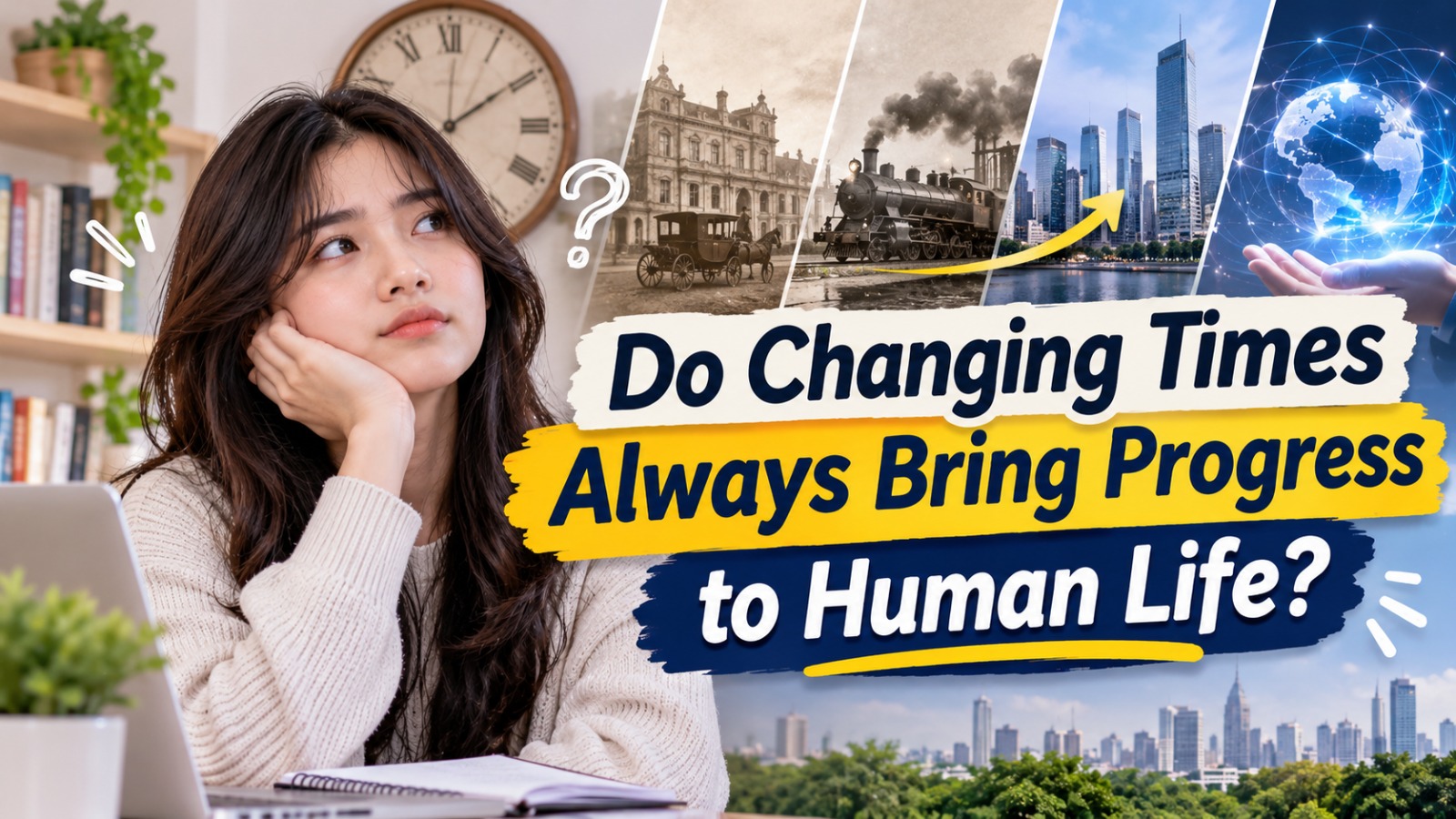
Changing times bring many developments that influence how people live, work, communicate, and interact with one another. Advances in technology, education, healthcare, and transportation have created new opportunities that make everyday activities more convenient. However, not every change automatically improves human life. Some developments also create problems, such as environmental damage, social inequality, unemployment, and excessive dependence on technology. Therefore, changing times do not always bring progress because the benefits of development depend on how people manage and respond to those changes.
THE POSITIVE IMPACT OF TECHNOLOGICAL DEVELOPMENT
Technological development has made many aspects of human life easier and more efficient. People can communicate instantly through digital platforms, access information within seconds, and complete various activities without visiting physical locations. Technology also supports businesses by improving productivity and helping organizations reach wider markets. In education, digital learning platforms allow students to access learning materials from different places. These developments demonstrate how technology can improve convenience, efficiency, and access to opportunities.
Technology has also contributed to progress in healthcare and public services. Modern medical equipment helps healthcare professionals detect diseases and provide more accurate treatments. Digital administrative systems can reduce complicated procedures and make public services easier to access. Transportation technology also helps people travel more efficiently and connect with distant communities. However, these benefits depend on whether technology is available and affordable for different groups of society.
ECONOMIC GROWTH AND NEW OPPORTUNITIES
Changes in the economy can create new opportunities for individuals and businesses. Digital platforms allow entrepreneurs to promote products, reach customers, and operate businesses without always needing physical stores. New industries also create employment opportunities in fields such as information technology, digital marketing, and online services. People can develop professional skills through online courses and access career opportunities beyond their local areas. Economic development can improve living standards when opportunities are distributed fairly and people have the skills to use them.
Nevertheless, economic changes can also create difficulties for certain groups. Automation may reduce the demand for workers who perform repetitive tasks, while new industries often require specialized abilities. Small businesses may struggle to compete with larger companies that have more advanced technology and financial resources. Differences in education and digital access can also increase economic inequality. Therefore, economic progress should include training programs, fair employment policies, and support for communities affected by industrial changes.
SOCIAL AND CULTURAL CHANGES IN MODERN LIFE
Changing times influence how people communicate, build relationships, and understand different cultures. Social media and digital communication allow individuals to maintain relationships despite geographical distance. People can also learn about traditions, lifestyles, and perspectives from different communities. These interactions may encourage greater understanding and cooperation between individuals with different backgrounds. Social development can create a more connected society when people use communication technology responsibly and respect cultural differences.
However, modern social changes can also affect traditional relationships and cultural identity. Excessive use of digital platforms may reduce direct interaction with family members, friends, and local communities. Some traditional languages, customs, and cultural practices may receive less attention as modern lifestyles become more dominant. The spread of misinformation can also create misunderstandings and social conflict. Society therefore needs to balance modern lifestyles with the preservation of important cultural values and meaningful human relationships.
ENVIRONMENTAL PROBLEMS CAUSED BY MODERN DEVELOPMENT
Modern development often increases industrial activity, transportation, construction, and energy consumption. These activities can create environmental problems when natural resources are used without proper management. Air pollution, water contamination, deforestation, and increasing waste are examples of challenges associated with uncontrolled development. Industrial production may improve economic growth, but it can also damage ecosystems and threaten public health. Development cannot be considered genuine progress if it creates environmental destruction that reduces the quality of life for future generations.
To address these problems, governments, businesses, and communities need to adopt more sustainable practices. Renewable energy, efficient public transportation, waste reduction, and environmentally responsible production can help reduce negative impacts. Individuals can also contribute by saving electricity, reducing single-use products, and choosing more sustainable daily habits. Environmental education is important because people need to understand the long-term consequences of their decisions. Progress should consider economic benefits while protecting natural resources and maintaining environmental balance.
THE IMPORTANCE OF HUMAN VALUES AND RESPONSIBLE DECISIONS
Progress should not be measured only by technological innovation, economic growth, or modern infrastructure. Human well-being, equality, safety, and social responsibility are also important indicators of a developed society. A country may have advanced technology but still face serious problems if many people lack access to education, healthcare, or decent employment. Development should improve people's opportunities and help them live with dignity. True progress occurs when changes create benefits for society as a whole rather than advantages for only a small group.
Responsible decisions are necessary to ensure that modern developments produce positive results. Governments should establish policies that protect workers, consumers, communities, and the environment. Educational institutions should prepare students to understand technological changes and use new tools ethically. Businesses should consider their social and environmental responsibilities instead of focusing entirely on profit. Individuals also need to evaluate new trends carefully and maintain values such as honesty, empathy, and respect. Through shared responsibility, society can make better use of change while reducing its harmful consequences.
BALANCING MODERNIZATION WITH SUSTAINABLE PROGRESS
Modernization can provide important benefits, but it should not require society to abandon everything from the past. Traditional knowledge, cultural identity, and community cooperation can remain valuable even as technology and lifestyles develop. For example, modern agricultural equipment can improve productivity while local farming knowledge helps communities understand their natural environment. Digital communication can support cultural preservation by introducing traditional arts and languages to younger generations. A balanced approach allows society to accept useful innovations while protecting values and practices that remain meaningful.
Sustainable progress also requires long-term planning rather than focusing only on immediate results. Governments and communities should consider how current decisions will affect future generations. Investments in education, public health, clean energy, and infrastructure can create benefits that last for many years. People should also be encouraged to develop new skills and adapt to changes without losing their sense of responsibility. When modernization is guided by sustainability and human values, changing times can become an opportunity to build a better society.
CONCLUSION
Changing times do not always bring progress to human life because every development can produce both positive and negative effects. Technology, economic growth, and social transformation can improve convenience and create new opportunities, but they may also increase inequality, environmental problems, and social challenges. True progress depends on how responsibly individuals, businesses, and governments manage these changes. By balancing modernization with sustainability, education, equality, and human values, society can ensure that development improves people's quality of life and creates a better future for coming generations.
Recent Posts

Bagaimana Cara Membangun Komunikasi yang Baik... 18.11.2026/45 View

Mengapa Keluarga Cemara Mengajarkan Arti Kebahagiaan... 18.11.2026/49 View

Mengapa Tradisi Keluarga Penting untuk Mempererat... 18.11.2026/48 View

Apa yang Membuat Keluarga Cemara Tetap... 18.11.2026/47 View

Mengapa Silaturahmi Menjadi Bagian Penting dalam... 18.11.2026/48 View
