

Does High Population Density Always Have Negative Effects on Society?
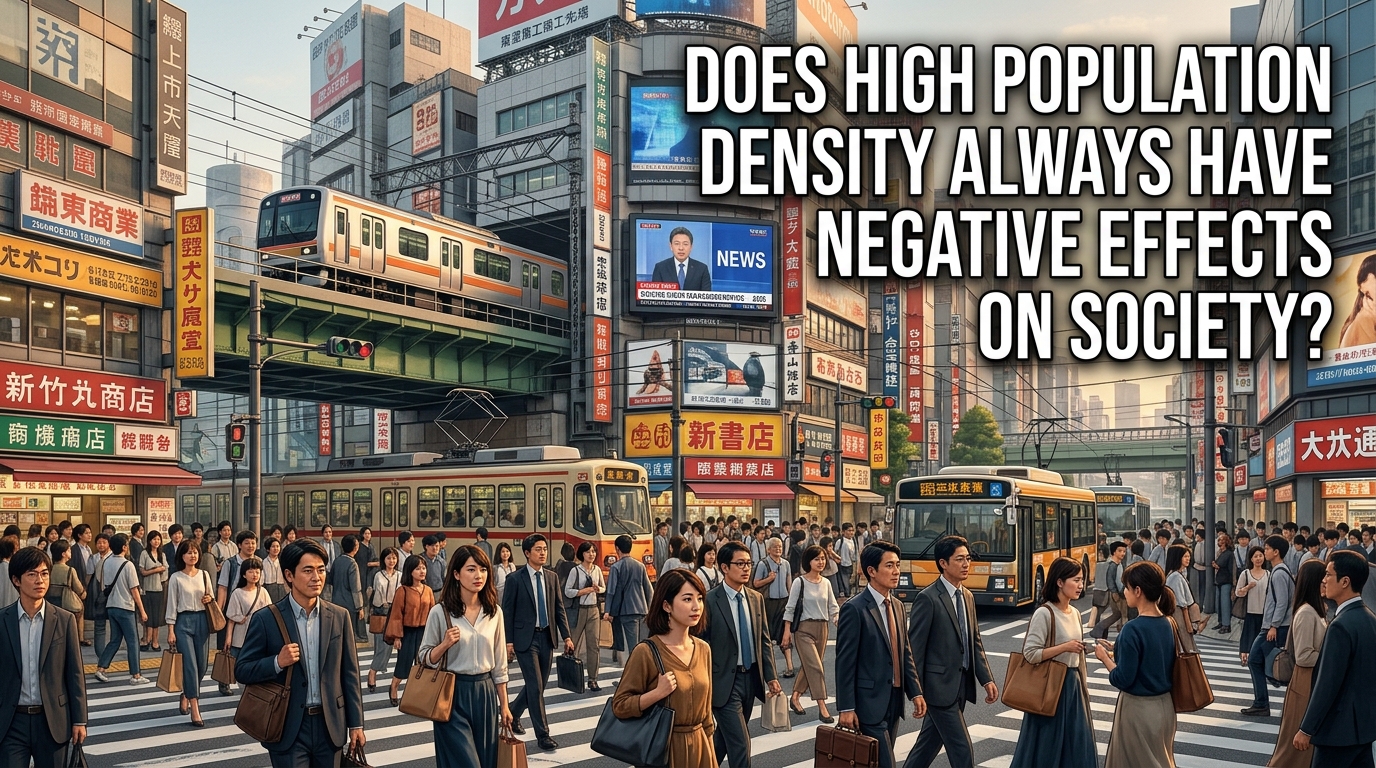
High population density is often associated with crowded cities, traffic congestion, housing shortages, pollution, and pressure on public facilities. These challenges can affect people's daily lives, especially when urban development cannot keep up with population growth. However, high population density does not always have negative effects on society.
In many cases, densely populated areas can create economic opportunities, support business development, improve access to public services, and encourage innovation. The impact depends on how well a region is planned, managed, and supported by infrastructure. Understanding both the positive and negative effects of population density is important for building communities that are productive, comfortable, and sustainable.
UNDERSTANDING HIGH POPULATION DENSITY
Population density refers to the number of people living within a specific area, usually measured in people per square kilometer. An area with many residents in a relatively small space has a high population density. Large cities often have higher population density than rural regions because they offer more employment opportunities, educational institutions, and public services.
However, population density alone does not determine whether a place has a good or poor quality of life. A densely populated city with organized transportation, adequate housing, and reliable public facilities can provide comfortable living conditions. In contrast, an area with poor planning may experience serious problems even when its population density is not extremely high.
POSITIVE ECONOMIC EFFECTS OF HIGH POPULATION DENSITY
High population density can support economic growth because many people live, work, and conduct business within a relatively small area. A large population creates demand for food, transportation, housing, healthcare, education, and other services. This demand encourages businesses to grow and creates employment opportunities across different industries.
Densely populated areas can also help businesses reduce certain operating costs. For example, companies may have easier access to suppliers, customers, skilled workers, and transportation networks. When these factors are supported by good infrastructure, population concentration can increase productivity and encourage local economic development.
IMPROVING ACCESS TO PUBLIC FACILITIES AND SERVICES
Cities with high population density can make public services easier to access when facilities are distributed strategically. Hospitals, schools, public transportation stations, markets, and government offices can serve many residents within a relatively short distance. This arrangement may reduce travel distances and make everyday activities more convenient.
A well-planned city can also use public resources more efficiently. For example, public transportation can carry many passengers through a limited road network, while centralized water and electricity systems can serve large communities. However, these benefits depend on sufficient service capacity and effective management to prevent overcrowding.
ENCOURAGING INNOVATION AND SOCIAL INTERACTION
High population density brings people from different backgrounds, professions, and areas of expertise into closer contact. This environment can encourage the exchange of ideas, cooperation, and creativity. Universities, research centers, businesses, and technology communities often benefit from being located near one another.
Densely populated communities can also provide more opportunities for cultural activities and social interaction. Residents may have easier access to public events, creative communities, and professional networks. When supported by inclusive public spaces and community programs, population concentration can strengthen social connections and encourage innovation.
NEGATIVE EFFECTS OF HIGH POPULATION DENSITY
Despite its potential benefits, high population density can create serious challenges when population growth exceeds the capacity of local infrastructure. Traffic congestion is one common problem, especially in cities where road networks and public transportation cannot accommodate the number of daily travelers. Long commuting times can reduce productivity and affect residents' quality of life.
Other problems include housing shortages, rising property prices, crowded schools, and overburdened healthcare facilities. High concentrations of people can also increase waste production, energy consumption, and pressure on clean water supplies. Without effective planning, these conditions may contribute to environmental pollution and social inequality.
WHY URBAN PLANNING DETERMINES THE IMPACT OF POPULATION DENSITY
Urban planning plays an important role in determining whether high population density becomes an advantage or a disadvantage. Governments need to ensure that residential areas are supported by roads, public transportation, schools, hospitals, green spaces, and essential utilities. These facilities must grow in line with population needs.
Good planning also involves creating mixed-use neighborhoods where residents can live, work, study, and access daily services without traveling long distances. Affordable housing policies and proper land management can help prevent overcrowding and excessive living costs. With balanced development, cities can accommodate more people while maintaining a healthy and comfortable environment.
THE ROLE OF TECHNOLOGY IN MANAGING DENSELY POPULATED AREAS
Technology can help governments manage the challenges of densely populated communities. Digital population databases and geographic information systems allow planners to identify areas experiencing rapid growth and determine where additional facilities are needed. This information supports more accurate decisions about housing, transportation, and infrastructure development.
Smart transportation systems can monitor traffic conditions and improve the management of public transport. Meanwhile, digital healthcare services, online education, and smart waste-management systems can make public services more efficient. Although technology cannot solve every urban problem, it can support better resource management and more responsive city services.
HIGH POPULATION DENSITY AND ENVIRONMENTAL SUSTAINABILITY
High population density can create environmental pressure because more people require energy, water, food, and waste-management services. However, compact urban development can also reduce the amount of land needed for housing and infrastructure compared with widespread, low-density development. When designed carefully, this can help protect surrounding agricultural land and natural habitats.
Densely populated cities can support more efficient public transportation, walking, and cycling. These options may reduce dependence on private vehicles and lower transportation-related emissions. Nevertheless, environmental benefits are not automatic because they depend on clean energy, effective waste management, green spaces, and sustainable urban policies.
HOW SOCIETY CAN BENEFIT FROM HIGH POPULATION DENSITY
To gain the advantages of high population density, governments and communities need to manage population growth responsibly. Investment in affordable housing, reliable public transportation, healthcare, education, and clean water is essential. These services help ensure that population concentration does not reduce residents' access to basic needs.
Community participation is equally important because residents understand many of the problems affecting their neighborhoods. Governments can involve local communities in decisions about public spaces, environmental protection, and infrastructure priorities. Cooperation between authorities, businesses, and residents can help create densely populated areas that are inclusive, productive, and sustainable.
CONCLUSION
High population density does not always have negative effects on society. It can support economic growth, create employment opportunities, improve access to public facilities, and encourage innovation. However, it can also cause traffic congestion, housing shortages, pollution, and pressure on public services when development is poorly managed.
The overall impact depends on urban planning, infrastructure quality, public policies, and resource management. With adequate facilities, sustainable development, and equal access to essential services, densely populated areas can become productive and comfortable places to live. Therefore, the main challenge is not simply reducing population density but managing it effectively to improve people's quality of life.
Recent Posts

Bagaimana Sistem SKS pada Program Kuliah... 22.11.2026/30 View

How Does Technology Make Daily Evaluation... 21.11.2026/66 View

Apa Strategi Menghadapi Kesenjangan antara Kompetensi... 21.11.2026/65 View

Mengapa Inventaris Aset Penting bagi Kelancaran... 21.11.2026/64 View

When Should Musicians Join a Record... 21.11.2026/64 View
