

Does Vocational Curriculum Reduce Youth Unemployment In Developing Countries?
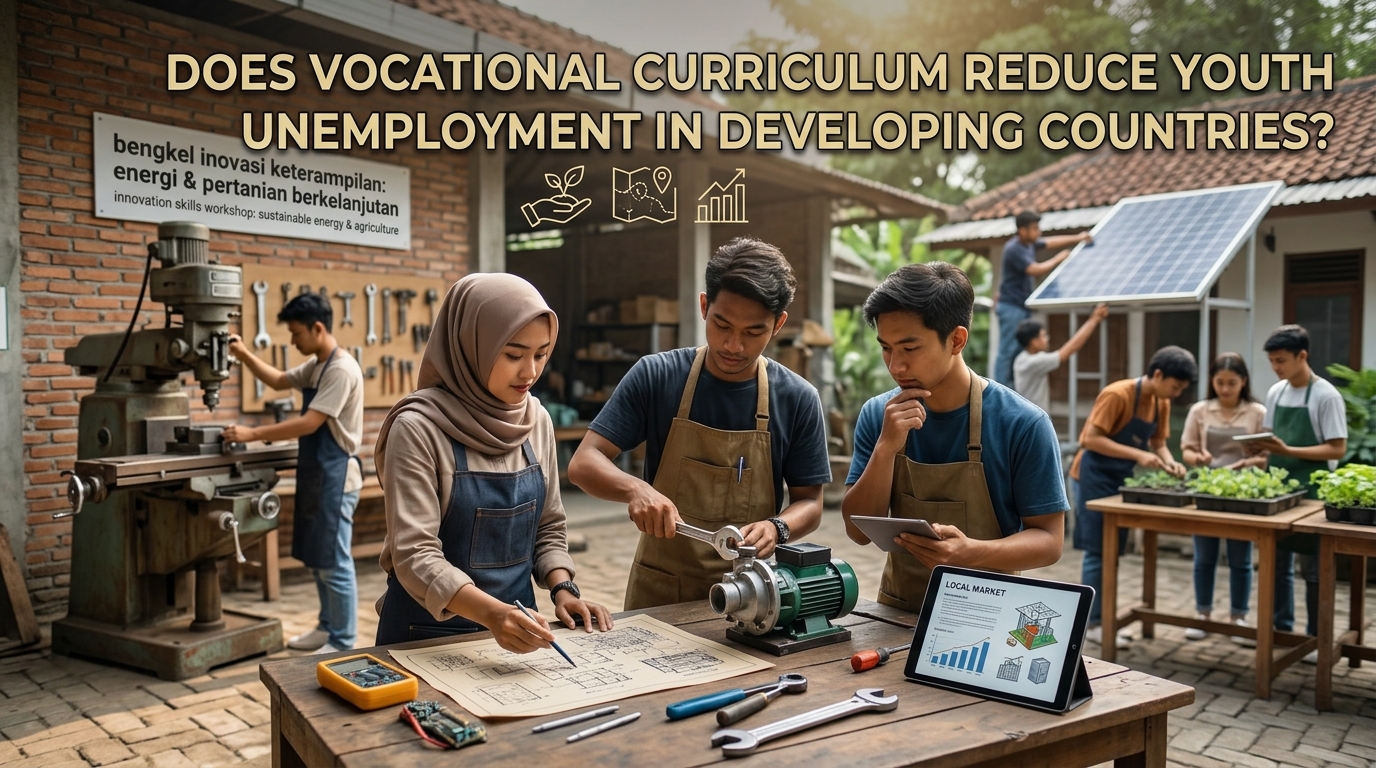
Youth unemployment remains a critical economic challenge across many developing nations today. Many young graduates struggle to secure meaningful jobs right after completing their formal education. To bridge this gap, governments are increasingly adopting a vocational curriculum to equip students with practical and job-ready skills.
This educational approach shifts the focus from purely academic theory to hands-on technical training. By directly aligning school coursework with current industry demands, developing countries hope to prepare their workforce more effectively. This transition plays a essential role in boosting national productivity and reducing overall youth jobless rates.
THE GAP BETWEEN TRADITIONAL EDUCATION AND INDUSTRY DEMANDS
Traditional academic education often focuses heavily on theoretical knowledge rather than practical execution. As a result, many university graduates enter the job market without the specific technical skills that modern employers actively seek. This widespread mismatch creates a frustrating situation where companies face severe skill shortages while millions of educated youths remain completely unemployed.
Vocational training solves this issue by offering targeted programs designed around real-world industry requirements. Students gain direct experience using modern tools, machinery, and software commonly used in corporate and industrial settings. Consequently, graduates transition into the workforce much faster and require significantly less on-boarding training from potential employers.
HOW VOCATIONAL CURRICULUM EMPOWERS THE YOUTH
A well-structured vocational curriculum empowers young individuals by giving them immediate, marketable skills for specific career paths. Programs focusing on areas like digital technology, automotive repair, healthcare, and hospitality open up immediate income-generating opportunities. This practical empowerment boosts personal confidence and significantly increases long-term job stability for young professionals.
Furthermore, vocational education actively fosters an entrepreneurial mindset among young learners in developing economies. Instead of relying solely on existing corporate job openings, skilled graduates often start their own local businesses and small enterprises. This self-reliance creates additional employment opportunities for others in the community, accelerating localized economic growth.
CHALLENGES IN IMPLEMENTING EFFECTIVE VOCATIONAL EDUCATION
Despite its undeniable benefits, implementing a high-quality vocational curriculum in developing countries comes with significant obstacles. Many vocational institutes suffer from outdated facility equipment, poorly trained instructors, and limited government funding. Without modern infrastructure, schools struggle to teach contemporary industrial practices effectively.
Additionally, a strong cultural preference for traditional university degrees still persists in many developing societies. Vocational pathways are sometimes wrongfully viewed as a secondary or inferior choice compared to academic education. Overcoming this negative social perception requires continuous awareness campaigns and strong public-private partnerships.
THE STRATEGIC ROLE OF PUBLIC PRIVATE PARTNERSHIPS
To maximize the impact of vocational education, strong collaboration between government bodies and private companies is absolute essential. Private companies can actively participate by helping design relevant course syllabi and offering direct apprenticeship opportunities. This direct involvement guarantees that classroom learning always matches real-world workplace needs.
In addition, corporate sponsorship can provide necessary funding and state-of-the-art equipment for vocational institutions. Internship programs allow students to experience real workplace environments before graduation, dramatically improving their overall employability. Successful public-private partnerships ultimately create a reliable pipeline of qualified, industry-ready talent.
CONCLUSION
In conclusion, implementing a targeted vocational curriculum is a highly effective strategy to combat youth unemployment in developing countries. By directly aligning educational standards with market needs, vocational training bridges the critical skill gap and fosters sustainable economic growth. Although challenges like outdated infrastructure and social stigma remain, continuous investment and strong industry partnerships can unleash the full potential of the young generation.
Recent Posts

Bagaimana Sistem SKS pada Program Kuliah... 22.11.2026/54 View

How Does Technology Make Daily Evaluation... 21.11.2026/83 View

Apa Strategi Menghadapi Kesenjangan antara Kompetensi... 21.11.2026/82 View

Mengapa Inventaris Aset Penting bagi Kelancaran... 21.11.2026/78 View

When Should Musicians Join a Record... 21.11.2026/84 View
