

How Are Academic Portals Supporting Digital Transformation in Universities?
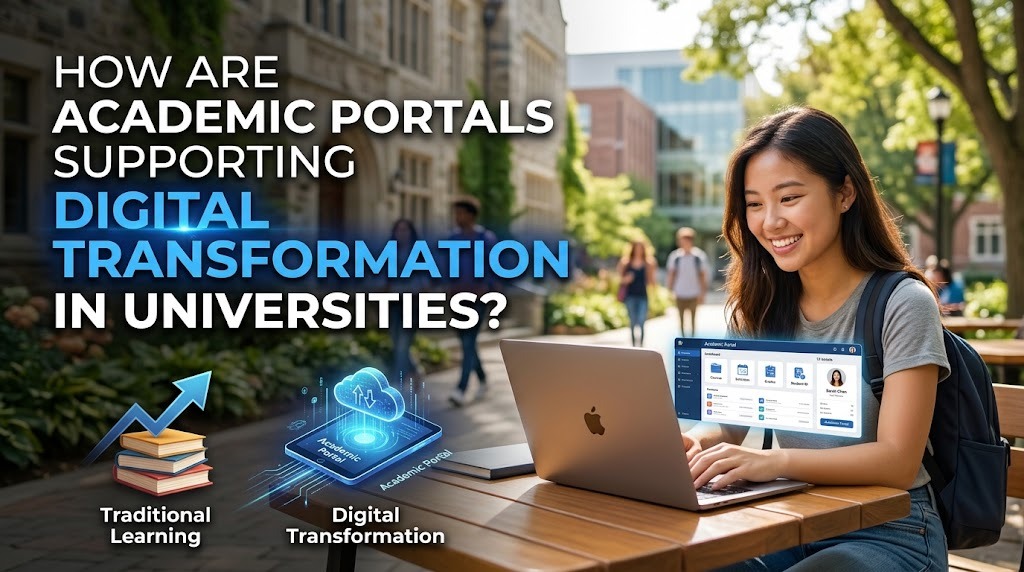
Digital technology is changing how universities deliver educational services and manage administrative activities. Many institutions now use an academic portal to provide students, lecturers, and university staff with access to academic information through a centralized online platform. This approach can reduce dependence on paper-based procedures and make important services more accessible.
Academic portals support digital transformation in universities by connecting academic information, simplifying administrative processes, and improving communication among campus communities. When integrated with other university systems, these platforms can also support data management and more informed decision-making. Their effectiveness, however, depends on reliable technology, accurate information, user accessibility, and appropriate security measures.
CENTRALIZING ACADEMIC INFORMATION AND SERVICES
One important contribution of an academic portal to digital transformation is the centralization of academic information. Students can often access class schedules, grades, course registration details, academic calendars, and university announcements through a single platform. This reduces the need to obtain information from multiple offices or separate sources.
Centralized access can also help lecturers and administrative staff find relevant academic information more efficiently. Depending on the system's features, users may access teaching schedules, student records, course information, and administrative services through the same interface. When information is properly maintained, this approach can improve consistency and help users complete routine academic tasks with fewer unnecessary steps.
DIGITALIZING CAMPUS ADMINISTRATIVE PROCEDURES
Traditional university administration may involve printed forms, manual recordkeeping, and repeated visits to administrative offices. An academic portal can help digitalize these processes by allowing students to complete certain procedures online, such as registering for courses, checking enrollment status, submitting academic requests, or accessing selected documents.
Digital procedures can reduce repetitive work and make administrative services more convenient. University staff may also spend less time handling routine inquiries when students can find the necessary information independently. However, not every procedure can be fully automated. Some requests may still require document verification, formal approval, or direct communication with authorized university personnel.
IMPROVING COMMUNICATION AND ACCESSIBILITY
Effective communication is essential for a university's digital transformation. An academic portal can provide a consistent channel for publishing official announcements, sharing academic updates, and communicating changes to schedules or administrative requirements. Students can use the platform to stay informed without relying exclusively on printed notices or in-person announcements.
Digital access can also make university services more convenient for students who have difficulty visiting campus offices during working hours. Depending on the platform, students may be able to review information outside normal office hours and access services from different locations. To ensure that these benefits reach all users, universities should consider accessibility, mobile compatibility, internet limitations, and the availability of alternative support channels.
SUPPORTING DATA-DRIVEN ACADEMIC MANAGEMENT
Digital transformation involves more than moving existing documents online. Universities also need reliable information to evaluate their processes and make informed decisions. An academic information system can help organize enrollment records, course information, academic progress, and other relevant data in a more structured format.
When properly managed, this information can support administrative reporting, resource planning, and the identification of recurring operational problems. For example, authorized staff may review course enrollment patterns to help plan class capacity or identify administrative processes that frequently require correction. However, data-based decisions are only as reliable as the information being collected. Universities must maintain data accuracy, control access, and interpret reports responsibly.
STRENGTHENING SECURITY AND SYSTEM INTEGRATION
As universities rely more heavily on digital services, academic portal security becomes an essential part of digital transformation. Academic systems may contain personal details, grades, enrollment information, and other sensitive records. Universities therefore need suitable authentication methods, access permissions, software maintenance, and procedures for responding to security incidents.
Integration with other university systems can also improve the digital experience. An academic portal may connect with a Student Information System, learning management system, library platform, or financial service, depending on the institution's infrastructure. Such integration can reduce duplicated data entry and make information easier to access. However, connected systems must be designed carefully to protect privacy, maintain reliable data exchange, and ensure that technical problems in one service do not unnecessarily disrupt other services.
CONCLUSION
Academic portals support digital transformation in universities by centralizing information, digitalizing administrative procedures, improving communication, supporting data-based management, and connecting academic services. These functions can help students access information more conveniently while allowing lecturers and university staff to manage their responsibilities more efficiently.
Successful digital transformation requires more than providing an online portal. Universities must also maintain accurate records, protect user information, improve accessibility, train users, and provide reliable technical support. With effective implementation and continuous evaluation, academic portals can become an important part of a more connected, accessible, and organized university environment.
Recent Posts

Bagaimana Sistem SKS pada Program Kuliah... 22.11.2026/56 View

How Does Technology Make Daily Evaluation... 21.11.2026/86 View

Apa Strategi Menghadapi Kesenjangan antara Kompetensi... 21.11.2026/84 View

Mengapa Inventaris Aset Penting bagi Kelancaran... 21.11.2026/82 View

When Should Musicians Join a Record... 21.11.2026/86 View
