

How Are Production Staff Performance Levels Measured?
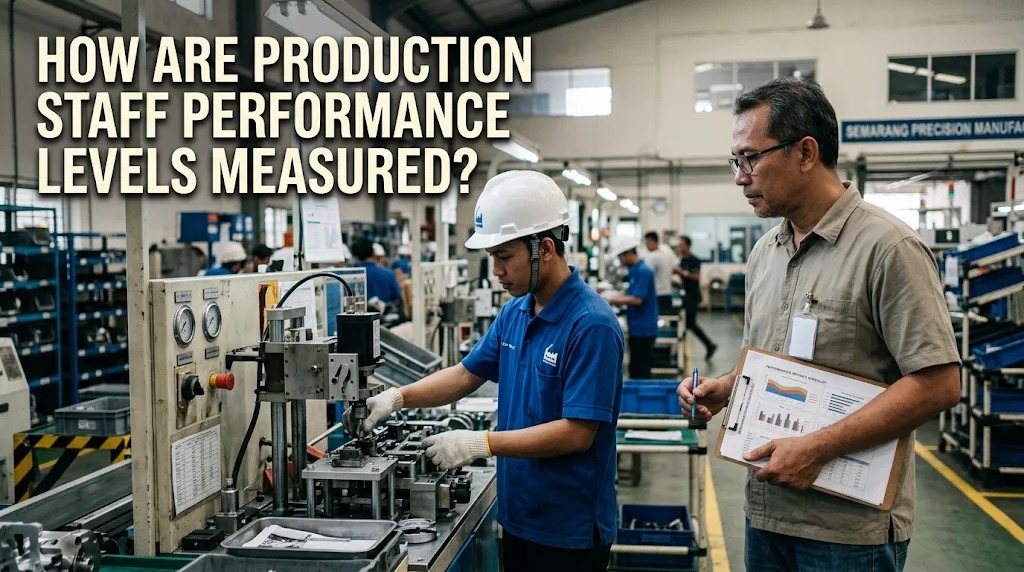
Measuring production staff performance is important for understanding how effectively employees complete their responsibilities in the manufacturing industry. Companies need to evaluate employee performance to ensure that production targets, quality standards, and operational requirements are achieved. Performance assessments also help identify areas that require improvement and recognize employees who consistently perform well. By using clear performance indicators, companies can maintain productivity and develop a more professional workforce.
MEASURING DAILY PRODUCTION OUTPUT
One common way to measure production staff performance is by evaluating daily production output. This indicator shows how much work employees complete within a specific period. Companies can compare actual production results with established targets to determine whether employees meet expected performance levels. Consistent output indicates that production activities are being managed effectively.
Production staff may be evaluated based on completed tasks, production quantities, and their ability to meet assigned deadlines. However, output should not be measured only by the number of products manufactured. Companies must also consider product quality and the resources used during production. Combining these factors provides a more accurate picture of employee performance.
EVALUATING PRODUCT QUALITY AND ACCURACY
Product quality is another important indicator used to assess production staff performance. Employees must complete their responsibilities according to established specifications and manufacturing procedures. Companies can evaluate performance by reviewing the number of defective products, inspection results, and errors recorded during production. A low defect rate generally indicates that employees are maintaining proper work standards.
Accuracy is particularly important because small mistakes can affect the final product and create additional production costs. Production staff should follow standard operating procedures, check important information, and report irregularities immediately. Quality control reports can help supervisors identify recurring problems and determine whether additional training is necessary. Maintaining consistent quality demonstrates responsibility and attention to detail.
MONITORING WORKING TIME AND DISCIPLINE
Working time and discipline can also be used to measure employee performance. Companies generally expect production staff to arrive on time, follow assigned schedules, and complete tasks within established deadlines. Employees who manage their time effectively can help maintain a stable production workflow. Regular attendance and consistent work habits also support team coordination.
Supervisors may review attendance records, punctuality, task completion times, and compliance with workplace regulations. However, evaluation should consider the nature of each employee's responsibilities and any operational factors beyond their control. Production delays caused by machine breakdowns or material shortages should not automatically be treated as individual performance failures. Fair assessment requires accurate information and clear evaluation standards.
ASSESSING COMPLIANCE WITH STANDARD OPERATING PROCEDURES
Standard Operating Procedures (SOPs) provide guidelines for completing production activities correctly and consistently. Production staff are expected to understand and follow these instructions when handling materials, monitoring processes, and recording information. Compliance helps prevent mistakes, maintain product quality, and protect workplace safety. Therefore, companies often include SOP compliance in employee performance evaluations.
Supervisors can assess compliance through workplace observations, internal audits, and production records. They may check whether employees follow the correct procedures and use equipment according to company instructions. Repeated violations may indicate a need for additional supervision or training. Employees who consistently follow established procedures demonstrate professionalism and responsibility.
EVALUATING TEAMWORK AND COMMUNICATION
Production staff rarely work independently because manufacturing activities involve cooperation between different employees and departments. Good communication helps ensure that production instructions, material requirements, and operational updates are shared accurately. Companies can evaluate teamwork by observing how employees cooperate, exchange information, and support coworkers. Strong collaboration helps reduce misunderstandings and maintain efficient production activities.
Supervisors may collect feedback from team members and evaluate how employees respond to instructions or workplace problems. Employees should be able to communicate difficulties clearly and contribute to practical solutions. They should also respect different responsibilities and maintain professional relationships with coworkers. Effective teamwork is an important indicator of performance because individual results often influence the success of the entire production team.
CHECKING WORKPLACE SAFETY COMPLIANCE
Workplace safety is an important part of production staff performance because manufacturing activities may involve machinery, chemicals, and other potential hazards. Employees must follow safety regulations, wear appropriate protective equipment, and maintain clean working areas. Ignoring safety procedures can lead to accidents, equipment damage, and production interruptions. Companies therefore evaluate whether employees demonstrate safe working behavior.
Safety performance can be assessed through workplace inspections, incident reports, and compliance observations. Supervisors may also review employee participation in safety training and their willingness to report potential hazards. Employees should understand that maintaining safety is part of their daily responsibilities. Consistent compliance helps protect the workforce and supports reliable manufacturing operations.
MEASURING RESOURCE AND MATERIAL EFFICIENCY
Production staff performance can also be evaluated by examining how effectively employees use available resources. Materials, equipment, energy, and working time must be managed carefully to prevent unnecessary waste. Companies may compare material consumption with production output to identify inefficiencies. Lower material losses and responsible resource usage can indicate effective work practices.
Employees should follow material handling instructions, avoid unnecessary consumption, and report damaged supplies or equipment problems. Production records and inventory reports can help supervisors monitor resource usage. However, evaluations must consider material quality, production complexity, and other factors that may influence consumption. Efficient resource management helps companies control costs while maintaining production standards.
USING KEY PERFORMANCE INDICATORS FOR EVALUATION
Key Performance Indicators (KPIs) provide measurable standards for evaluating production staff performance. Companies can use KPIs to assess productivity, quality, attendance, safety compliance, and task completion. These indicators help supervisors compare actual results with established expectations. Clear performance measurements also make employee evaluations more objective and consistent.
The selected KPIs should match the responsibilities of each position. For example, production administrators may be assessed based on report accuracy and document completion, while operators may be evaluated through output, quality, and machine operation standards. Companies should review KPI results regularly and provide feedback to employees. Using appropriate indicators helps identify strengths, weaknesses, and opportunities for professional development.
CONCLUSION
Production staff performance levels are measured through several indicators, including production output, product quality, working discipline, SOP compliance, teamwork, workplace safety, and resource efficiency. Companies can combine performance records, direct observations, and measurable KPIs to evaluate employees more accurately. Fair assessments should also consider the responsibilities of each position and operational conditions beyond individual control. By conducting regular evaluations and providing constructive feedback, companies can improve employee performance and maintain efficient manufacturing operations.
Recent Posts

How Does Technology Make Daily Evaluation... 21.11.2026/56 View

Apa Strategi Menghadapi Kesenjangan antara Kompetensi... 21.11.2026/58 View

Mengapa Inventaris Aset Penting bagi Kelancaran... 21.11.2026/52 View

When Should Musicians Join a Record... 21.11.2026/53 View

Daily Evaluation or Daily Planning Which... 21.11.2026/60 View
