

How Are Regional Languages Connected to Traditional Customs and Culture?
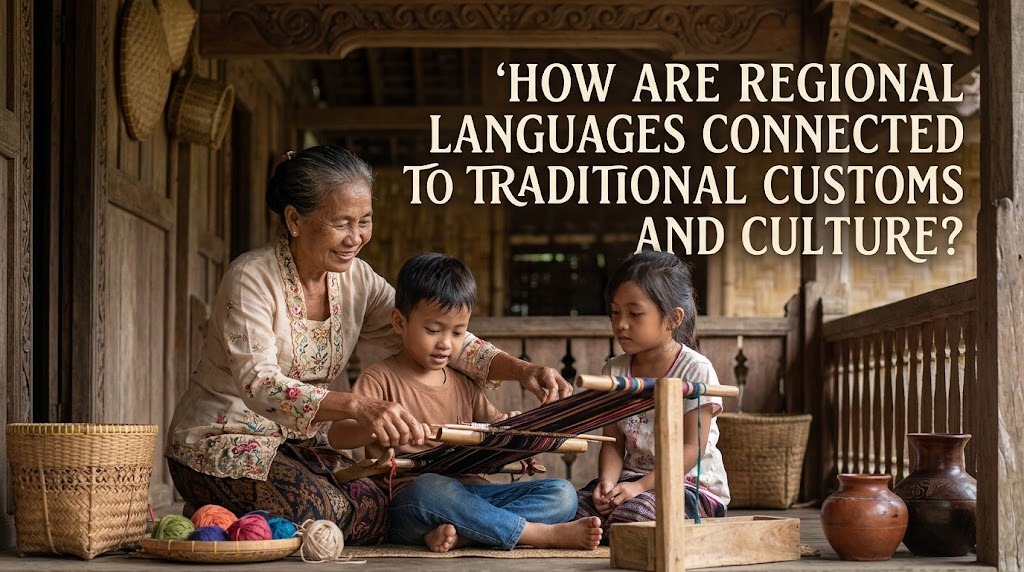
Regional languages are closely connected to the customs, traditions, and cultural identity of communities. In Indonesia, each region has its own linguistic characteristics that reflect its history, social relationships, beliefs, and ways of life. Regional languages are used in traditional ceremonies, folk stories, songs, and daily interactions that pass cultural knowledge from one generation to another. A regional language is not merely a tool for communication but also a medium for preserving cultural heritage. Understanding this connection helps people recognize why regional languages deserve to be protected as society continues to change.
REGIONAL LANGUAGES PRESERVE CULTURAL VALUES
Regional languages contain words, expressions, and sayings that reflect the values of the communities that use them. Traditional proverbs often communicate lessons about respect, cooperation, honesty, responsibility, and relationships between generations. These expressions may carry meanings that are difficult to translate fully into another language because they are rooted in local experiences. By learning regional languages, people can better understand the ideas and principles that shape their communities. Language helps preserve cultural values by carrying them through everyday communication and traditional teachings.
Many cultural values are taught informally through conversations with parents, grandparents, elders, and community leaders. For example, certain expressions may be used to show respect when speaking to older people or addressing individuals with particular social roles. The appropriate choice of words can communicate politeness, familiarity, or respect for social relationships. When younger generations stop learning these expressions, they may lose access to some of the cultural meanings associated with them. Preserving regional languages therefore also helps maintain important traditions of communication.
THE ROLE OF REGIONAL LANGUAGES IN TRADITIONAL CEREMONIES
Traditional ceremonies often use regional languages to communicate prayers, advice, blessings, and symbolic messages. Weddings, harvest celebrations, community gatherings, and other customary events may include speeches, songs, or ritual expressions in a local language. These words can have special meanings because they have been passed down through generations and are connected to established cultural practices. Understanding the language helps participants appreciate the significance of the ceremony rather than simply observing its outward activities. Regional languages help maintain the meaning and continuity of traditional ceremonies.
In some communities, particular expressions are traditionally spoken by elders, ceremonial leaders, or other people with specific responsibilities. These expressions may explain family relationships, community obligations, hopes for the future, or the importance of maintaining harmony. If the language becomes unfamiliar to younger participants, the meaning of these traditions may become harder to understand. Communities can address this challenge by documenting traditional expressions and teaching their meanings to younger generations. Such efforts help ensure that cultural ceremonies remain meaningful while adapting appropriately to changing circumstances.
FOLK STORIES AND ORAL TRADITIONS
Folk stories are an important way communities preserve history, imagination, and cultural knowledge. Regional languages allow storytellers to use distinctive expressions, humor, metaphors, and descriptions that reflect local life. Stories may explain the origins of a place, teach moral lessons, or describe relationships between people and their natural surroundings. When these stories are told in their original languages, listeners can experience cultural details that may be reduced or changed through translation. Preserving the language of oral traditions helps protect both the stories and the cultural perspectives they contain.
Parents, grandparents, teachers, and community elders can introduce children to folk tales through storytelling sessions. Schools and cultural organizations can also record stories with the permission of the storytellers and make them available as educational materials. Written versions, audio recordings, and videos can help preserve stories that might otherwise become less familiar to younger generations. However, documentation should respect the original storytellers and recognize that different communities may have different versions of the same story. Through these efforts, oral traditions can continue to inspire and educate future generations.
REGIONAL LANGUAGES IN TRADITIONAL MUSIC AND DANCE
Traditional music and dance frequently incorporate regional languages through lyrics, chants, poetry, and spoken introductions. Songs can describe local landscapes, historical events, relationships, community values, and celebrations. The words often fit particular rhythms and melodies, making the language an essential part of the performance. Understanding the lyrics can help audiences appreciate the message and cultural context behind the music. Regional languages give many traditional performances their distinctive identity and meaning.
Dance performances may also include songs or spoken expressions that explain the story being presented. These elements can help communicate the purpose of a ritual, celebration, or theatrical tradition. When performers and audiences understand the language, the cultural message becomes easier to recognize and pass on. Schools and cultural groups can support preservation by teaching traditional songs, explaining their vocabulary, and inviting knowledgeable performers to share their skills. These activities allow young people to experience regional languages through creative and memorable forms of cultural expression.
LANGUAGE AND LOCAL CUSTOMS IN DAILY LIFE
The connection between regional languages and culture is not limited to formal ceremonies or artistic performances. Everyday conversations can reflect customs involving greetings, hospitality, family relationships, community cooperation, and respect for older people. Some languages have different words or expressions depending on a person's age, social relationship, or the situation in which they are speaking. Learning these differences helps people understand local expectations and communicate appropriately. Daily language use keeps cultural traditions alive through ordinary interactions.
Markets, neighborhood gatherings, family meals, and community activities provide natural opportunities to use regional languages. In these settings, people exchange local knowledge, discuss customs, and maintain relationships through familiar expressions. When families consistently use their regional language, children can learn cultural practices alongside vocabulary and pronunciation. If communication increasingly shifts to other languages, some traditional expressions may be used less frequently. Encouraging regular conversations in regional languages can help communities maintain both linguistic skills and cultural connections.
PASSING CULTURAL HERITAGE TO FUTURE GENERATIONS
Regional languages can survive when younger generations have opportunities to learn and use them. Families can introduce children to local stories, songs, greetings, and expressions from an early age. Schools can support this process through regional language lessons, cultural projects, traditional performances, and cooperation with local communities. Digital tools can also help record vocabulary, oral histories, and traditional practices for educational purposes. Passing regional languages to children is an important step in protecting the cultural knowledge connected to them.
Preservation efforts should make learning enjoyable and relevant rather than treating regional languages as relics of the past. Young people can create videos, digital stories, podcasts, and creative performances using their local languages. Community elders can guide these projects by explaining cultural meanings and correcting language use when necessary. It is also important to recognize that languages and cultures can change naturally over time while retaining meaningful connections to their history. By combining family participation, education, and creative activities, communities can help ensure that their cultural heritage remains accessible to future generations.
CONCLUSION
Regional languages are closely connected to traditional customs and culture because they preserve cultural values, support ceremonies, carry oral traditions, and enrich music, dance, and everyday communication. They also help younger generations understand the experiences and knowledge of their ancestors. Protecting regional languages means protecting an important part of a community's cultural heritage. Families, schools, cultural organizations, and local communities can work together to encourage language use and pass traditional knowledge to future generations. With consistent support, regional languages can remain meaningful parts of modern life while preserving the traditions that make each community distinctive.
Recent Posts

Bagaimana Sistem SKS pada Program Kuliah... 22.11.2026/49 View

How Does Technology Make Daily Evaluation... 21.11.2026/76 View

Apa Strategi Menghadapi Kesenjangan antara Kompetensi... 21.11.2026/78 View

Mengapa Inventaris Aset Penting bagi Kelancaran... 21.11.2026/74 View

When Should Musicians Join a Record... 21.11.2026/78 View
