

How Are Regional Languages Used in Traditional Ceremonies in Indonesia?
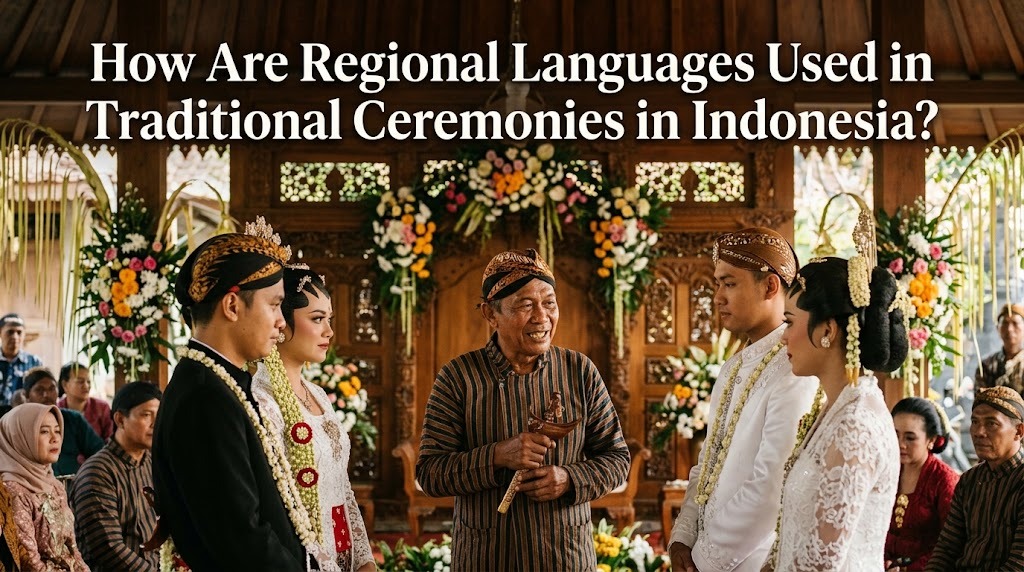
Indonesia is known for its cultural diversity, which can be seen in its traditional ceremonies, customs, music, and regional languages. Across the country, communities use local languages to express respect, communicate symbolic meanings, and pass cultural knowledge from one generation to another. Regional languages often appear in wedding rituals, traditional performances, harvest celebrations, and other important community events. Their use helps participants understand the values and history associated with each ceremony. Regional languages are more than communication tools because they preserve the cultural meanings behind Indonesia's traditional ceremonies.
REGIONAL LANGUAGES IN TRADITIONAL WEDDINGS
Traditional weddings in Indonesia often include regional languages in speeches, advice, blessings, and ceremonial expressions. Family members, elders, or customary leaders may use local languages to welcome guests and communicate messages to the bride and groom. These expressions can represent respect for parents, responsibility within marriage, and the importance of maintaining family relationships. The language used may also reflect the customs of a particular ethnic community. Regional languages help communicate the cultural values and family traditions associated with marriage ceremonies.
In Javanese weddings, for example, certain traditional expressions may appear in ceremonial speeches and panggih, a customary meeting between the bride and groom. In other communities, local languages may be used to deliver blessings, explain symbolic actions, or welcome relatives from different areas. The exact words and practices can vary according to local customs and family preferences. Understanding these expressions allows participants to appreciate the ceremony beyond its visible rituals. Teaching their meanings to younger generations can help preserve both the language and the traditions connected to it.
USING REGIONAL LANGUAGES IN RELIGIOUS AND CUSTOMARY RITUALS
Regional languages are used in various religious and customary ceremonies throughout Indonesia. Depending on the community and tradition, local languages may appear in prayers, spoken blessings, ceremonial instructions, or messages delivered by elders. These expressions can communicate hopes for safety, prosperity, harmony, and well-being. In some settings, particular words are traditionally associated with specific stages of a ritual. Using regional languages can help preserve the symbolic meaning and cultural context of customary ceremonies.
The role of regional languages differs across communities and religious traditions. Some ceremonies combine local expressions with Indonesian or other languages, while others follow established linguistic practices. The choice of language may depend on the purpose of the ceremony, the people leading it, and the preferences of participants. Recording and explaining traditional expressions can help younger people understand their significance. Such documentation should be carried out respectfully, especially when the words are considered sacred or are intended only for particular ceremonial settings.
REGIONAL LANGUAGES IN HARVEST AND COMMUNITY CELEBRATIONS
Agricultural communities may use regional languages during harvest celebrations and rituals connected to farming. Traditional speeches, songs, chants, and expressions can communicate gratitude, cooperation, and hopes for future harvests. These activities often reflect the close relationship between communities, their environment, and their sources of livelihood. The vocabulary used may include traditional terms for crops, farming activities, seasonal changes, and community responsibilities. Regional languages preserve local knowledge about agriculture and the customs associated with community life.
Different regions have their own forms of harvest celebrations and agricultural traditions. Some events may involve communal meals, performances, processions, or speeches by community leaders. Local languages help participants share stories about farming practices and explain the meanings behind ceremonial activities. Younger generations can learn this vocabulary by participating in the events and speaking with experienced community members. Through these interactions, traditional expressions remain connected to the activities and knowledge that gave them meaning.
REGIONAL LANGUAGES IN TRADITIONAL MUSIC AND PERFORMANCES
Traditional music and performances often rely on regional languages to communicate stories, emotions, and cultural messages. Songs may describe historical events, local legends, family relationships, or community values. Performers can use distinctive expressions and poetic forms that are closely associated with their language and cultural background. Audiences who understand the words may gain a deeper appreciation of the performance's meaning. Regional languages give many traditional songs and performances their distinctive cultural identity.
For example, traditional Javanese performances may include Javanese dialogue or songs, while performances in other regions may feature local languages and musical traditions. Regional-language poetry, chants, and spoken introductions can also explain the purpose of a performance or the story being presented. However, the exact language used depends on the art form and the community that maintains it. Schools and cultural organizations can help preserve these traditions by teaching the lyrics, explaining their meanings, and inviting experienced performers to share their knowledge. These activities make cultural learning more engaging for younger audiences.
PASSING TRADITIONAL KNOWLEDGE THROUGH ORAL COMMUNICATION
Many traditional ceremonies depend on knowledge passed orally from one generation to another. Elders and customary leaders may teach younger participants the correct expressions, ceremonial greetings, stories, and instructions associated with particular events. Regional languages help preserve details that may be difficult to communicate fully through translation alone. They can also maintain the connection between a ceremony and the community's historical experiences. Oral communication in regional languages helps keep traditional knowledge alive across generations.
Families and communities can support this process by encouraging children to attend appropriate cultural events and learn from experienced speakers. Schools may invite cultural practitioners to explain the vocabulary and background of local ceremonies. Audio recordings, videos, and written materials can supplement this learning when created with the permission of the people involved. It is important to recognize that not every ceremonial expression should be shared publicly, since some traditions contain private or sacred knowledge. Respectful teaching and documentation help protect both cultural heritage and community rights.
PRESERVING REGIONAL LANGUAGES THROUGH CULTURAL ACTIVITIES
Traditional ceremonies create meaningful opportunities for people to hear and use regional languages in real situations. When participants speak local languages during speeches, songs, and customary activities, they help keep traditional expressions familiar. However, some younger people may understand only part of the language used in these events. Explaining important words and their cultural meanings can help them participate more confidently. Combining traditional ceremonies with language education can strengthen both linguistic skills and cultural appreciation.
Communities can organize storytelling sessions, cultural workshops, language classes, and traditional performances to encourage younger generations to learn. Digital recordings and educational materials can also preserve examples of ceremonial language for future study. These efforts should involve native speakers and respect differences between local language varieties. Most importantly, regional languages need to be used beyond occasional celebrations, including in family conversations and community interactions. Regular use helps ensure that the language remains a living part of cultural identity rather than only a ceremonial symbol.
CONCLUSION
Regional languages are used in traditional ceremonies in Indonesia to deliver blessings, communicate cultural values, support music and performances, and pass knowledge between generations. Their meanings are closely connected to the history, beliefs, and customs of individual communities. Preserving the language used in traditional ceremonies also helps protect the cultural knowledge and identity associated with those practices. Families, schools, cultural organizations, and community leaders can work together to teach younger generations these expressions. Through respectful participation, documentation, and everyday language use, Indonesia's regional languages can continue to enrich traditional ceremonies in the future.
Recent Posts

Bagaimana Sistem SKS pada Program Kuliah... 22.11.2026/49 View

How Does Technology Make Daily Evaluation... 21.11.2026/77 View

Apa Strategi Menghadapi Kesenjangan antara Kompetensi... 21.11.2026/78 View

Mengapa Inventaris Aset Penting bagi Kelancaran... 21.11.2026/74 View

When Should Musicians Join a Record... 21.11.2026/79 View
