

How Are Safety and Quality Standards Maintained in Laboratories?
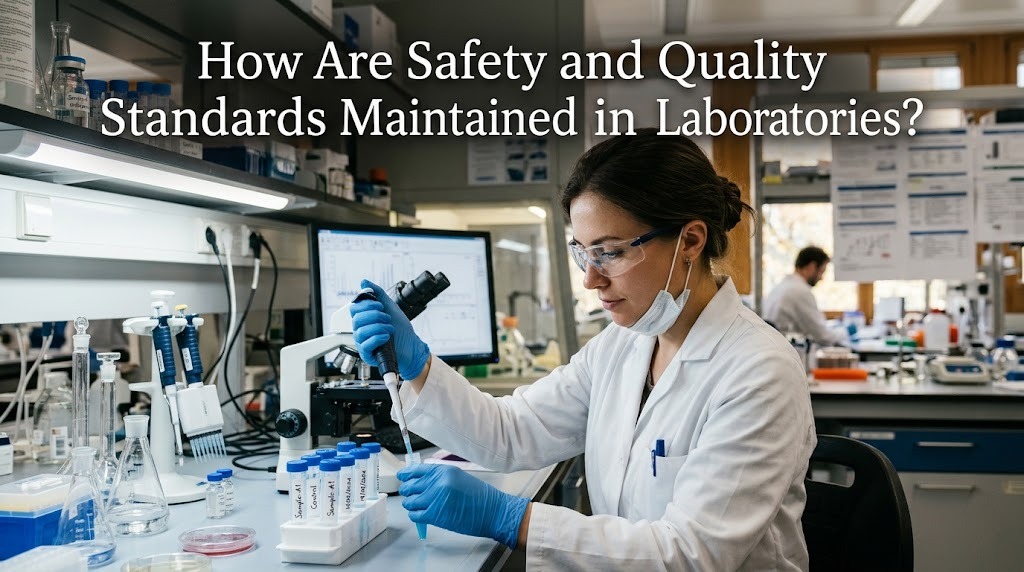
Laboratories must maintain strict safety and quality standards to ensure that every testing process is reliable, accurate, and safe. These standards are important because laboratory activities often involve biological samples, chemicals, specialized equipment, and potentially hazardous materials. Without proper procedures, workers may face health risks, while testing results may become inaccurate or unreliable.
Maintaining laboratory safety and quality requires more than simply following written rules. It involves trained personnel, suitable equipment, clean working environments, proper sample handling, and regular evaluations. Every stage of laboratory work must follow established procedures to reduce errors and protect everyone involved.
UNDERSTANDING LABORATORY SAFETY AND QUALITY STANDARDS
Laboratory safety standards are rules and procedures designed to protect workers, visitors, patients, and the surrounding environment from potential hazards. These standards cover activities such as handling chemicals, collecting samples, operating equipment, storing materials, and disposing of laboratory waste. Their main purpose is to prevent accidents, contamination, exposure to harmful substances, and other workplace risks.
Meanwhile, laboratory quality standards focus on ensuring that testing procedures produce accurate, consistent, and dependable results. Quality involves every stage of the testing process, starting from sample collection and preparation to analysis and reporting. Both safety and quality are closely connected because unsafe working conditions can affect the reliability of laboratory activities.
IMPLEMENTING STANDARD OPERATING PROCEDURES
Standard Operating Procedures, commonly known as SOPs, are essential for maintaining consistent laboratory activities. These documents explain how specific tasks should be performed, including preparing samples, operating instruments, cleaning workspaces, and handling hazardous materials. Clear procedures help laboratory personnel understand their responsibilities and reduce mistakes caused by inconsistent practices.
SOPs must be written in a way that workers can understand and follow easily. Laboratories should also review and update these procedures whenever equipment, testing methods, regulations, or workplace conditions change. Personnel need to receive appropriate instructions before performing tasks that involve technical procedures or safety risks.
PROVIDING PROPER TRAINING FOR LABORATORY PERSONNEL
Qualified and well-trained personnel play an important role in maintaining laboratory safety and quality. Workers must understand how to use laboratory equipment, handle samples, identify potential hazards, and respond to emergencies. Proper training helps prevent mistakes that could affect test results or cause workplace accidents.
Training should not be limited to new employees. Experienced personnel also need regular updates about new technologies, revised safety procedures, and changes in laboratory standards. Practical exercises, supervision, and competency assessments can help ensure that workers apply their knowledge correctly during daily activities.
USING PERSONAL PROTECTIVE EQUIPMENT
Personal Protective Equipment, or PPE, helps protect laboratory personnel from exposure to hazardous materials. Common examples include laboratory coats, protective gloves, safety glasses, face shields, and appropriate footwear. The type of protection required depends on the materials being handled and the potential risks associated with each activity.
Laboratories must provide suitable protective equipment and ensure that workers understand how to use it properly. PPE should be worn when required, replaced when damaged, and removed carefully to avoid contamination. However, protective equipment should not be considered the only safety measure because proper procedures, ventilation, and engineering controls are also necessary.
MAINTAINING CLEAN AND ORGANIZED LABORATORY ENVIRONMENTS
A clean and organized laboratory helps prevent contamination and reduces the possibility of accidents. Work surfaces should be cleaned and disinfected according to the type of materials being handled. Equipment, chemicals, and samples must be stored in designated areas to prevent confusion, accidental exposure, or unwanted reactions.
Laboratory personnel should also maintain good housekeeping practices throughout their working hours. Spills must be managed using appropriate procedures, while waste should be separated according to its classification. Regular cleaning schedules and workplace inspections help ensure that the laboratory remains suitable for safe and reliable testing.
CALIBRATING AND MAINTAINING LABORATORY EQUIPMENT
Laboratory equipment must function correctly to produce dependable testing results. Instruments such as microscopes, centrifuges, balances, pipettes, and analytical machines require regular maintenance and calibration. Calibration helps determine whether an instrument provides measurements within established accuracy requirements.
Equipment maintenance is equally important because damaged or poorly maintained instruments can affect testing performance. Laboratories should keep maintenance records, calibration certificates, and inspection schedules. Instruments that do not meet required performance standards should be evaluated and should not be used for testing until the problem has been addressed.
APPLYING QUALITY CONTROL PROCEDURES
Quality control is a systematic process used to monitor laboratory performance and identify possible problems. It involves checking testing methods, equipment performance, reagents, and analytical results to ensure that they meet established requirements. Quality control materials with known values may be tested alongside patient or research samples to evaluate whether an analytical process is working properly.
When quality control results fall outside acceptable limits, laboratory personnel must investigate the cause before releasing affected results. Possible problems may involve equipment malfunction, expired reagents, incorrect procedures, or sample contamination. Consistent quality control helps laboratories detect errors early and maintain confidence in their testing processes.
FOLLOWING INTERNATIONAL LABORATORY STANDARDS
Laboratories may follow recognized international standards to strengthen their safety and quality management systems. One important example is ISO 15189, which establishes requirements for quality and competence in medical laboratories. It covers important aspects of laboratory operations, including personnel qualifications, equipment, testing processes, documentation, and result reporting.
Another relevant standard is ISO/IEC 17025, which focuses on the competence of testing and calibration laboratories. These standards provide structured requirements that laboratories can use to evaluate and improve their operations. However, the appropriate standard depends on the laboratory's activities, services, and applicable regulatory requirements.
HANDLING AND STORING SAMPLES CORRECTLY
Proper sample handling is essential because the condition of a sample can directly influence testing results. Samples must be collected, labeled, transported, and stored according to specific requirements. Incorrect storage temperatures, delayed processing, damaged containers, or unclear identification can lead to contamination or unreliable findings.
Laboratories should establish procedures to maintain sample integrity throughout the testing process. Each sample should have appropriate identification and documentation to prevent mix-ups. Personnel must also understand the storage conditions required for different sample types because blood, urine, tissue, and other materials may have different handling requirements.
MANAGING CHEMICALS AND BIOLOGICAL WASTE
Laboratories often handle chemicals, infectious materials, and other substances that require special management. Improper storage or disposal can create health hazards and environmental problems. Therefore, laboratories need clear procedures for identifying, labeling, storing, transporting, and disposing of hazardous materials.
Waste should be separated according to its characteristics and handled using approved disposal methods. Chemical waste, infectious waste, sharps, and ordinary waste should not be mixed carelessly. Personnel must receive training about waste management and emergency procedures to reduce the risk of exposure and contamination.
CONDUCTING REGULAR INSPECTIONS AND INTERNAL AUDITS
Regular inspections help laboratories identify safety risks and operational problems before they become serious. Inspections may examine workspace conditions, equipment performance, chemical storage, protective equipment, cleaning practices, and documentation. Findings should be recorded so that responsible personnel can take appropriate corrective action.
Internal audits provide a more systematic evaluation of whether laboratory activities follow established procedures and quality requirements. Auditors review records, observe work practices, and assess whether the laboratory management system operates effectively. The results can reveal weaknesses that need improvement and help laboratories maintain consistent performance.
PREVENTING CONTAMINATION DURING TESTING
Contamination can occur when unwanted substances enter a sample, testing instrument, or working environment. It may happen through improper sample handling, unclean equipment, poor storage, or contact between different materials. Contamination can affect analytical results and create potential risks for laboratory personnel.
To prevent these problems, laboratories use appropriate cleaning, disinfection, sterilization, and sample separation procedures. Some testing activities also require controlled environments, such as biosafety cabinets or designated clean workspaces. Personnel must follow the correct procedures for each activity rather than assuming that one method is suitable for every laboratory situation.
DOCUMENTING LABORATORY ACTIVITIES
Accurate documentation helps laboratories maintain accountability and traceability. Important records may include sample identification, testing procedures, equipment calibration, maintenance activities, quality control results, personnel training, and incident reports. These documents provide evidence that laboratory activities have been performed according to established requirements.
Good documentation also makes it easier to investigate problems and identify where errors may have occurred. Records should be clear, complete, accurate, and protected from unauthorized changes. Digital laboratory information systems can support this process by organizing data and improving access to relevant information.
RESPONDING TO LABORATORY ACCIDENTS AND EMERGENCIES
Even laboratories with strong safety systems must prepare for unexpected incidents. Accidents may involve chemical spills, broken glass, equipment failure, fires, or exposure to biological materials. Having clear emergency procedures helps personnel respond quickly and reduce the potential consequences.
Laboratories should provide accessible emergency equipment, appropriate warning systems, and clear evacuation routes. Workers need to understand how to report incidents and whom to contact when an emergency occurs. After an incident, the laboratory should investigate its causes and introduce improvements to reduce the likelihood of similar events happening again.
CONTINUOUSLY IMPROVING LABORATORY PERFORMANCE
Maintaining safety and quality standards is an ongoing responsibility rather than a one-time activity. Laboratories must regularly evaluate their procedures, review testing performance, and identify opportunities for improvement. Changes in technology, scientific knowledge, and regulatory requirements may also require adjustments to existing systems.
Continuous improvement can involve staff feedback, internal audits, external assessments, updated training, and the implementation of better testing methods. Laboratories should use evaluation results to address weaknesses and strengthen their management systems. This approach helps maintain reliable services while supporting a safer working environment.
CONCLUSION
Safety and quality standards in laboratories are maintained through proper procedures, trained personnel, protective equipment, equipment calibration, quality control, and regular inspections. Correct sample handling, waste management, documentation, and emergency preparation are also essential for preventing risks and maintaining reliable results.
By applying recognized standards and continuously improving their working systems, laboratories can protect personnel, reduce testing errors, and provide dependable results. A strong commitment to safety and quality ultimately supports better laboratory performance and greater confidence in the services provided.
Recent Posts

Bagaimana Sistem SKS pada Program Kuliah... 22.11.2026/46 View

How Does Technology Make Daily Evaluation... 21.11.2026/74 View

Apa Strategi Menghadapi Kesenjangan antara Kompetensi... 21.11.2026/75 View

Mengapa Inventaris Aset Penting bagi Kelancaran... 21.11.2026/72 View

When Should Musicians Join a Record... 21.11.2026/75 View
