

How Can a Vice Principal Build Strong Communication with Teachers and School Staff?
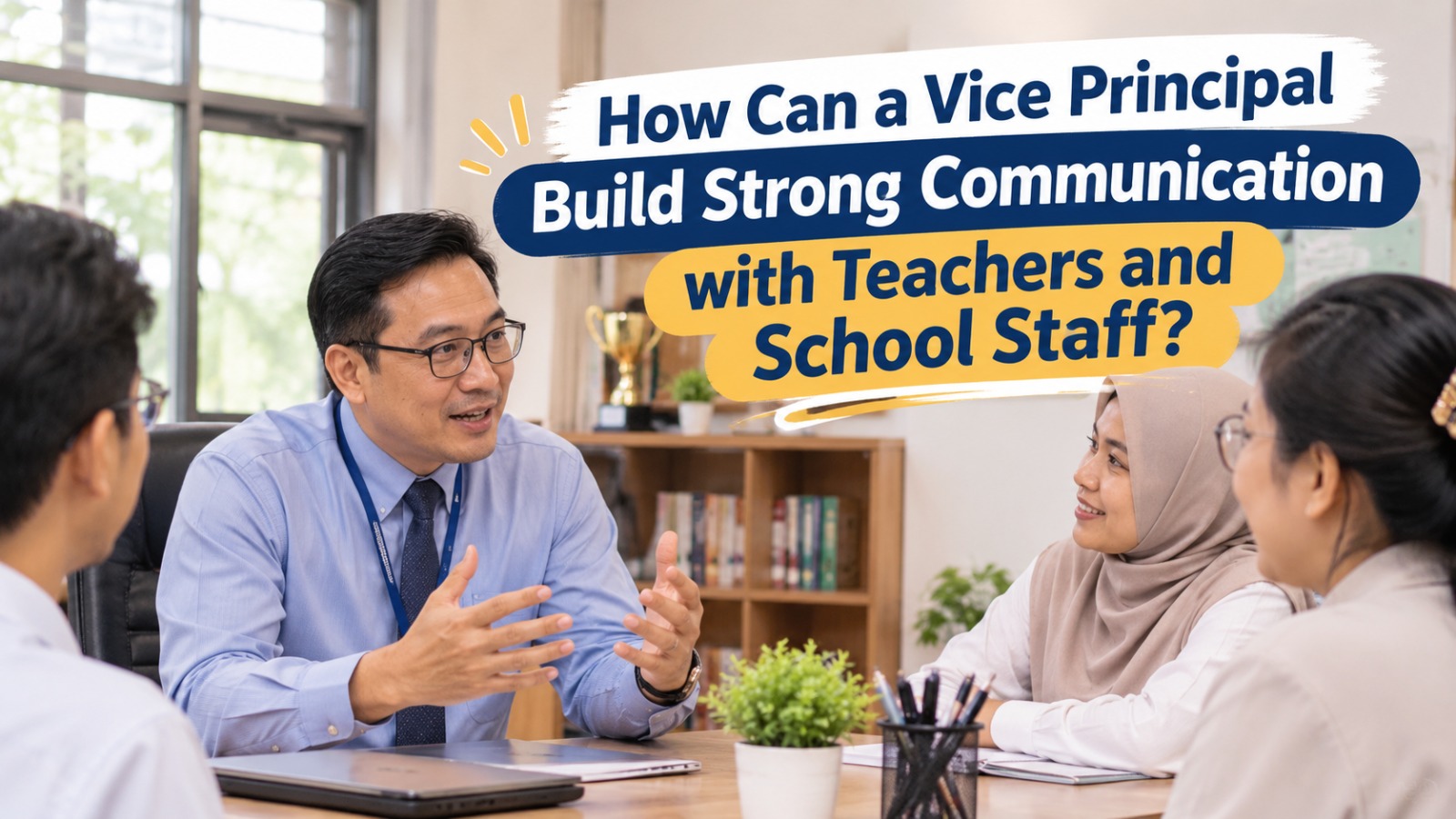
Strong communication is an essential part of effective school management. A vice principal needs to maintain good relationships with teachers and school staff to ensure that educational activities run smoothly and school objectives are achieved. Communication helps school leaders share information, coordinate responsibilities, solve problems, and make important decisions. Without clear communication, misunderstandings can occur and affect the quality of teaching and administrative activities. Therefore, a vice principal must develop effective communication strategies that encourage teamwork, mutual respect, and professional cooperation throughout the school community.
ESTABLISHING OPEN AND TRANSPARENT COMMUNICATION
One of the most effective ways for a vice principal to build strong communication is by creating an open and transparent communication environment. Teachers and school staff should feel comfortable sharing their opinions, asking questions, and discussing challenges related to their responsibilities. A vice principal needs to listen carefully and respond to their concerns without immediately judging or dismissing their opinions. This approach helps develop trust and makes employees feel valued as important members of the school community.
Transparency is also necessary when communicating school policies, academic schedules, administrative procedures, and organizational decisions. Teachers need accurate information to understand their responsibilities and prepare their activities properly. A vice principal should avoid providing unclear instructions or allowing important information to reach only certain individuals. By communicating information openly and consistently, school leaders can reduce misunderstandings and create a more supportive working environment.
ORGANIZING REGULAR MEETINGS AND PROFESSIONAL DISCUSSIONS
Regular meetings provide opportunities for a vice principal to communicate directly with teachers and school staff. These meetings can be used to discuss teaching activities, student development, academic programs, administrative responsibilities, and school improvement plans. Effective meetings allow every participant to understand current priorities and contribute ideas for solving problems. They also help ensure that important decisions are communicated to everyone involved.
However, meetings should have clear objectives and organized discussions so they do not waste participants' time. A vice principal can prepare an agenda, provide relevant information, and give teachers opportunities to share their experiences. For example, teachers can discuss classroom challenges and exchange strategies for improving student participation. Meeting results should also be summarized so that everyone understands the agreed decisions and follow-up responsibilities. This practice strengthens coordination and encourages professional collaboration.
DEVELOPING ACTIVE LISTENING AND MUTUAL RESPECT
Good communication is not only about delivering instructions but also about understanding other people's perspectives. A vice principal should practice active listening by giving full attention when teachers and staff express their opinions or concerns. Interrupting conversations, ignoring suggestions, or responding defensively can damage professional relationships. Instead, school leaders should ask relevant questions and provide thoughtful responses to understand the actual situation.
Mutual respect is equally important in maintaining positive workplace relationships. Teachers and administrative staff have different responsibilities, experiences, and professional challenges. A vice principal should appreciate these differences and treat everyone fairly, regardless of their position or length of service. When employees feel respected, they are more likely to communicate honestly and cooperate with school management. As a result, the school can develop a healthier working atmosphere based on trust and understanding.
PROVIDING CLEAR INSTRUCTIONS AND CONSTRUCTIVE FEEDBACK
Teachers and school staff need clear instructions to perform their responsibilities effectively. A vice principal should communicate tasks, expectations, deadlines, and work procedures in a simple and understandable manner. Clear communication reduces confusion and helps employees understand what they need to accomplish. Instructions should also be delivered through appropriate channels, such as meetings, official announcements, written documents, or school communication platforms.
In addition, constructive feedback helps teachers and staff improve their professional performance. A vice principal should provide feedback based on observations and relevant information rather than personal assumptions. For example, when a teacher experiences difficulties managing classroom activities, the vice principal can discuss possible improvements and suggest practical solutions. Feedback should recognize positive performance while identifying areas that need development. This balanced approach encourages employees to improve their abilities without feeling discouraged or embarrassed.
USING DIGITAL TECHNOLOGY TO IMPROVE SCHOOL COMMUNICATION
Technology can make communication between school leaders, teachers, and administrative staff faster and more efficient. A vice principal can use digital communication platforms to distribute announcements, share documents, coordinate schedules, and provide important updates. Email, school management systems, messaging applications, and shared digital documents can help employees access information when needed. These tools are especially useful when teachers have different schedules or cannot attend meetings in person.
However, digital communication must be managed properly to prevent misunderstandings and information overload. A vice principal should establish guidelines regarding official communication channels, response times, and the appropriate use of messaging platforms. Sensitive information about students or employees should also be shared only through secure and authorized channels. Technology should support direct communication rather than completely replace personal discussions. By combining digital tools with face-to-face interaction, schools can maintain effective communication while improving administrative efficiency.
BUILDING TEAMWORK AND RESOLVING WORKPLACE CONFLICTS
Strong communication becomes more effective when it encourages teamwork and shared responsibility. A vice principal should create opportunities for teachers and school staff to work together on academic programs, school events, student development activities, and administrative projects. Collaboration allows employees to share knowledge, exchange ideas, and understand each other's responsibilities. It also helps prevent individual departments from working separately without considering the school's overall objectives.
Workplace conflicts may still occur because employees have different opinions, expectations, and working styles. When disagreements arise, a vice principal should remain neutral, listen to all parties, and identify the main issues before making decisions. Constructive discussions can help employees understand different perspectives and find solutions that benefit the school. The vice principal should also encourage professional behavior and prevent personal disagreements from affecting school activities. Through effective conflict resolution and consistent cooperation, the school can develop a more harmonious and productive working environment.
CONCLUSION
A vice principal can build strong communication with teachers and school staff by establishing transparency, organizing regular meetings, practicing active listening, and providing clear instructions. The use of digital communication tools also helps distribute information efficiently and supports daily school management. Furthermore, teamwork and constructive conflict resolution are important for maintaining professional relationships.
Successful communication requires trust, respect, openness, responsibility, and consistency. A vice principal should not only give instructions but also listen to employees and involve them in discussions about school development. When teachers and school staff communicate effectively, they can work together toward shared educational goals. As a result, school management becomes more organized, workplace relationships improve, and students receive better educational services.
Recent Posts

Bagaimana Sistem SKS pada Program Kuliah... 22.11.2026/21 View

How Does Technology Make Daily Evaluation... 21.11.2026/63 View

Apa Strategi Menghadapi Kesenjangan antara Kompetensi... 21.11.2026/65 View

Mengapa Inventaris Aset Penting bagi Kelancaran... 21.11.2026/62 View

When Should Musicians Join a Record... 21.11.2026/60 View
