

How Can a Vice Principal of Curriculum Help Teachers Improve Their Teaching Skills?
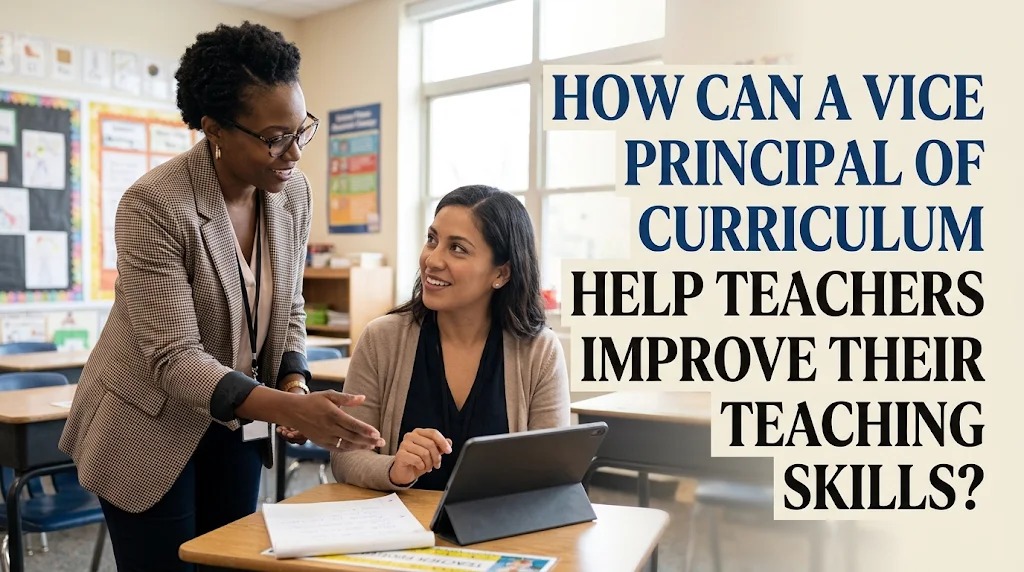
Teachers play an essential role in determining the quality of education because they are directly involved in guiding students through the learning process. However, teaching skills need to develop continuously to keep up with changes in educational methods, technology, curriculum requirements, and student needs. Teachers must be able to present learning materials clearly, manage classrooms effectively, and select appropriate instructional strategies to support student development.
A Vice Principal of Curriculum can help teachers improve their teaching skills by coordinating professional development, providing instructional guidance, monitoring classroom activities, and encouraging collaboration among educators. This support is important because improving teaching quality requires more than individual effort. It also involves creating a school environment where teachers can learn from one another, receive constructive feedback, and continuously develop their professional abilities.
ORGANIZING TRAINING AND PROFESSIONAL DEVELOPMENT PROGRAMS
One way a Vice Principal of Curriculum can improve teachers' teaching skills is by organizing relevant professional development programs. Teachers need opportunities to update their knowledge and learn new approaches that can be applied in the classroom. Training activities can help educators understand current educational practices and respond to different learning situations.
These programs may include workshops, seminars, teaching demonstrations, subject-based training, and educational technology sessions. For example, teachers can participate in training about classroom management, student-centered learning, digital learning platforms, or effective assessment methods. The topics should be selected based on the actual needs of teachers and the school's academic priorities.
The Vice Principal of Curriculum can coordinate with school leaders, experienced educators, or external training providers to organize these activities. After training, teachers should also have opportunities to discuss what they have learned and apply relevant strategies in their classrooms. Continuous professional development helps teachers strengthen their competencies and maintain relevant teaching practices.
PROVIDING GUIDANCE AND CONSTRUCTIVE FEEDBACK
Teachers sometimes need guidance to identify areas that can be improved in their teaching practices. The Vice Principal of Curriculum can support this process by coordinating instructional supervision and providing constructive feedback. This approach helps teachers understand their strengths and recognize aspects of classroom instruction that may require further development.
Guidance can involve reviewing lesson plans, discussing instructional methods, and observing classroom activities according to school procedures. For example, an observation may reveal that students need more opportunities to participate in discussions or that learning materials could be presented more clearly. Feedback should be specific, respectful, and focused on improving the learning experience rather than simply pointing out mistakes.
After receiving feedback, teachers can discuss practical steps for improving their instruction. The Vice Principal of Curriculum may also help connect teachers with mentors or colleagues who have relevant experience. Constructive instructional feedback creates opportunities for professional growth and encourages teachers to reflect on their teaching methods.
ENCOURAGING COLLABORATION AND KNOWLEDGE SHARING AMONG TEACHERS
Collaboration is another important way to improve teaching skills. Teachers often have different experiences, subject knowledge, and classroom management approaches. By sharing these experiences, they can learn practical strategies that may be useful in their own classrooms.
The Vice Principal of Curriculum can organize teacher meetings, subject-based discussions, and professional learning communities. These activities allow educators to discuss teaching challenges, exchange instructional materials, and share successful classroom practices. Teachers can also work together to prepare learning resources or develop activities that support specific curriculum objectives.
Collaboration is particularly useful when teachers face similar difficulties. For example, educators teaching the same subject can discuss ways to explain challenging concepts or design more engaging assignments. Teacher collaboration and knowledge sharing help build a supportive professional environment where improvement becomes a shared responsibility.
SUPPORTING THE USE OF TECHNOLOGY AND INNOVATIVE TEACHING METHODS
Educational technology provides teachers with additional ways to present information and organize classroom activities. However, not every teacher has the same level of confidence or experience when using digital tools. The Vice Principal of Curriculum can help address this difference by coordinating technology training and encouraging the appropriate use of digital learning resources.
Teachers can learn to use presentation applications, digital assessment platforms, online learning environments, and educational videos. These tools may help make learning materials easier to access and provide additional opportunities for student participation. The choice of technology should depend on the subject, learning objectives, available facilities, and students' needs.
In addition to technology, teachers can explore instructional methods such as group discussions, project-based learning, problem-solving activities, and practical demonstrations. The Vice Principal of Curriculum can encourage educators to select methods that are appropriate for their classroom conditions rather than relying on only one approach. Technology integration and innovative teaching methods can enrich classroom experiences when applied thoughtfully.
EVALUATING TEACHING PRACTICES AND SUPPORTING CONTINUOUS IMPROVEMENT
Improving teaching skills requires regular evaluation to determine whether development programs are producing meaningful results. The Vice Principal of Curriculum can coordinate evaluations through classroom observations, teacher discussions, reviews of learning documents, and analysis of student progress. These activities provide information about how teaching practices are developing over time.
Evaluation should consider different aspects of instruction, including lesson preparation, classroom management, student participation, learning materials, and assessment methods. Feedback from students, when collected appropriately, may also help teachers understand how classroom activities are experienced by learners. The findings can then be used to identify areas that require further support.
The Vice Principal of Curriculum should encourage teachers to use evaluation results as a basis for reflection and improvement. Follow-up activities may include additional training, mentoring, peer observation, or adjustments to teaching strategies. Continuous teaching evaluation helps ensure that professional development is connected to actual classroom needs and contributes to better learning experiences.
CONCLUSION
A Vice Principal of Curriculum can help teachers improve their teaching skills through professional development programs, constructive feedback, teacher collaboration, technology support, and continuous evaluation. These activities provide educators with opportunities to strengthen their knowledge, improve instructional methods, and respond more effectively to different student needs.
Successful teacher development requires consistent support and cooperation between school leaders and educators. Rather than treating professional improvement as a one-time activity, schools should make it part of their ongoing academic programs. Through effective curriculum leadership and continuous teacher development, the Vice Principal of Curriculum can contribute to stronger teaching practices and better educational quality.
Recent Posts

Bagaimana Sistem SKS pada Program Kuliah... 22.11.2026/7 View

How Does Technology Make Daily Evaluation... 21.11.2026/63 View

Apa Strategi Menghadapi Kesenjangan antara Kompetensi... 21.11.2026/64 View

Mengapa Inventaris Aset Penting bagi Kelancaran... 21.11.2026/61 View

When Should Musicians Join a Record... 21.11.2026/59 View
