

How Can a Vice Principal of Public Relations Improve Public Trust in Schools?
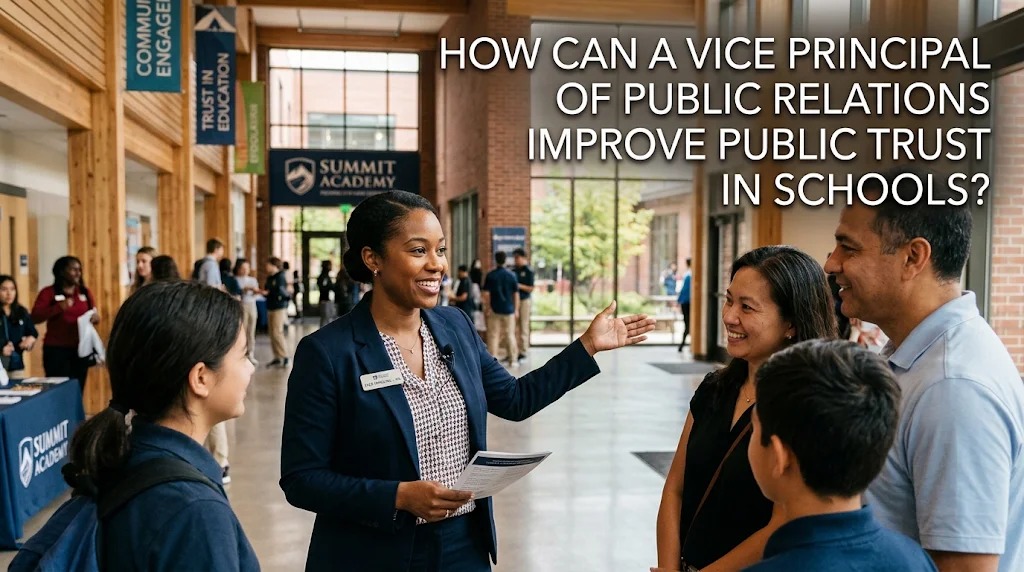
Public trust is an important foundation for building a successful educational institution. Parents, students, teachers, and community members need to feel confident that a school provides reliable information, maintains good communication, and manages its responsibilities properly. A Vice Principal of Public Relations plays an important role in developing this trust by connecting the school with the wider community.
Building public trust requires more than simply promoting school achievements or sharing positive news. It also involves transparency, honest communication, responsiveness, and consistent cooperation with different stakeholders. Through effective public relations strategies, a Vice Principal of Public Relations can help create a positive school image and strengthen relationships with the community.
MAINTAINING TRANSPARENT AND HONEST COMMUNICATION
One of the most effective ways to improve public trust is by maintaining transparent communication. A Vice Principal of Public Relations should ensure that important school information is shared accurately and in a timely manner. Information about school programs, academic activities, policies, achievements, and important changes should be communicated clearly to parents and the community. When people receive reliable information, they are more likely to understand school decisions and feel confident in the institution. Transparency also helps prevent misunderstandings caused by incomplete or unclear announcements.
Honesty is equally important when a school faces problems or receives criticism. Instead of hiding difficulties, the public relations team should communicate relevant information responsibly while respecting privacy and confidentiality. Every statement should be based on verified facts rather than assumptions or rumors. If a situation requires further investigation, the school should explain what is known and provide updates when appropriate. This approach demonstrates accountability and helps maintain public confidence even during challenging situations.
BUILDING STRONG RELATIONSHIPS WITH PARENTS AND THE COMMUNITY
Parents are among the most important stakeholders in education because they directly support students' learning and development. A Vice Principal of Public Relations can strengthen relationships with parents by organizing meetings, school visits, consultation sessions, and communication programs. These activities provide opportunities for parents to understand school policies and discuss their children's educational experiences. The school should also create accessible communication channels so parents can ask questions and share concerns. When parents feel heard and respected, their confidence in the school can gradually increase.
Cooperation with the wider community is also essential for building public trust. Schools can establish partnerships with local organizations, universities, businesses, government institutions, and community leaders. These partnerships may support educational programs, student development, career preparation, and social activities. The Vice Principal of Public Relations helps coordinate communication and maintain professional relationships with these partners. Strong cooperation demonstrates that the school is open to collaboration and committed to contributing positively to society.
RESPONDING TO COMPLAINTS AND PUBLIC CONCERNS EFFECTIVELY
An effective public relations system must be able to respond to complaints and concerns professionally. Parents or community members may raise questions about school facilities, educational services, student activities, or administrative decisions. The Vice Principal of Public Relations should provide a clear channel for receiving and recording these concerns. Each complaint should be directed to the appropriate department so it can be reviewed and handled properly. A timely response helps prevent small misunderstandings from developing into larger conflicts.
Listening is just as important as providing answers. The school should understand the reasons behind public concerns before deciding on an appropriate response. If a complaint reveals a genuine problem, the relevant school leaders should consider corrective action and communicate the progress when possible. The Vice Principal of Public Relations can coordinate this process without making promises that the school cannot fulfill. Professional and respectful responses show that the institution takes public feedback seriously and is willing to improve its services.
USING DIGITAL MEDIA TO SHARE ACCURATE SCHOOL INFORMATION
Digital media has become an important communication tool for educational institutions. A Vice Principal of Public Relations can use official school websites, social media accounts, messaging platforms, and digital newsletters to share information with parents and the wider community. These platforms can provide updates about school activities, student achievements, announcements, and educational programs. Regular communication helps the public stay informed without always needing to visit the school directly. However, all published information should be accurate, relevant, and consistent with official school policies.
Responsible digital communication also requires attention to privacy and information security. Photos, videos, and personal details of students should only be published in accordance with applicable privacy rules and consent requirements. The public relations team must also verify information before sharing it to avoid spreading incorrect news. In addition, schools should monitor official communication channels and respond appropriately to relevant questions or feedback. By using digital media responsibly, schools can improve accessibility, strengthen communication, and build a trustworthy online presence.
EVALUATING PUBLIC RELATIONS PROGRAMS AND IMPROVING SCHOOL ACCOUNTABILITY
Building public trust is a continuous process that requires regular evaluation. The Vice Principal of Public Relations should assess whether communication programs are reaching their intended audiences and providing useful information. Feedback from parents, students, teachers, and external partners can help identify areas that need improvement. Surveys, meetings, discussion sessions, and communication reports are some methods that can be used to collect feedback. The results should be shared with relevant school leaders to support better planning and decision-making.
Accountability is also essential because public trust depends on whether a school fulfills its responsibilities. The Vice Principal of Public Relations can help communicate the progress of school programs, partnership activities, and community initiatives. They should coordinate with the principal and other departments to ensure that public information reflects actual school activities. If a program does not achieve its intended results, the school should evaluate the reasons and consider improvements. Consistent evaluation and responsible reporting help demonstrate the school's commitment to quality education and public service.
CONCLUSION
A Vice Principal of Public Relations can improve public trust in schools through transparent communication, strong community relationships, effective complaint handling, responsible digital media use, and regular program evaluation. These responsibilities help ensure that parents and community members receive accurate information and feel respected by the institution. Public trust cannot be built through promotion alone because it requires consistent actions and accountability. By maintaining honest communication and responding to public needs, schools can develop stronger relationships and create a positive educational environment. Ultimately, effective public relations helps schools earn lasting confidence and support from the community.
Recent Posts

How Does Technology Make Daily Evaluation... 21.11.2026/63 View

Apa Strategi Menghadapi Kesenjangan antara Kompetensi... 21.11.2026/64 View

Mengapa Inventaris Aset Penting bagi Kelancaran... 21.11.2026/60 View

When Should Musicians Join a Record... 21.11.2026/59 View

Daily Evaluation or Daily Planning Which... 21.11.2026/67 View
