

How Can a Vice Principal Prepare Students to Face Future Challenges?
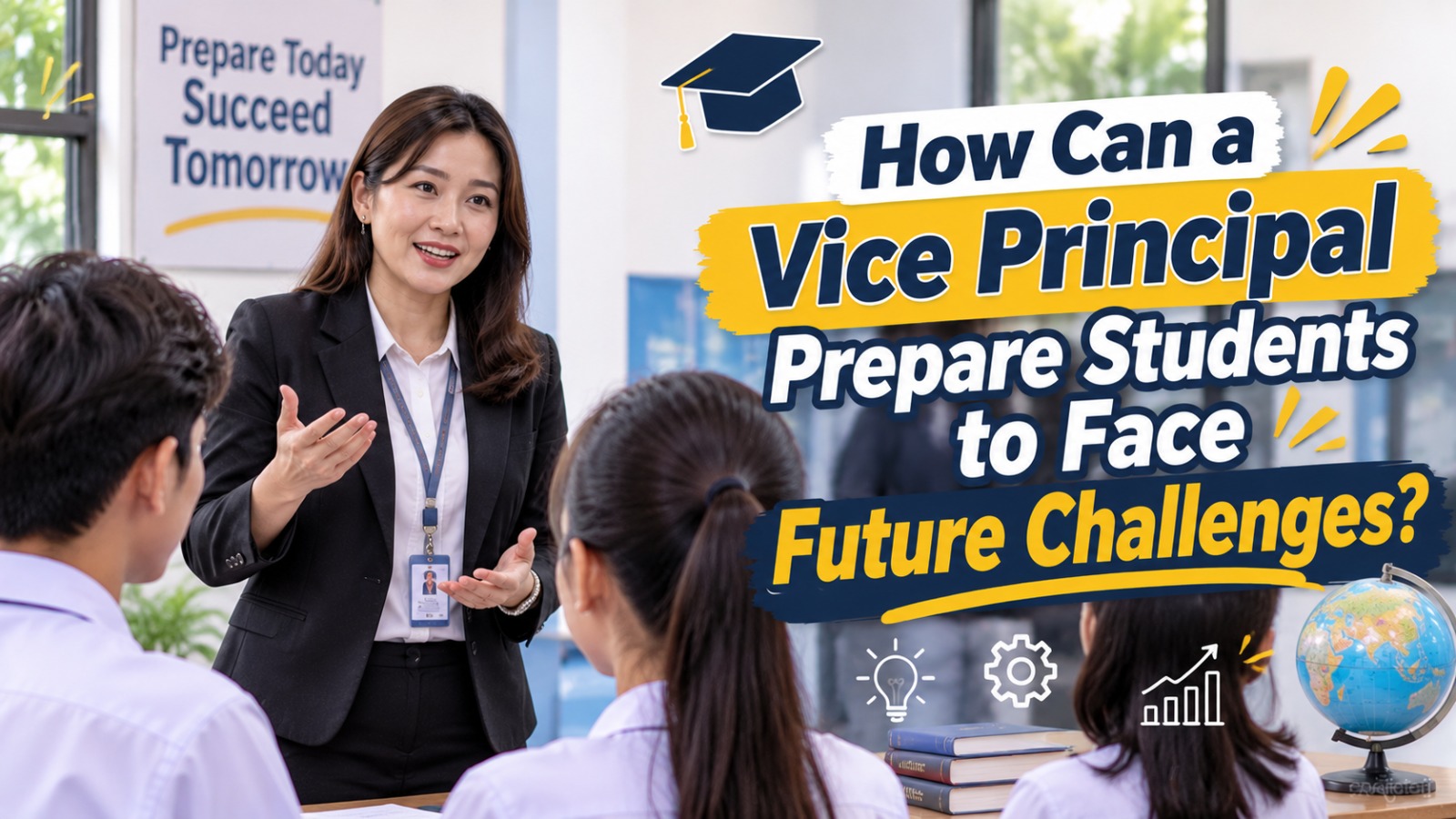
Preparing students to face future challenges is an important responsibility of modern educational institutions. Students need more than academic knowledge to succeed in a world influenced by technological developments, global competition, and changing workplace requirements. They also need critical thinking, communication, creativity, adaptability, and problem-solving abilities. A vice principal has an important role in supporting these skills through educational programs, student development activities, and effective school management. By working with teachers, parents, and the wider community, a vice principal can help students become confident, independent, and prepared to face future opportunities and difficulties.
DEVELOPING CRITICAL THINKING AND PROBLEM-SOLVING SKILLS
One important way a vice principal can prepare students for future challenges is by encouraging critical thinking and problem-solving skills. These abilities help students analyze information, identify problems, consider different perspectives, and make reasonable decisions. In modern society, students frequently encounter complex information from digital platforms, social media, and various educational sources. Therefore, they need to learn how to evaluate information carefully instead of accepting everything they read or hear.
A vice principal can encourage teachers to use learning activities that develop these abilities. For example, classroom discussions, research assignments, case studies, and project-based learning can help students analyze real situations. Teachers can also encourage students to ask questions, explain their opinions, and support their arguments with relevant information. These activities develop independent thinking and prepare students to solve problems in academic, professional, and everyday situations. Through consistent practice, students can become more confident in making responsible decisions.
IMPROVING DIGITAL LITERACY AND TECHNOLOGICAL SKILLS
Technological development continues to change how people communicate, study, and work. Therefore, students need digital literacy and technological skills to participate effectively in modern society. A vice principal can support this development by encouraging schools to integrate appropriate technology into classroom activities. Students can learn to use educational applications, digital learning platforms, presentation software, and online research tools to improve their learning experiences.
However, digital literacy involves more than knowing how to operate electronic devices. Students must also understand online safety, information accuracy, digital privacy, and responsible communication. A vice principal can coordinate digital literacy programs that teach students how to recognize misinformation, protect personal information, and use technology ethically. Schools can also introduce basic coding, digital creativity, and technology-based projects according to available resources. These experiences help students become responsible technology users and prepare them for an increasingly digital future.
STRENGTHENING COMMUNICATION AND COLLABORATION SKILLS
Communication and collaboration are essential abilities in education, professional environments, and social relationships. Students need to express ideas clearly, listen to others, understand different opinions, and work effectively in teams. A vice principal can encourage teachers to provide collaborative learning opportunities through group discussions, presentations, research projects, and classroom activities. These experiences help students become more comfortable sharing information and cooperating with others.
In addition, schools can organize extracurricular activities, student organizations, leadership programs, and community projects. Through these activities, students learn how to divide responsibilities, manage disagreements, and achieve shared objectives. They also develop the ability to communicate with people who have different backgrounds and perspectives. These skills are valuable because future workplaces often require employees to cooperate across different teams and professional fields. By providing meaningful opportunities for interaction, a vice principal can help students develop stronger interpersonal abilities.
BUILDING STUDENT CONFIDENCE, INDEPENDENCE, AND ADAPTABILITY
Future challenges often require individuals to face unfamiliar situations and make decisions without always depending on others. For this reason, a vice principal should support the development of self-confidence, independence, and adaptability among students. These qualities help students recognize their strengths, manage difficulties, and remain motivated when facing changes. Students who have confidence in their abilities are also more willing to explore new opportunities and take responsibility for their decisions.
A vice principal can encourage independence by supporting student leadership activities, academic projects, and extracurricular programs that involve individual responsibility. Students should also be given opportunities to express opinions, organize activities, and participate in school decision-making processes when appropriate. Teachers can provide guidance while allowing students to learn from their experiences and mistakes. Furthermore, schools should encourage students to view challenges as opportunities for improvement rather than reasons to give up. Through these experiences, students can become more flexible and prepared to handle different situations in the future.
PREPARING STUDENTS WITH CAREER AWARENESS AND PRACTICAL SKILLS
Academic knowledge is important, but students also need an understanding of future career opportunities and professional expectations. A vice principal can support career preparation and practical skill development by introducing career guidance programs, vocational activities, entrepreneurship projects, and professional awareness sessions. These programs help students understand different occupations and recognize the abilities required in various industries. Students can also explore how their interests and talents relate to possible educational and career pathways.
Furthermore, schools can organize career seminars, industry visits, professional presentations, and practical workshops when resources and opportunities are available. These activities allow students to gain information about workplace expectations and changing employment trends. A vice principal can also encourage teachers to connect classroom lessons with practical situations, helping students understand the real-world value of academic knowledge. Important skills such as time management, responsibility, teamwork, and problem-solving should be developed through everyday school activities. With early career preparation, students can make more informed decisions about their education and future goals.
DEVELOPING CHARACTER, RESPONSIBILITY, AND A STRONG LEARNING CULTURE
Preparing students for the future also requires developing positive character and responsible behavior. Knowledge and technical abilities alone are not enough if students lack honesty, discipline, empathy, and respect for others. A vice principal should help establish a positive school culture that encourages ethical behavior and personal responsibility. School regulations, character education programs, and daily interactions can teach students the importance of respecting rules and understanding the consequences of their actions.
In addition, students need to develop a habit of continuous learning because knowledge and professional requirements can change over time. A vice principal can encourage reading programs, academic competitions, creative projects, and independent learning activities. Teachers should also motivate students to remain curious and explore subjects beyond their regular classroom materials. Parents and community organizations can contribute by providing positive examples and supporting students' development. When schools build a culture based on discipline, curiosity, integrity, and lifelong learning, students become better prepared to face future challenges.
CONCLUSION
A vice principal can prepare students to face future challenges by developing critical thinking, digital literacy, communication, collaboration, and practical career skills. Supporting student confidence, independence, adaptability, and positive character is equally important. These abilities help students become more capable of responding to changes in technology, education, society, and the workplace.
Preparing students for the future requires cooperation between vice principals, teachers, parents, students, and the wider community. Schools should provide learning experiences that combine academic knowledge with practical skills and personal development. Through effective leadership, continuous improvement, and relevant educational programs, a vice principal can help students become responsible, creative, independent, and competitive individuals who are ready to take advantage of future opportunities.
Recent Posts

Bagaimana Sistem SKS pada Program Kuliah... 22.11.2026/12 View

How Does Technology Make Daily Evaluation... 21.11.2026/63 View

Apa Strategi Menghadapi Kesenjangan antara Kompetensi... 21.11.2026/64 View

Mengapa Inventaris Aset Penting bagi Kelancaran... 21.11.2026/61 View

When Should Musicians Join a Record... 21.11.2026/59 View
