

How Can an Extended Family Help Raise and Educate Children?
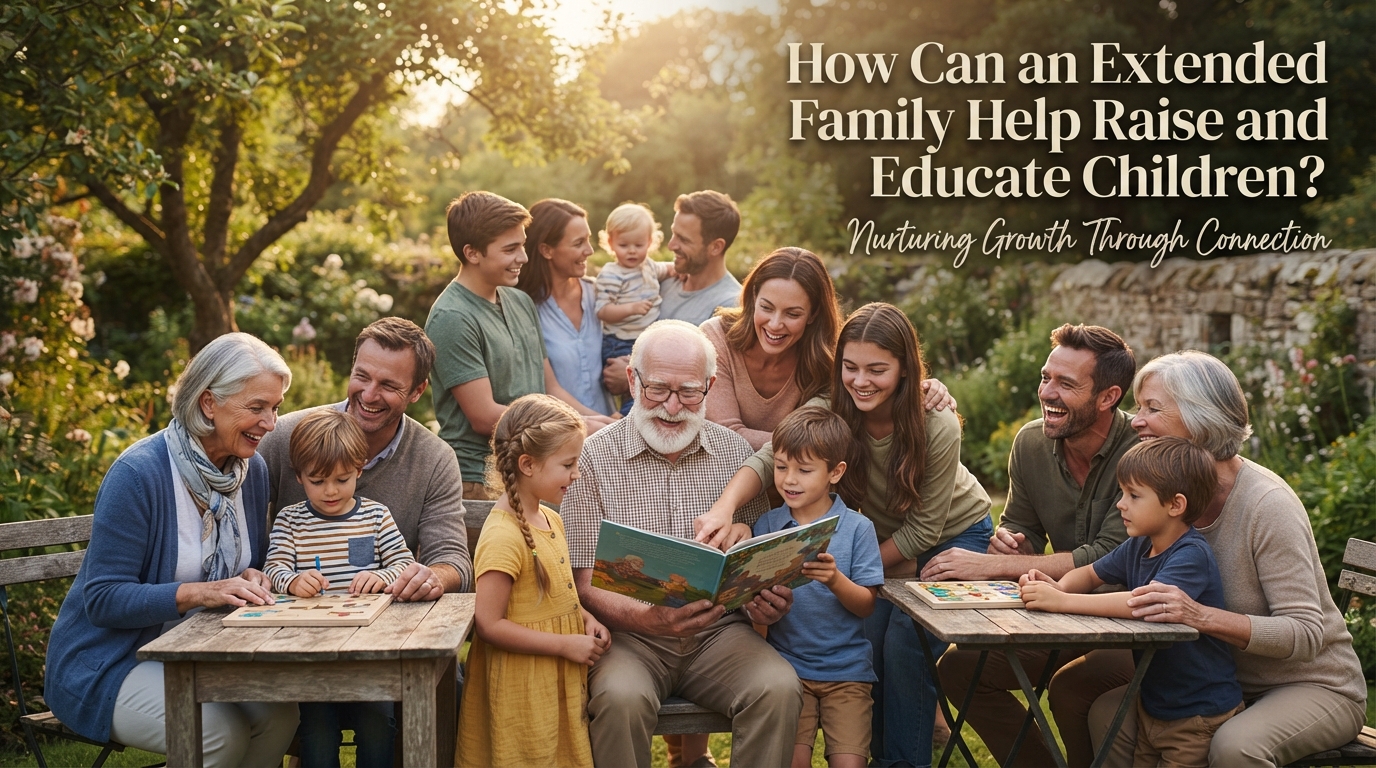
Raising and educating children requires time, attention, patience, and consistent guidance. Although parents have the primary responsibility for their children's development, other relatives can also make valuable contributions. An extended family, which includes grandparents, uncles, aunts, cousins, and other relatives, can provide additional support in creating a positive environment for children to grow and learn.
The involvement of extended family members can benefit children in several ways, including emotional development, social skills, education, character building, and daily care. Different relatives can share their knowledge, experiences, and abilities to support children's needs. When family members work together and respect parental responsibilities, they can create a supportive environment that helps children develop into confident, responsible, and independent individuals.
PROVIDING EMOTIONAL SUPPORT AND AFFECTION
One of the most important contributions of an extended family is providing emotional support and affection to children. Grandparents, aunts, uncles, and other relatives can offer attention, encouragement, and a sense of security. Their presence helps children understand that they are loved and appreciated by many people in their family. This positive environment can strengthen children's confidence and emotional well-being.
When children experience sadness, fear, or disappointment, supportive relatives can listen to their concerns and provide reassurance. For example, grandparents may spend time talking with children, while uncles and aunts can encourage them to explore their interests. These interactions teach children how to recognize and express their feelings. Consistent affection from family members can also help children develop healthy relationships with others.
SUPPORTING CHILDREN'S EDUCATIONAL DEVELOPMENT
Extended family members can contribute to children's educational development by helping them understand school subjects and develop good learning habits. Relatives who have knowledge or experience in particular fields may explain difficult topics, help with homework, or introduce educational activities. This additional guidance can make learning more interesting and encourage children to become curious about new things.
For example, grandparents can share historical stories, while aunts or uncles may help children practice mathematics, languages, or computer skills. Family members can also encourage children to read books, ask questions, and develop independent study habits. However, educational assistance should complement the guidance provided by teachers and parents. Working together helps children receive more consistent support throughout their learning journey.
TEACHING MORAL VALUES AND GOOD CHARACTER
An extended family plays an important role in teaching moral values and positive character. Through daily interactions, relatives can demonstrate the importance of honesty, kindness, discipline, responsibility, and respect. Children often learn these values by observing how adults communicate, solve problems, and treat other people. Positive examples can influence their behavior both inside and outside the home.
Grandparents, for instance, may teach children to respect older people and appreciate family traditions. Other relatives can encourage children to share, help others, and take responsibility for their actions. These lessons should be reinforced through consistent guidance rather than instructions alone. When family members demonstrate the values they teach, children have better opportunities to develop strong character.
DEVELOPING SOCIAL SKILLS AND COMMUNICATION
Growing up around different relatives gives children more opportunities to develop social skills and communication abilities. They learn how to interact with people of different ages, personalities, and backgrounds. Through conversations and shared activities, children can practice listening, expressing opinions, taking turns, and respecting different perspectives.
Family gatherings also provide opportunities to develop cooperation and empathy. For example, children may learn to share toys with cousins, help relatives prepare meals, or participate in group activities. These experiences teach them how to build relationships and manage everyday social situations. Such skills are valuable when children interact with classmates, teachers, and other people in their communities.
HELPING WITH CHILDCARE AND DAILY ACTIVITIES
Extended family members can support parents by helping with childcare and daily activities. They may supervise children, prepare meals, accompany them to school, or assist with daily routines when parents have work or other responsibilities. This cooperation can reduce the pressure on parents and provide children with additional attention.
Grandparents and other relatives can also help children maintain healthy habits, such as eating nutritious food, getting enough rest, completing homework, and participating in physical activities. However, childcare arrangements should be discussed clearly to ensure that everyone understands their responsibilities. Parents and relatives should maintain consistent rules regarding safety, discipline, and children's routines. This coordination helps create a stable environment for children's development.
INTRODUCING FAMILY TRADITIONS AND CULTURAL KNOWLEDGE
An extended family helps children understand their family history, traditions, and cultural identity. Older relatives often have valuable knowledge about family backgrounds, traditional celebrations, local customs, and cultural practices. By sharing stories and participating in family activities, they help children understand their roots and appreciate their heritage.
Children can learn about traditional foods, family celebrations, local languages, and customs through direct experiences. These activities also create opportunities for meaningful interaction between different generations. Families can introduce modern ideas while continuing to preserve important cultural values. This balance helps children develop an appreciation for their identity while remaining open to different cultures and perspectives.
ENCOURAGING INDEPENDENCE AND RESPONSIBILITY
Although family support is important, children also need opportunities to develop independence and personal responsibility. Extended family members can encourage children to complete age-appropriate tasks, make simple decisions, and solve everyday problems. For example, children can be encouraged to organize their school supplies, keep their rooms tidy, or manage their study schedules.
Relatives can guide children without doing everything for them. Giving children opportunities to try new activities and learn from mistakes helps develop confidence and problem-solving abilities. It is also important for family members to avoid excessive protection that may limit children's independence. With appropriate guidance, children can learn to become more responsible and prepared for future challenges.
CREATING A SAFE AND SUPPORTIVE LEARNING ENVIRONMENT
Children need a safe and supportive environment to develop physically, emotionally, and intellectually. Extended family members can contribute by creating positive interactions, maintaining appropriate supervision, and ensuring that children feel comfortable expressing themselves. A household where adults communicate respectfully can help children understand healthy relationships and appropriate behavior.
Family members should also establish clear boundaries to protect children's privacy, safety, and well-being. Parents and relatives need to agree on important matters such as discipline, screen time, online safety, and children's daily activities. Everyone involved in childcare should respect the child's individual needs and developmental stage. When adults cooperate effectively, children can grow in an environment that supports learning, confidence, and healthy development.
CONCLUSION
An extended family can play a valuable role in raising and educating children by providing emotional support, educational guidance, childcare assistance, and positive examples of behavior. Relatives can also help children develop social skills, understand cultural traditions, become more independent, and build strong personal values.
However, successful family involvement requires good communication, mutual respect, consistent guidance, and cooperation with parents. Every family member should understand their responsibilities and respect the decisions made by parents regarding their children's development. When relatives work together, an extended family can become an important support system that helps children grow into educated, confident, responsible, and well-rounded individuals.
Recent Posts

How Does Technology Make Daily Evaluation... 21.11.2026/57 View

Apa Strategi Menghadapi Kesenjangan antara Kompetensi... 21.11.2026/59 View

Mengapa Inventaris Aset Penting bagi Kelancaran... 21.11.2026/55 View

When Should Musicians Join a Record... 21.11.2026/54 View

Daily Evaluation or Daily Planning Which... 21.11.2026/61 View
