

How Can Artificial Intelligence Improve Efficiency in Business Logistics?
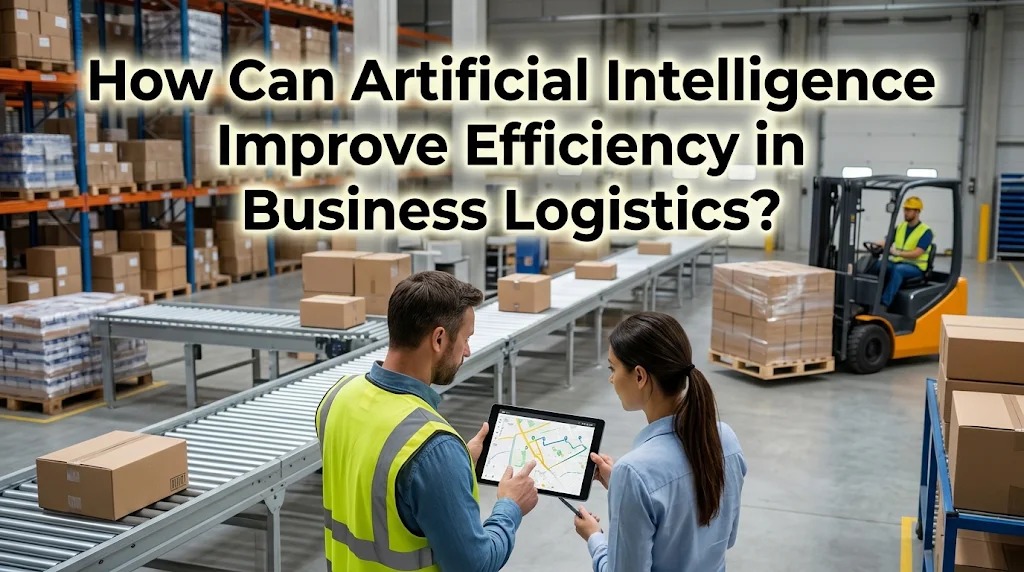
Artificial intelligence has become an important technology in modern business logistics because it helps companies manage distribution activities more quickly and accurately. Logistics operations involve various processes, including inventory management, transportation planning, warehouse activities, and product delivery. Managing these activities manually can require considerable time and increase the possibility of operational errors. By implementing artificial intelligence, businesses can automate repetitive tasks, analyze operational information, and make better decisions.
As customer expectations continue to increase, companies need logistics systems that are efficient, flexible, and reliable. Artificial intelligence provides solutions that help businesses predict customer demand, optimize transportation routes, monitor inventory, and identify potential operational problems. These capabilities allow companies to reduce unnecessary expenses while improving distribution performance. Understanding how artificial intelligence works in logistics can help businesses use technology to strengthen their competitiveness and support long-term growth.
IMPROVING INVENTORY MANAGEMENT AND DEMAND FORECASTING
Artificial intelligence helps businesses manage inventory by analyzing historical sales records, purchasing patterns, seasonal trends, and market conditions. This information allows AI systems to estimate future product demand more accurately. Companies can use these predictions to determine how much stock should be maintained and when additional products need to be ordered. As a result, businesses can reduce the risk of inventory shortages and excessive stock accumulation.
Furthermore, AI-powered inventory systems can monitor stock movements and identify products that require replenishment. Some systems can automatically generate recommendations or reorder alerts when inventory reaches predetermined levels. This helps employees manage warehouse supplies more efficiently and reduces the time spent checking stock manually. With better demand forecasting and inventory control, businesses can maintain product availability while controlling storage expenses.
OPTIMIZING TRANSPORTATION AND DELIVERY ROUTES
Transportation is one of the largest expenses in business logistics, making route optimization an important area for artificial intelligence. AI systems can analyze traffic conditions, delivery locations, road accessibility, weather information, and transportation schedules to recommend efficient routes. This technology helps companies reduce unnecessary travel distances and improve delivery planning. Consequently, businesses can save fuel, reduce transportation expenses, and complete deliveries more efficiently.
In addition, artificial intelligence can support dynamic route planning when unexpected situations occur. For example, if a delivery vehicle encounters heavy traffic or a road closure, an AI-powered system may recommend an alternative route based on available information. Companies can also use predictive analytics to estimate delivery times and identify possible transportation disruptions. These capabilities help logistics managers maintain more reliable delivery schedules and improve customer satisfaction.
AUTOMATING WAREHOUSE OPERATIONS AND ORDER PROCESSING
Warehouse automation is another important application of artificial intelligence in logistics management. AI-powered systems can help businesses organize product storage, identify items, manage order picking, and coordinate warehouse activities. When combined with robotics and automated equipment, these systems can reduce repetitive manual tasks and improve the speed of product handling. Employees can then focus on activities that require supervision, problem-solving, and decision-making.
Moreover, artificial intelligence can improve order processing by identifying errors and analyzing warehouse activity patterns. For example, AI systems can help determine the most efficient arrangement of products based on their demand and frequency of movement. This can reduce the time employees spend searching for items and preparing customer orders. Through improved warehouse coordination, businesses can increase productivity, minimize handling mistakes, and process shipments more quickly.
ENHANCING REAL-TIME TRACKING AND PREDICTIVE MAINTENANCE
Artificial intelligence can improve shipment monitoring by analyzing information collected from GPS devices, sensors, and digital tracking systems. These technologies help companies monitor product movements and identify unusual transportation patterns. Logistics managers can use the information to detect possible delivery delays and take corrective action before problems become more serious. Customers may also receive more accurate shipment updates through integrated tracking platforms.
Another valuable application is predictive maintenance, which helps businesses identify potential vehicle or equipment problems before major failures occur. AI systems can analyze information about vehicle performance, operating conditions, and maintenance history to estimate when repairs may be necessary. This allows companies to schedule maintenance more effectively and reduce unexpected breakdowns during transportation. By combining tracking technology and predictive maintenance, businesses can improve operational reliability and minimize distribution interruptions.
REDUCING OPERATIONAL COSTS AND SUPPORTING BETTER DECISION-MAKING
Artificial intelligence helps businesses reduce logistics expenses by identifying inefficient activities and recommending improvements. AI systems can analyze transportation costs, warehouse performance, inventory levels, and delivery records to identify areas where resources are being wasted. Managers can use these insights to adjust operational strategies and allocate resources more effectively. This approach helps companies control expenses without unnecessarily reducing service quality.
Furthermore, AI supports data-driven decision-making by providing useful insights from large amounts of operational information. Companies can use these insights to evaluate supplier performance, forecast demand, plan transportation schedules, and prepare for potential supply chain disruptions. However, successful implementation requires accurate data, appropriate technology, employee training, and proper data protection. By integrating artificial intelligence responsibly into logistics operations, businesses can improve efficiency, strengthen operational control, and achieve better long-term performance.
CONCLUSION
Artificial intelligence can significantly improve business logistics efficiency by supporting inventory management, demand forecasting, transportation planning, warehouse automation, and shipment monitoring. These technologies help companies reduce operational errors, minimize unnecessary expenses, and improve the reliability of product distribution. AI-powered predictive maintenance and data analysis also allow businesses to identify potential problems and make better operational decisions.
However, artificial intelligence should be implemented according to business requirements and supported by reliable information systems. Companies must also consider technology investment, employee readiness, data security, and continuous system evaluation. With proper implementation, artificial intelligence can become an important tool for improving logistics productivity, customer satisfaction, and business competitiveness.
Recent Posts

How Does Technology Make Daily Evaluation... 21.11.2026/62 View

Apa Strategi Menghadapi Kesenjangan antara Kompetensi... 21.11.2026/63 View

Mengapa Inventaris Aset Penting bagi Kelancaran... 21.11.2026/59 View

When Should Musicians Join a Record... 21.11.2026/58 View

Daily Evaluation or Daily Planning Which... 21.11.2026/66 View
