

How Can Audiobooks Support the Learning Process?
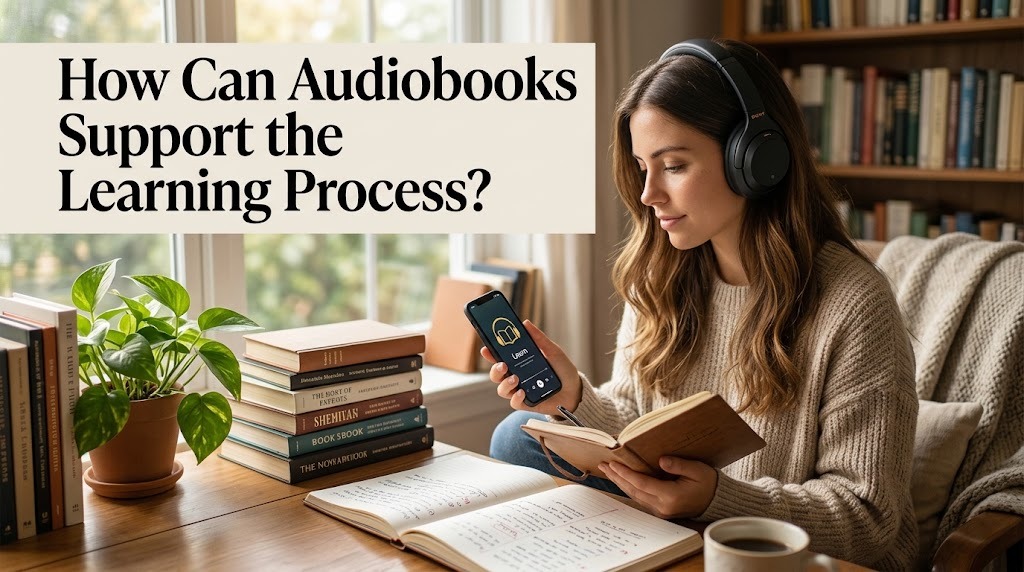
Learning can take place in many different ways, including reading textbooks, watching educational videos, participating in discussions, and listening to spoken explanations. As digital technology continues to develop, audiobooks have become another resource that learners can use to explore information and understand new subjects. They provide narrated content that can be accessed through smartphones, computers, tablets, and other compatible devices.
Audiobooks can support the learning process by making educational content more accessible, providing exposure to spoken language, and allowing learners to review information at their own pace. They can be useful for students, language learners, and people who want to continue learning outside formal education. Although audiobooks do not replace every learning method, they can complement reading, note-taking, practice, and other educational activities.
MAKING EDUCATIONAL MATERIALS MORE ACCESSIBLE
One way audiobooks support learning is by giving learners another way to access educational information. Some people find it easier to follow spoken explanations than to read long passages of text. Audiobooks can also be useful for learners who prefer listening or need an alternative to continuous screen reading.
Educational audiobooks cover many subjects, including science, history, literature, communication, and personal development. Learners can choose materials that match their interests and current level of understanding. This flexibility can make it easier to explore unfamiliar topics without relying on a single learning format. However, the quality and suitability of the content remain important, so learners should select reliable sources that explain information clearly and accurately.
SUPPORTING LANGUAGE AND VOCABULARY DEVELOPMENT
Audiobooks can provide valuable exposure to spoken language. By listening to a narrator, learners can become more familiar with pronunciation, sentence patterns, rhythm, and intonation. This can be particularly helpful for people studying a foreign language because it allows them to hear how words and expressions are used in context.
For example, an English learner may choose an audiobook with clear narration and vocabulary appropriate to their level. Following the written text while listening can help connect spoken words with their spelling and meaning. Learners can also pause or replay difficult sections to review unfamiliar expressions. Nevertheless, listening should be combined with speaking, writing, and reading practice to develop a more complete understanding of a language.
HELPING LEARNERS REVIEW AND UNDERSTAND INFORMATION
Another advantage of audiobooks for education is the ability to revisit important information. Learners can replay a chapter or passage when an explanation is unclear, allowing them to review the material without starting the entire book again. Some digital platforms also provide bookmarks or playback controls that make it easier to return to specific sections.
Repeated listening can help learners become more familiar with concepts, especially when the material is presented in a clear and organized way. However, hearing the same information repeatedly does not automatically guarantee understanding or long-term memory. Learners should actively engage with the content by summarizing key ideas, asking questions, or writing down important points. These activities can help transform passive listening into a more effective learning experience.
ENCOURAGING INDEPENDENT AND FLEXIBLE LEARNING
Audiobooks can support independent learning because learners can choose what to study, when to listen, and how quickly to progress. They can explore subjects outside their formal curriculum and select books based on personal interests or educational goals. This flexibility allows learning to continue beyond the classroom or scheduled study sessions.
For instance, a student interested in environmental science may listen to an educational audiobook before researching the topic in greater detail. Another learner may use a biography to explore leadership, decision-making, or historical events. By selecting relevant materials and reflecting on what they hear, learners can take a more active role in their own education. A realistic listening schedule can also help them balance independent study with other responsibilities.
COMPLEMENTING OTHER LEARNING METHODS
Audiobooks are often most useful when combined with other learning activities. Listening can introduce a topic, provide background information, or reinforce ideas learned through textbooks and classroom instruction. Learners can also use printed or digital text alongside narration when they need to examine specific details, diagrams, definitions, or written examples.
After listening to a chapter, learners may summarize the main ideas, complete related exercises, discuss the subject with others, or apply the information to a practical task. These activities help check comprehension and identify areas that require further study. Audiobooks may not be sufficient for every subject, particularly when learning depends heavily on visual demonstrations, calculations, or hands-on practice. Combining suitable methods creates a more balanced approach to learning.
CONCLUSION
Audiobooks can support the learning process by improving access to educational materials, providing language exposure, helping learners review information, and encouraging independent study. They offer flexibility for students and lifelong learners who want to explore different subjects or reinforce knowledge outside formal learning environments.
To gain the most benefit, learners should choose reliable audiobooks, listen with a clear purpose, and actively review the information they hear. Combining audiobooks with reading, note-taking, discussion, and practical exercises can strengthen the overall learning experience. When used appropriately, audiobooks can become a valuable complement to other educational resources.
Recent Posts

Bagaimana Sistem SKS pada Program Kuliah... 22.11.2026/40 View

How Does Technology Make Daily Evaluation... 21.11.2026/71 View

Apa Strategi Menghadapi Kesenjangan antara Kompetensi... 21.11.2026/73 View

Mengapa Inventaris Aset Penting bagi Kelancaran... 21.11.2026/69 View

When Should Musicians Join a Record... 21.11.2026/73 View
