

How Can Automated Feeders Improve Livestock Management?
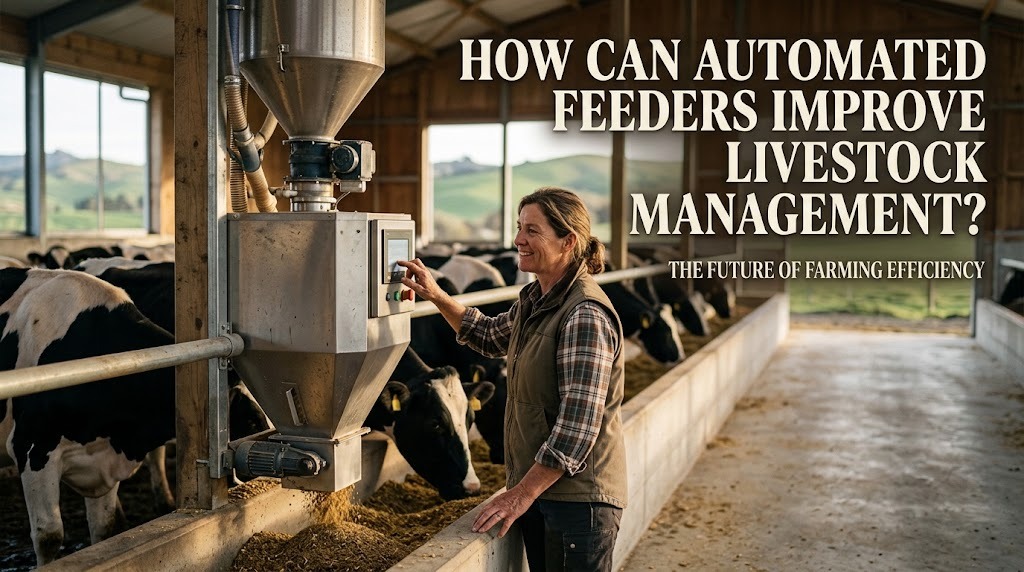
Livestock management requires careful attention to feeding schedules, feed quantities, animal health, and production costs. Traditional feeding methods often involve repetitive manual work and can make it difficult to distribute feed consistently across large farms. Automated feeders help address these challenges by delivering measured amounts of feed according to predefined schedules or sensor-based instructions. When properly implemented, these systems can improve feeding efficiency, reduce waste, and support better livestock management.
HOW AUTOMATED FEEDERS WORK
Automated feeders use mechanical equipment, electronic controllers, and sometimes sensors to distribute feed to livestock. Depending on the system, feed may be stored in a hopper and delivered through conveyors, augers, or dispensing mechanisms. Programmable controls determine when feeding occurs and how much feed is released. More advanced systems can integrate animal identification technology, weight measurements, or feeding behavior data to adjust distribution. The design depends on the livestock species, farm layout, feed type, and production objectives.
IMPROVING FEEDING SCHEDULES
Consistent feeding schedules help farmers manage daily livestock routines more efficiently. Automated feeders can dispense feed at predetermined times, reducing dependence on manual feeding rounds. Regular delivery helps farms maintain predictable feeding patterns and can make it easier to coordinate other activities, such as cleaning, health checks, and production monitoring. Some systems also allow farmers to adjust schedules remotely. However, feeding frequency and timing should match the nutritional needs and behavior of the animals being raised.
PROVIDING MORE ACCURATE FEED PORTIONS
Automated feeding systems can measure and dispense specific quantities of feed, helping farmers maintain consistent portions. Accurate distribution is important because both insufficient and excessive feeding can affect animal health and production. For example, dairy cattle may require different feed quantities depending on body weight, milk production, and nutritional requirements. Automated systems can support these differences when they are configured with appropriate feeding plans. Regular calibration is necessary to prevent inaccurate dispensing caused by mechanical wear or changes in feed characteristics.
REDUCING FEED WASTE AND FARM COSTS
Feed represents a significant operating expense in many livestock operations. Automated feeders can reduce waste by delivering controlled portions and limiting unnecessary feed distribution. Some systems use sensors or scheduled dispensing to help prevent excessive accumulation of uneaten feed. Better feed management may also improve inventory planning and help farmers identify unusual consumption patterns. However, savings depend on equipment costs, maintenance requirements, feed prices, and the effectiveness of the feeding program.
MONITORING ANIMAL HEALTH AND FEEDING BEHAVIOR
Advanced automated feeders can collect information about feeding frequency, consumption, and individual animal activity. When combined with electronic identification, the system may record how much feed each animal consumes over time. A sudden decline in consumption can indicate a potential health issue, although it does not establish a diagnosis on its own. Farmers can use these changes as an early warning to inspect animals and seek veterinary advice when necessary. Reliable monitoring requires accurate sensors and a clear process for responding to unusual readings.
SUPPORTING DIFFERENT TYPES OF LIVESTOCK
Automated feeders can be adapted for cattle, pigs, poultry, sheep, and other farm animals. Poultry systems often distribute feed through connected feeding lines, while pig farms may use controlled dispensers or individual feeding stations. Cattle operations can use automated systems to deliver feed mixtures or distribute feed along feeding areas. Each design must account for animal size, feeding behavior, group structure, and nutritional requirements. Choosing species-appropriate equipment helps ensure that animals can access feed safely and consistently.
INTEGRATING FEEDERS WITH SMART FARMING TECHNOLOGY
Automated feeders can connect with farm management software, environmental sensors, and livestock monitoring systems. These connections allow farmers to review feeding records, track inventory, and compare feed consumption with growth or production data. Some systems use data analysis to identify patterns and recommend adjustments to feeding schedules. Remote monitoring can also help farmers detect equipment faults or low feed supplies before they interrupt operations. Effective integration depends on reliable connectivity, compatible equipment, and accurate data management.
CHALLENGES OF AUTOMATED FEEDING SYSTEMS
Despite their advantages, automated feeders require an initial investment and ongoing maintenance. Feed can clog dispensing mechanisms, sensors may become dirty, and electrical or mechanical failures can interrupt delivery. Farms must also provide suitable power supplies, clean equipment regularly, and train workers to operate the system. Poorly configured feeding programs may distribute inappropriate quantities or prevent some animals from accessing enough feed. Manual inspections and backup procedures remain important to protect animal welfare and maintain continuity.
THE FUTURE OF AUTOMATED LIVESTOCK FEEDING
Advances in artificial intelligence, precision livestock farming, and connected sensors are making automated feeding systems more adaptable. Future systems may combine animal identification, weight estimates, health indicators, and feed consumption records to support individualized nutrition. Predictive analytics could help farmers anticipate feed demand and identify abnormal behavior earlier. More efficient motors and improved dispensing mechanisms may also reduce energy use and waste. These developments can support more data-driven livestock management when combined with sound veterinary and nutritional practices.
CONCLUSION
Automated feeders improve livestock management by providing consistent feeding schedules, accurate portions, and better records of feed consumption. They can reduce repetitive labor, limit waste, and help farmers identify changes in animal feeding behavior. Although investment, maintenance, and proper configuration remain important considerations, well-designed systems can make livestock operations more efficient. Combining automation with regular animal observation and professional nutritional guidance supports healthier and more productive herds and flocks.
Recent Posts

Bagaimana Sistem SKS pada Program Kuliah... 22.11.2026/49 View

How Does Technology Make Daily Evaluation... 21.11.2026/77 View

Apa Strategi Menghadapi Kesenjangan antara Kompetensi... 21.11.2026/78 View

Mengapa Inventaris Aset Penting bagi Kelancaran... 21.11.2026/74 View

When Should Musicians Join a Record... 21.11.2026/79 View
