

How Can Beginners Become Professional Designers?
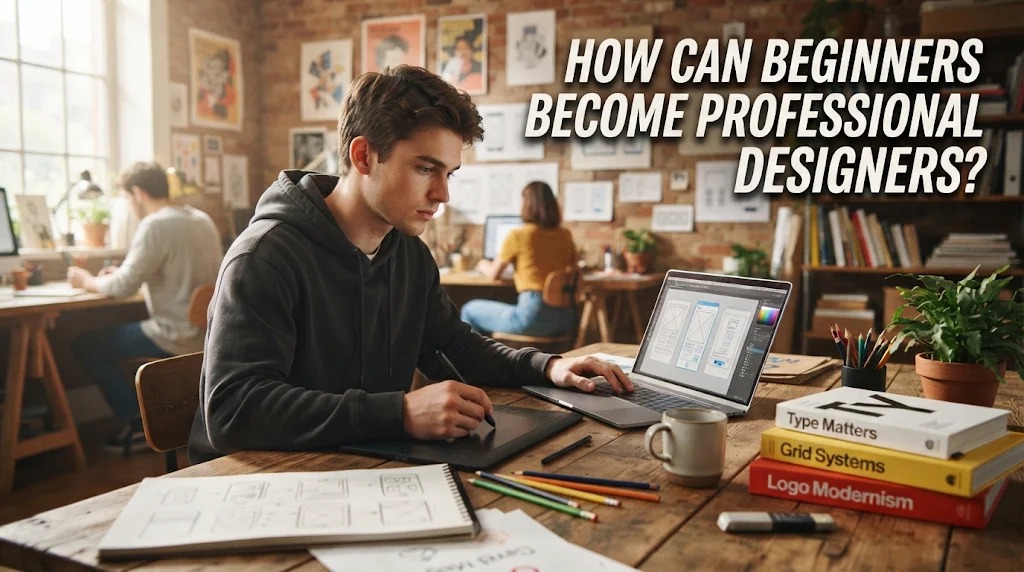
Becoming a professional designer is an achievable goal for beginners who have creativity, motivation, and a willingness to learn. In today's digital era, design skills are needed in many industries, including advertising, technology, business, education, and entertainment. Designers help individuals and companies communicate ideas through attractive and functional visual content. However, becoming a professional designer requires more than simply knowing how to use design software. Beginners must develop their skills, understand design principles, build experience, and learn how to work with clients. With consistent practice and the right learning strategy, beginners can gradually turn their interest in design into a professional career.
UNDERSTAND THE BASICS OF DESIGN
The first step toward becoming a professional designer is understanding the basic principles of design. Beginners should learn about color combinations, typography, composition, balance, contrast, spacing, and visual hierarchy. These elements help designers create visual content that looks attractive and communicates information clearly. Understanding these principles is important because good design is not only about appearance but also about delivering messages effectively.
Beginners can start by studying simple design examples from posters, advertisements, websites, and social media content. Observing how professional designers arrange elements can help develop visual awareness and creative thinking. It is also important to understand the purpose of different design styles and how they influence audiences. By learning the fundamentals before focusing on advanced techniques, beginners can build a strong foundation for their future careers.
LEARN DESIGN SOFTWARE AND DIGITAL TOOLS
After understanding the basic principles, beginners should learn how to use design software and digital tools. Some popular applications include Adobe Photoshop, Adobe Illustrator, Canva, Figma, and CorelDRAW. Each application has different functions depending on the type of design being created. For example, Photoshop is commonly used for image editing, Illustrator for vector graphics, Canva for accessible graphic design, and Figma for user interface and user experience design.
Beginners do not need to master every application at once. They can choose one or two tools that match their interests and practice using their main features. Following tutorials, taking online courses, and completing small design projects can make the learning process easier. As their abilities improve, they can explore more advanced features and additional software. Understanding digital tools will help designers work more efficiently and meet different professional requirements.
PRACTICE REGULARLY AND DEVELOP CREATIVE SKILLS
Regular practice is one of the most important factors in becoming a professional designer. Beginners should make time to create different types of designs, such as posters, logos, brochures, social media content, and website layouts. These activities help improve technical abilities and develop a better understanding of visual communication. Practicing with different projects also allows beginners to discover their strengths and identify areas that need improvement.
Creativity can be developed through observation, experimentation, and learning from different sources of inspiration. Beginners can explore design trends, study professional portfolios, visit creative platforms, and observe how visual elements are used in everyday life. However, inspiration should not lead to copying another designer's work. Instead, beginners should use references to develop their own ideas and creative approaches. Consistent practice will gradually improve the quality, originality, and confidence of their work.
BUILD A PROFESSIONAL PORTFOLIO AND GAIN EXPERIENCE
A professional portfolio is essential for beginners who want to enter the design industry. It serves as a collection of their best work and helps potential clients or employers evaluate their abilities. A good portfolio should contain several design projects that demonstrate technical skills, creativity, consistency, and an understanding of design principles. Beginners who do not have professional experience can include personal projects, practice assignments, and fictional client projects.
Besides creating a portfolio, beginners should look for opportunities to gain practical experience. They can participate in internships, join creative communities, work on campus projects, or accept small freelance assignments. These experiences help them understand real project requirements, communicate with clients, and manage deadlines. Receiving feedback from experienced designers is also valuable because it helps identify mistakes and improve future work. Over time, practical experience and a strong portfolio can increase their chances of finding professional opportunities.
DEVELOP COMMUNICATION SKILLS AND UNDERSTAND CLIENT NEEDS
Professional designers need more than technical and creative abilities. They must also communicate effectively with clients, coworkers, and other professionals. Good communication helps designers understand project goals, target audiences, design preferences, budgets, and deadlines. Before starting a project, designers should ask relevant questions and make sure they understand what the client expects. This process reduces misunderstandings and helps produce designs that match the intended purpose.
Beginners should also learn how to receive criticism and respond to revisions professionally. Not every client will immediately accept the first design, so designers must be willing to make reasonable improvements. Time management, problem-solving, teamwork, and responsibility are equally important in professional design work. By developing these soft skills, beginners can build trust, maintain good working relationships, and create better career opportunities.
CONCLUSION
Becoming a professional designer requires continuous learning, regular practice, and practical experience. Beginners should start by understanding design principles, learning relevant software, and developing their creative abilities. Building a strong portfolio and gaining experience through real projects can help demonstrate their professional potential. They should also improve communication skills and learn to understand client expectations. Although the process takes time, consistent effort and a willingness to improve can help beginners develop into skilled designers and build successful careers in the creative industry.
Recent Posts

How Does Technology Make Daily Evaluation... 21.11.2026/58 View

Apa Strategi Menghadapi Kesenjangan antara Kompetensi... 21.11.2026/60 View

Mengapa Inventaris Aset Penting bagi Kelancaran... 21.11.2026/56 View

When Should Musicians Join a Record... 21.11.2026/55 View

Daily Evaluation or Daily Planning Which... 21.11.2026/63 View
