

How Can Beginners Become Professional Radio Announcers?
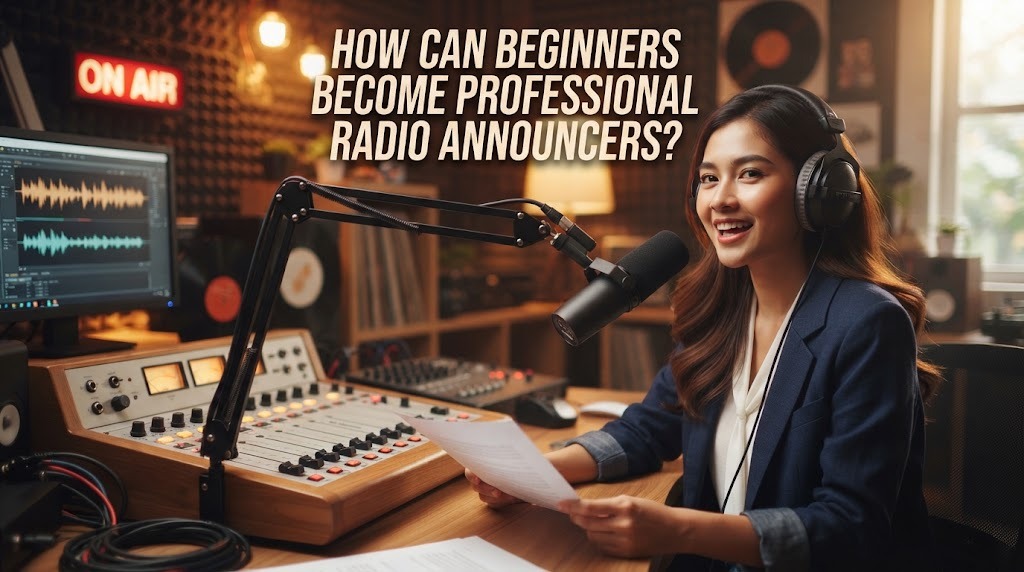
Becoming a professional radio announcer can be an exciting career path for people who enjoy speaking, communicating, and entertaining audiences. A radio announcer does more than simply read scripts or introduce songs. They need to communicate clearly, create an engaging atmosphere, interact with listeners, and deliver information accurately. With consistent practice and the right skills, beginners can gradually develop the abilities needed to work professionally in radio broadcasting.
UNDERSTAND THE ROLE OF A RADIO ANNOUNCER
A radio announcer is responsible for communicating with listeners through spoken content. Their work may include introducing music, delivering news, presenting programs, conducting interviews, reading advertisements, and interacting with audiences. Depending on the station and program, announcers may also prepare topics, research information, and work with producers before going on air. This makes the profession a combination of communication, preparation, creativity, and performance.
Beginners should understand that professional radio work requires more than having a pleasant voice. An announcer must know how to control their tone, pronunciation, pace, and emotional expression. They also need to understand the character of their radio station and target audience. Learning these responsibilities gives beginners a clearer idea of what they need to improve.
DEVELOP STRONG SPEAKING SKILLS
Clear speaking is one of the most important skills for anyone who wants to become a radio announcer. Listeners cannot see the speaker, so every word needs to be understandable through audio alone. Beginners should practice pronunciation, articulation, breathing, and sentence delivery regularly. Reading articles, news scripts, or short stories aloud can help improve speaking ability.
Beginners should also practice changing their tone and speaking rhythm. A flat delivery can make even interesting information sound boring. On the other hand, excessive expression can make a broadcast feel unnatural. The goal is to develop a confident and natural speaking style that keeps listeners interested.
PRACTICE PUBLIC SPEAKING AND VOICE CONTROL
Public speaking practice can help beginners become more comfortable using their voices. They can practice speaking in front of a mirror, recording their voice, or presenting short topics to friends. Listening to recordings is particularly useful because it allows beginners to identify unclear pronunciation, unnecessary pauses, or repetitive words. Regular practice can gradually improve confidence and vocal control.
Voice control also involves breathing correctly. Good breathing helps announcers maintain stable volume and avoid sounding rushed. Beginners should learn to pause naturally between ideas and use appropriate emphasis when delivering important information. These simple techniques can make their voice sound more professional and engaging.
LEARN BASIC RADIO BROADCASTING TECHNIQUES
Understanding basic broadcasting techniques is essential for beginners who want to work professionally. They should learn how radio programs are structured, including introductions, transitions, music segments, advertisements, interviews, and closing sections. Beginners should also become familiar with terms commonly used in broadcasting. This knowledge can make it easier to communicate with producers and other members of a radio team.
Technical knowledge is also useful because radio announcers often work closely with studio equipment. Beginners can learn the basic functions of microphones, headphones, audio mixers, and broadcasting software. They do not necessarily need to become audio engineers, but understanding the equipment can help them work more confidently in a studio environment.
BUILD KNOWLEDGE AND RESEARCH HABITS
A professional radio announcer needs reliable information to create useful and interesting content. Beginners should develop the habit of researching topics before discussing them on air. They should compare information from credible sources and avoid presenting unverified claims as facts. Good preparation also helps announcers speak more naturally because they understand the subject they are discussing.
Having broad knowledge can make an announcer more versatile. Topics may include entertainment, education, lifestyle, technology, culture, sports, or current events, depending on the program. Beginners should gradually develop knowledge in areas that match their interests and the audience they want to reach. Strong preparation can also make interviews and discussions more meaningful.
IMPROVE LISTENER ENGAGEMENT
Radio announcers need to create a connection with their audience even though they cannot see their listeners. Beginners can learn to use conversational language that sounds natural rather than overly formal. They can also ask questions, respond to listener messages, and create discussions around topics that interest their audience. This approach can make a radio program feel more personal.
Understanding the target audience is important for effective communication. A program for young listeners may use a different style from a news or educational program. Beginners should learn to adjust their vocabulary, tone, humor, and delivery according to the program format. The ability to connect with different audiences is an important quality of a professional announcer.
GAIN PRACTICAL EXPERIENCE
Practical experience allows beginners to apply their communication skills in real situations. They can start by joining campus radio stations, community radio activities, broadcasting clubs, or other media projects. These opportunities can teach them how to prepare scripts, operate within a program schedule, and communicate with a production team. Experience also helps beginners become more comfortable speaking under time pressure.
Internships can provide another valuable pathway into the broadcasting industry. Working directly in a radio station allows beginners to observe professional announcers and understand daily broadcasting routines. They can learn from feedback and gradually take on more responsibilities. Building experience step by step is often more effective than waiting until every skill feels perfect.
CREATE A PROFESSIONAL VOICE PORTFOLIO
A voice portfolio can help beginners demonstrate their abilities to radio stations and potential employers. It may contain short recordings that show different styles, such as music presentation, news reading, advertising, interviews, or conversational broadcasting. Each recording should have clear audio and demonstrate natural delivery. A portfolio does not need to be very long because the quality and variety of the samples are more important.
Beginners should update their portfolio as their skills improve. Feedback from experienced broadcasters, lecturers, producers, or communication professionals can help identify areas that need improvement. A strong portfolio can make it easier for recruiters to understand a candidate's voice, style, and communication abilities.
DEVELOP PROFESSIONAL ATTITUDES
Professional attitude is just as important as speaking ability. Radio announcers need to be punctual, prepared, responsible, adaptable, and willing to receive feedback. They often work according to strict program schedules, so being able to manage time is essential. They also need to cooperate with producers, technicians, guests, and other broadcasters.
Mistakes can happen during live broadcasts, especially when someone is still learning. Professional announcers learn how to stay calm and recover without creating unnecessary confusion. Beginners should treat mistakes as opportunities to improve rather than reasons to lose confidence. A positive attitude and willingness to keep learning can support long term career development.
KEEP LEARNING AND FOLLOW INDUSTRY TRENDS
The broadcasting industry continues to develop alongside digital media. Radio announcers may now interact with audiences through social media, streaming platforms, podcasts, and digital content. Beginners should therefore develop skills beyond traditional broadcasting. Understanding digital communication can make them more adaptable to changing media environments.
Continuous learning can also help announcers remain competitive. They can study communication techniques, audio production, interviewing, storytelling, and content creation. Listening to experienced broadcasters can provide useful examples of professional delivery. The more consistently beginners practice and learn, the greater their opportunity to develop into professional radio announcers.
CONCLUSION
Becoming a professional radio announcer requires communication skills, voice control, broadcasting knowledge, practical experience, and a strong professional attitude. Beginners can start by practicing their speaking skills, learning basic broadcasting techniques, researching topics carefully, and building confidence through real experience. Creating a voice portfolio can also help demonstrate their abilities when applying for broadcasting opportunities. Most importantly, aspiring announcers should continue learning and accept feedback throughout their development. With consistent practice, preparation, and dedication, beginners can build the skills needed to pursue a professional career in radio broadcasting.
Recent Posts

Bagaimana Sistem SKS pada Program Kuliah... 22.11.2026/35 View

How Does Technology Make Daily Evaluation... 21.11.2026/69 View

Apa Strategi Menghadapi Kesenjangan antara Kompetensi... 21.11.2026/69 View

Mengapa Inventaris Aset Penting bagi Kelancaran... 21.11.2026/67 View

When Should Musicians Join a Record... 21.11.2026/68 View
