

How Can Better Urban Planning Help Solve Traffic Congestion?
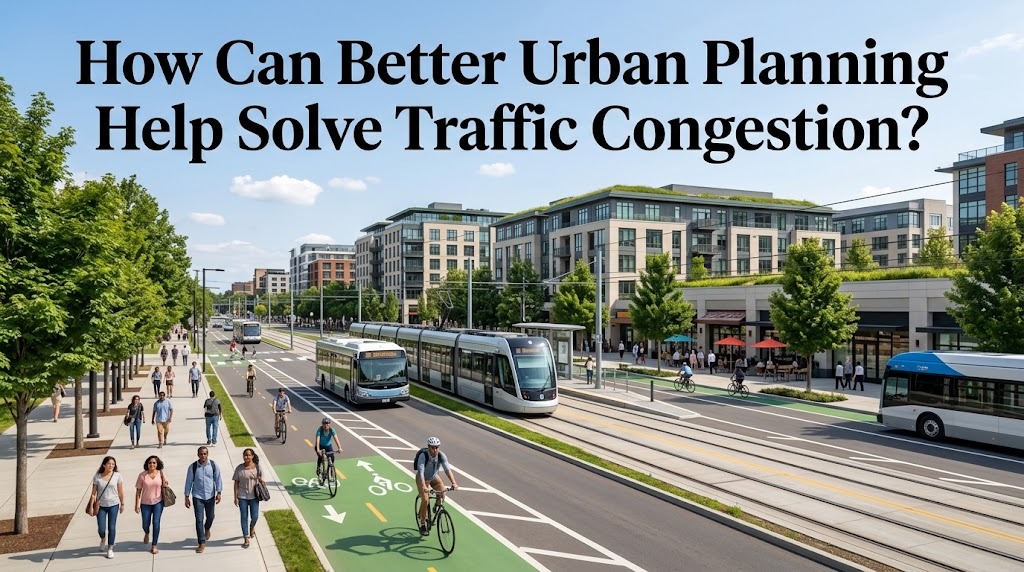
Traffic congestion is a common problem in growing cities, where increasing populations and rising vehicle ownership place pressure on existing roads. Long traffic delays waste time, increase fuel consumption, contribute to air pollution, and reduce people's quality of life. Although building new roads may appear to be a practical solution, it does not always solve congestion in the long term. Better urban planning offers a more sustainable approach by organizing residential areas, workplaces, public facilities, and transportation networks more efficiently. With thoughtful planning, cities can reduce unnecessary travel, improve public transportation, and create safer, more accessible urban environments.
CREATING MIXED-USE NEIGHBORHOODS
One important way urban planning can reduce traffic congestion is by developing mixed-use neighborhoods. These areas combine housing, offices, shops, schools, healthcare facilities, and other essential services within a convenient distance. When people can reach their daily destinations nearby, they may not need to drive long distances for routine activities. This can reduce the number of private vehicles traveling across the city, especially during busy commuting periods.
Mixed-use development also encourages walking and cycling when streets are safe and pedestrian facilities are well designed. For example, residents may be able to walk to a grocery store, cycle to a nearby school, or use public transportation to reach their workplaces. This approach can make neighborhoods more active and reduce dependence on motor vehicles. However, mixed-use development must include sufficient services, safe streets, and affordable housing to meet residents' needs. When implemented effectively, it can shorten daily journeys and reduce pressure on major roads.
IMPROVING PUBLIC TRANSPORTATION NETWORKS
Public transportation is an essential part of urban planning because it allows large numbers of people to travel without using individual cars or motorcycles. Cities can plan bus routes, railway stations, and transit connections around residential areas, employment centers, and educational institutions. A well-connected network makes it easier for passengers to reach their destinations without relying entirely on private vehicles. Reliable schedules, affordable fares, and convenient transfers can also encourage more people to use public transportation.
Urban planners should consider public transportation from the beginning of a development project rather than adding it after neighborhoods become crowded. Residential areas with convenient access to bus stops or train stations can reduce the need for daily car journeys. Cities can also introduce dedicated bus lanes and improve connections between different transport services. These measures help public transportation operate more efficiently, even when road space is limited. As more commuters use shared transportation, congestion may decrease and existing roads can serve more people.
DEVELOPING WALKABLE AND CYCLING-FRIENDLY CITIES
Cities can reduce traffic congestion by creating environments where people can safely walk or cycle for short trips. Walkable urban design includes continuous sidewalks, safe pedestrian crossings, appropriate street lighting, and convenient access to essential services. When walking becomes comfortable and safe, residents may choose it instead of using cars or motorcycles for nearby destinations. This can reduce the number of short vehicle trips that contribute to busy streets and crowded intersections.
Cycling infrastructure is equally important for sustainable urban mobility. Protected bicycle lanes, secure parking facilities, and clear connections between neighborhoods can make cycling a practical option for commuting. Urban planners should design these facilities to connect homes with schools, offices, shopping areas, and public transportation stations. Safe infrastructure is particularly important on roads with heavy traffic, where cyclists and pedestrians may face greater risks. By supporting walking and cycling, cities can reduce vehicle dependence while improving public health and the overall quality of urban life.
MANAGING LAND USE AND POPULATION GROWTH
Poorly coordinated land use can increase traffic congestion when homes, workplaces, schools, and commercial areas are located far apart. Residents may have little choice but to travel long distances by car or motorcycle, especially when public transportation is limited. Integrated land-use planning helps coordinate development so that housing, employment, and essential services are better connected. This can reduce unnecessary travel and make transportation networks more efficient.
Cities also need to manage population growth and urban expansion carefully. Uncontrolled development at the edges of cities can create sprawling neighborhoods that are difficult to serve with efficient public transportation. Planners can encourage compact development in suitable locations while protecting green spaces and ensuring access to public facilities. New housing projects should be supported by adequate transport links, schools, healthcare services, and other essential infrastructure. By coordinating development with transportation needs, cities can reduce long-term pressure on roads and avoid creating patterns of travel that encourage excessive car use.
USING SMART TECHNOLOGY AND EFFECTIVE TRAFFIC MANAGEMENT
Modern technology can help urban planners understand how roads are used and where congestion occurs most frequently. Traffic monitoring systems, road sensors, and digital mapping tools can provide information about vehicle volumes, travel times, and recurring bottlenecks. Planners can use this information to improve intersection designs, adjust traffic signal timing, and identify locations where road management needs attention. Data-driven decisions can help cities make better use of existing infrastructure without immediately building additional roads.
Smart technology should also be combined with effective traffic management policies. Cities can coordinate traffic signals across major routes, improve public transportation information, enforce parking regulations, and manage traffic around schools and business districts. In some locations, parking charges or congestion pricing may help discourage unnecessary vehicle trips into crowded areas. However, these policies should be introduced alongside reliable transportation alternatives so that residents are not unfairly disadvantaged. Technology and policy work best when they support a broader urban planning strategy rather than operate as isolated solutions.
STRENGTHENING GOVERNMENT POLICIES AND LONG-TERM PLANNING
Government leadership is essential for turning urban planning strategies into practical improvements. Local authorities need to coordinate transportation, housing, environmental protection, and economic development policies. Without coordination, one department may approve new housing developments while another fails to provide adequate transport connections. Integrated urban planning helps ensure that development decisions support the city's long-term mobility goals.
Governments should also involve residents, businesses, transportation operators, and community organizations in the planning process. Public participation helps identify local problems, such as unsafe crossings, unreliable bus services, or inadequate access to essential facilities. Cities should regularly evaluate policies using indicators such as average travel time, public transportation use, traffic volume, road safety, and air quality. Long-term planning must also consider population changes, new technologies, and the needs of people with disabilities and lower incomes. Through consistent investment, public participation, and evidence-based decisions, cities can create transportation systems that remain effective as urban areas grow.
CONCLUSION
Better urban planning can help solve traffic congestion by reducing unnecessary journeys and making transportation more efficient. Mixed-use neighborhoods, reliable public transportation, walkable streets, and cycling facilities can reduce dependence on private vehicles. Coordinated land use, smart traffic technology, and effective government policies can further improve the use of existing roads. These strategies require long-term commitment and cooperation among planners, authorities, businesses, and residents. By integrating transportation with housing and community development, cities can reduce congestion, improve air quality, and create more accessible and sustainable urban environments.
Recent Posts

Bagaimana Sistem SKS pada Program Kuliah... 22.11.2026/54 View

How Does Technology Make Daily Evaluation... 21.11.2026/83 View

Apa Strategi Menghadapi Kesenjangan antara Kompetensi... 21.11.2026/81 View

Mengapa Inventaris Aset Penting bagi Kelancaran... 21.11.2026/78 View

When Should Musicians Join a Record... 21.11.2026/82 View
