

How Can Big Data Help Schools Understand Individual Student Learning Needs?
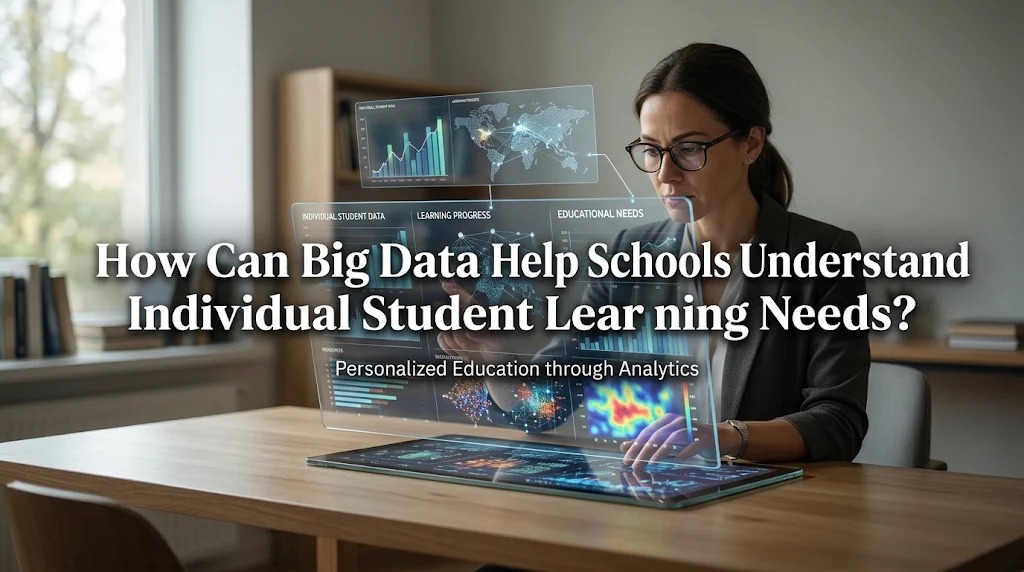
Big Data has become an increasingly important technology in modern education. Schools generate large amounts of information through student attendance records, examination results, assignment submissions, classroom activities, and digital learning platforms. When this information is collected and analyzed properly, it can help schools understand how students learn, identify academic difficulties, and develop more effective teaching strategies. Instead of relying only on general classroom observations, teachers and school administrators can use educational data to make better decisions.
Every student has different learning abilities, interests, challenges, and academic development. Some students understand lessons quickly, while others need additional explanations and practice to achieve similar results. Big Data helps schools recognize these differences by identifying patterns in student performance and learning behavior. With accurate analysis, schools can provide more appropriate educational support and create personalized learning experiences that match individual student needs.
IDENTIFYING STUDENTS' ACADEMIC STRENGTHS AND WEAKNESSES
One of the main benefits of Big Data in education is its ability to help schools identify students' academic strengths and weaknesses. Schools can collect information from examination results, daily assignments, classroom participation, and learning progress reports. By analyzing this information, teachers can recognize subjects that students understand well and topics that require additional attention. For example, a student may consistently achieve high scores in language subjects but experience difficulties in mathematics. This information helps teachers understand individual academic conditions more accurately.
Data analysis also allows teachers to recognize learning difficulties before they become more serious problems. If a student's examination scores continue to decrease or assignment completion becomes inconsistent, teachers can investigate the possible causes. They may discover that the student needs additional explanations, different learning materials, or more individual guidance. This approach helps schools provide support based on actual learning evidence rather than assumptions. As a result, academic performance analysis can improve the accuracy of educational evaluations and help students develop their abilities.
DEVELOPING PERSONALIZED LEARNING STRATEGIES
Big Data can help schools create learning strategies that match individual student needs. By analyzing academic records, learning progress, and student interactions with educational platforms, schools can identify different learning patterns. Some students may benefit from visual materials, while others understand concepts more effectively through reading, discussion, or practical activities. Teachers can use these findings to select appropriate teaching methods and learning resources. This allows classroom instruction to become more responsive to student differences.
Personalized learning strategies can also help students progress according to their abilities. Students who experience difficulties can receive additional exercises and explanations, while students who demonstrate strong understanding can explore more challenging materials. Digital learning platforms may also recommend educational content based on previous learning activities. However, teachers should not rely entirely on automated recommendations because student needs also involve personal circumstances and classroom interactions. Personalized education becomes more effective when data analysis is combined with professional teacher judgment.
MONITORING STUDENT LEARNING PROGRESS CONTINUOUSLY
Another important contribution of Big Data is its ability to support continuous monitoring of student development. Traditional evaluations often focus on examination results at specific periods, which may not fully represent a student's learning journey. Through digital education systems, schools can monitor assignment completion, quiz results, attendance, and participation over time. This information provides a broader picture of how students develop their knowledge and skills. Teachers can also compare current performance with previous results to identify improvements or emerging difficulties.
Continuous monitoring allows schools to respond more quickly when students need assistance. For example, if a student repeatedly fails to complete assignments, teachers can communicate with the student and parents to understand the situation. Schools can also identify whether certain learning materials or teaching approaches are creating difficulties for several students. This information supports more timely educational interventions. By using student progress tracking, schools can evaluate learning development more consistently and provide appropriate academic support.
HELPING TEACHERS IMPROVE TEACHING EFFECTIVENESS
Big Data does not only provide information about students but also helps teachers evaluate the effectiveness of their teaching methods. By examining classroom performance, assignment results, and student participation, teachers can identify which teaching strategies produce better learning outcomes. For example, if students perform better after using interactive learning materials, teachers may consider incorporating similar activities into future lessons. Data can also reveal topics that consistently create difficulties across different classes. This allows teachers to adjust their explanations and learning activities based on actual student responses.
Furthermore, educational data can help teachers plan lessons more efficiently. They can identify students who need additional guidance, prepare different levels of exercises, and organize classroom discussions based on learning progress. School administrators can also use aggregated data to identify areas where teachers may need professional development. However, data should support rather than replace teachers' professional experience and understanding of students. Data-driven teaching is most effective when analytical information is combined with direct observation, communication, and appropriate educational judgment.
PREDICTING LEARNING DIFFICULTIES AND PROVIDING EARLY SUPPORT
Big Data can help schools recognize patterns that may indicate a risk of academic difficulties. By analyzing information such as attendance, examination results, assignment completion, and learning participation, schools may identify students who need additional attention. For example, repeated absences combined with declining academic performance may indicate that a student is experiencing difficulties that require further investigation. Early identification allows teachers and school counselors to provide support before the situation becomes more serious. This approach can help prevent students from falling further behind in their education.
Predictive analysis can also help schools plan appropriate intervention programs. Students who struggle with particular subjects may receive additional tutoring, remedial lessons, or individual learning guidance. Schools can evaluate whether these interventions improve student performance by monitoring subsequent learning results. However, predictions generated from data are not always accurate and should never be treated as definite conclusions about a student's future. Teachers must consider personal circumstances and communicate directly with students before making important decisions. Early academic intervention works best when data analysis is combined with empathy, careful evaluation, and human support.
STRENGTHENING DATA SECURITY AND RESPONSIBLE DATA MANAGEMENT
Although Big Data provides many educational benefits, collecting student information also creates responsibilities for schools. Academic records, personal details, attendance information, and learning histories must be protected against unauthorized access. If this information is managed carelessly, students may face privacy violations or misuse of their personal data. Schools therefore need secure digital systems, controlled access permissions, and clear procedures for collecting and storing educational information. Data should only be used for legitimate educational purposes.
Schools must also ensure that data analysis does not create unfair treatment or discrimination. For example, students should not be labeled as academically weak based on a limited number of examination results or automated predictions. Educational decisions must consider individual development, personal circumstances, and opportunities for improvement. Teachers, administrators, and technology providers need to understand their responsibilities when handling student information. By applying data privacy, information security, and ethical data management, schools can use Big Data responsibly while maintaining students' trust and protecting their rights.
CONCLUSION
Big Data helps schools understand individual student learning needs by providing detailed information about academic performance, learning progress, classroom participation, and educational challenges. Through data analysis, teachers can identify student strengths and weaknesses, develop personalized learning strategies, monitor academic development, and provide early support. These capabilities allow schools to make more informed decisions and improve the effectiveness of teaching activities.
However, the successful use of Big Data requires accurate information, reliable digital systems, qualified teachers, and strong data protection practices. Schools must ensure that educational decisions remain fair and consider students as individuals rather than relying entirely on numerical results. By combining data-driven education with professional teacher guidance, schools can create more responsive learning environments and help every student reach their academic potential.
Recent Posts

Bagaimana Sistem SKS pada Program Kuliah... 22.11.2026/33 View

How Does Technology Make Daily Evaluation... 21.11.2026/67 View

Apa Strategi Menghadapi Kesenjangan antara Kompetensi... 21.11.2026/67 View

Mengapa Inventaris Aset Penting bagi Kelancaran... 21.11.2026/65 View

When Should Musicians Join a Record... 21.11.2026/66 View
