

How Can Bodily Kinesthetic Intelligence Help People Discover Their Potential?
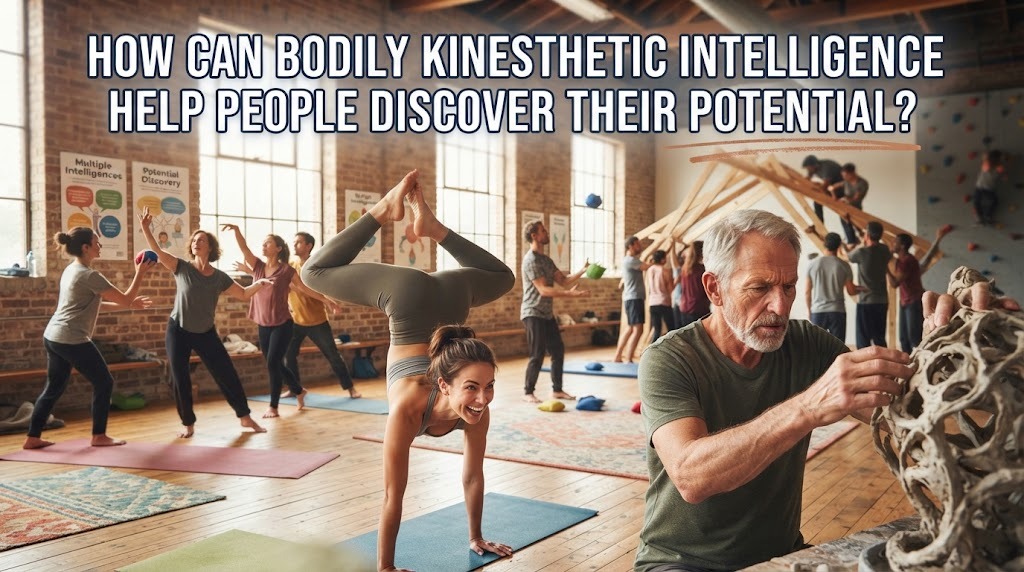
Bodily kinesthetic intelligence is often discussed in Howard Gardner’s theory of multiple intelligences. It refers to the ability to use the body effectively, control movement, and learn through physical activity. People with this strength may enjoy activities that involve movement, practice, touch, or direct experience. Understanding this ability can help people recognize skills that may not appear through traditional academic activities. It can also encourage them to explore their potential in different ways.
UNDERSTANDING BODILY KINESTHETIC INTELLIGENCE
Bodily kinesthetic intelligence involves using the body with coordination, control, and awareness. A person with this strength may be comfortable with activities such as sports, dancing, acting, crafting, or practical work. They may also understand certain ideas more easily when they can practice them instead of only reading or listening. This does not mean that someone must be an athlete to have bodily kinesthetic strengths. The ability can appear in many different forms and levels.
Recognizing this intelligence can help people understand that learning and ability can develop in different ways. Some people discover their strengths when they work with their hands or solve problems through physical experience. This awareness can become an important starting point for exploring personal interests and abilities.
DISCOVERING STRENGTHS THROUGH MOVEMENT
Physical activities can reveal skills that a person may not notice during traditional classroom tasks. For example, someone may discover strong balance, coordination, timing, or body control while playing sports or learning dance. Another person may show excellent control while building, repairing, cooking, or creating handmade products. These experiences can provide useful information about personal strengths. Regular practice can also make these abilities easier to recognize.
Movement can therefore become a practical way to explore different interests. Instead of asking only what they are good at academically, people can also consider what activities make them focused, motivated, and willing to practice. These observations can help them identify areas that deserve further development.
BUILDING CONFIDENCE THROUGH PRACTICAL ACTIVITIES
Practical activities can give people opportunities to experience progress directly. When someone learns a new movement or skill, improvement can often be seen through repeated practice. This visible progress can increase confidence and motivation. Small achievements may encourage a person to try more challenging activities. Over time, these experiences can help them become more comfortable with their abilities.
Confidence is especially useful when discovering personal potential. A person who realizes that they can improve through practice may become more willing to face challenges. This mindset can support persistence, patience, and a willingness to learn from mistakes.
SUPPORTING DIFFERENT WAYS OF LEARNING
Bodily kinesthetic strengths can support learning through hands on experiences. Instead of simply memorizing information, learners can use demonstrations, experiments, simulations, models, or practical projects. These activities can make certain concepts easier to understand because learners connect information with direct experience. Movement can also make learning more active and engaging. However, people can have several strengths at the same time, so physical activities should complement rather than replace other learning methods.
Using different learning methods gives people more opportunities to find approaches that work well for them. A learner might understand a difficult concept after seeing it demonstrated or practicing it directly. This can reveal learning preferences and practical strengths that may otherwise remain unnoticed.
EXPLORING CAREER AND PERSONAL INTERESTS
Bodily kinesthetic abilities can be useful when exploring activities and careers that involve physical coordination or practical skills. Examples may include sports, dance, theater, healthcare, construction, design, culinary work, crafts, and technical fields. These areas require different combinations of knowledge and skills, so bodily kinesthetic ability alone does not determine career suitability. People should also consider their interests, education, values, and other abilities.
Exploring different activities can help someone learn what they enjoy and where they perform comfortably. Trying workshops, clubs, projects, volunteering, or practical courses can provide useful experiences. These experiences may help people make more informed decisions about future goals.
DEVELOPING POTENTIAL THROUGH REGULAR PRACTICE
Potential is not simply something a person either has or does not have. Many physical and practical skills can improve through consistent practice, feedback, and experience. A beginner may initially struggle with coordination or technique but become more capable after repeated training. Setting realistic goals can make progress easier to track. Feedback from teachers, coaches, or experienced people can also help identify areas that need improvement.
Practice should be balanced with rest and proper technique. Trying to improve too quickly can lead to frustration or unnecessary physical strain. A better approach is to develop skills gradually while paying attention to progress and personal limits. This can make learning more sustainable and enjoyable.
CONNECTING BODY SKILLS WITH OTHER ABILITIES
Bodily kinesthetic intelligence does not work separately from other abilities. Physical activities can also involve problem solving, communication, creativity, memory, and concentration. For example, a dancer needs to remember sequences, an athlete needs to make decisions during a game, and a craft maker may need to plan how different materials will work together. These examples show that physical skills can involve several types of thinking.
Recognizing these connections can give people a broader understanding of their potential. Someone may discover that their physical ability is strongest when combined with another interest. This combination can create new opportunities for creative projects, learning experiences, and personal growth.
CONCLUSION
Bodily kinesthetic intelligence can help people discover potential by encouraging them to explore movement, practical activities, and direct experience. It can reveal strengths such as coordination, body control, creativity, and practical problem solving. These strengths may also support confidence when people see themselves improving through practice. Exploring different activities can help individuals understand their interests and possible future directions. Most importantly, bodily kinesthetic ability is only one part of a person’s overall potential. Combining physical strengths with other skills, interests, and continued learning can create more opportunities for growth.
Recent Posts

Bagaimana Sistem SKS pada Program Kuliah... 22.11.2026/31 View

How Does Technology Make Daily Evaluation... 21.11.2026/67 View

Apa Strategi Menghadapi Kesenjangan antara Kompetensi... 21.11.2026/66 View

Mengapa Inventaris Aset Penting bagi Kelancaran... 21.11.2026/64 View

When Should Musicians Join a Record... 21.11.2026/65 View
