

How Can Businesses Improve Inventory Accuracy Through Logistics Management Systems?
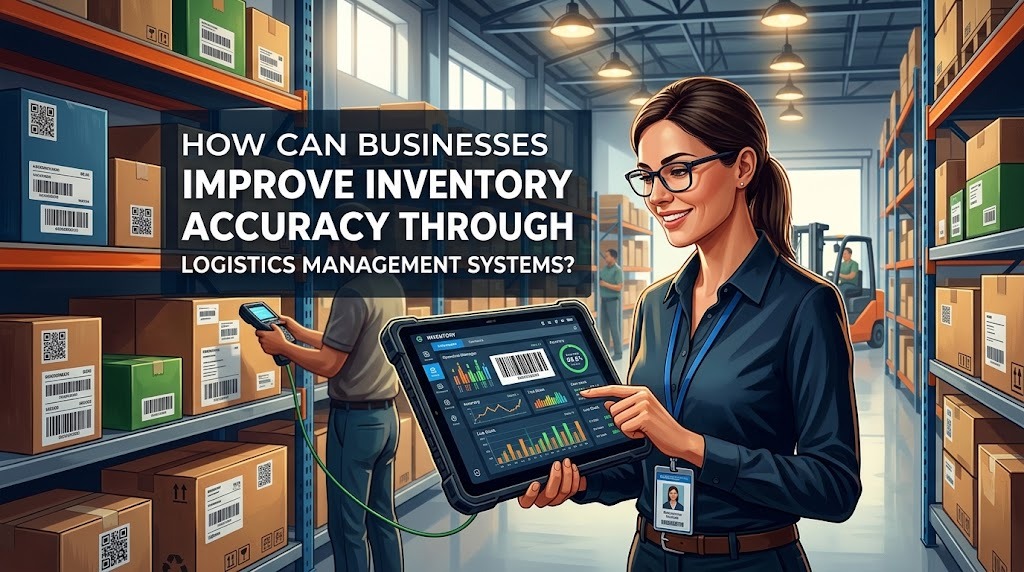
Inventory accuracy is essential for businesses that want to maintain efficient logistics operations, control costs, and satisfy customers. When inventory records do not match actual stock, companies may experience product shortages, overstocking, delayed deliveries, and unnecessary purchasing expenses. These problems can disrupt warehouse activities and reduce customer trust. Logistics management systems help businesses monitor inventory movements, organize product information, and improve coordination between warehouses, suppliers, and distribution teams. By combining reliable technology with consistent inventory procedures, companies can improve stock accuracy and make better operational decisions.
UNDERSTANDING INVENTORY ACCURACY IN LOGISTICS MANAGEMENT
Inventory accuracy refers to how closely recorded stock quantities match the actual products available in a warehouse or storage facility. Accurate records help businesses determine which products are available, which items need replenishment, and which orders can be fulfilled. When inventory information is incorrect, employees may spend additional time searching for missing products or correcting order mistakes.
Logistics management systems support inventory accuracy by organizing information about receiving, storage, movement, and dispatch. For example, when a warehouse receives a shipment, employees can record the quantities and update stock information in the system. When products are sold or transferred, the records should be updated accordingly. Consistent inventory tracking allows businesses to maintain reliable stock information and reduce errors throughout their logistics operations.
USING INVENTORY MANAGEMENT SOFTWARE
Inventory management software helps businesses record and monitor stock levels through a centralized digital system. Instead of depending entirely on handwritten documents or separate spreadsheets, employees can access updated information about product quantities and locations. Real time inventory updates, when supported by the system and properly implemented, help reduce discrepancies caused by delayed or repeated data entry.
These systems can also provide low-stock alerts, stock movement reports, and information about products that sell quickly or remain in storage for long periods. Managers can use these features to plan replenishment and avoid purchasing more products than necessary. Businesses should choose software that matches their operational needs, product volume, and budget. Suitable inventory software improves visibility, supports accurate records, and makes inventory management more efficient.
IMPLEMENTING BARCODE AND RFID TECHNOLOGY
Barcode technology helps employees identify products quickly by scanning labels with compatible devices. Each barcode can connect a product to information stored in the inventory system, reducing the need for manual data entry. Barcode scanning can improve accuracy during receiving, picking, packing, and shipping when employees follow consistent scanning procedures.
Radio-frequency identification, or RFID, uses radio waves to identify tagged items and can support inventory tracking without requiring every tag to be scanned individually. Depending on the equipment and setup, RFID may help businesses monitor multiple tagged products more efficiently. However, implementation costs, tag compatibility, product materials, and warehouse conditions should be considered before adoption. By selecting appropriate identification technology, businesses can reduce recording errors, speed up stock checks, and improve inventory visibility.
CONDUCTING REGULAR STOCK AUDITS AND CYCLE COUNTING
Technology alone cannot guarantee accurate inventory records. Businesses should regularly compare system information with the physical products stored in their facilities. Physical stock audits help identify missing goods, damaged products, incorrect quantities, and recording mistakes. Investigating these differences allows managers to correct records and prevent similar problems from recurring.
Cycle counting is another useful method because employees check selected inventory items according to a planned schedule instead of counting every product at once. High-value or fast-moving products may be counted more frequently, depending on the business's risks and requirements. Clear procedures should explain how employees count products, report discrepancies, and approve adjustments. Regular stock verification helps maintain reliable records while reducing the disruption associated with large inventory counts.
IMPROVING WAREHOUSE PROCEDURES AND EMPLOYEE TRAINING
Accurate inventory depends on employees following consistent procedures whenever products enter, move through, or leave a warehouse. Businesses should establish clear instructions for receiving shipments, labeling products, recording transfers, processing returns, and dispatching orders. Standardized warehouse procedures reduce confusion and help ensure that every inventory movement is recorded correctly.
Employee training is equally important because even advanced systems can produce inaccurate records when users make mistakes. Workers should understand how to scan products, enter quantities, report damaged goods, and handle system errors. Managers should also assign clear responsibilities and review unusual stock adjustments. By combining effective procedures with regular training, businesses can reduce human error, improve accountability, and maintain accurate inventory records.
ANALYZING INVENTORY DATA AND MONITORING PERFORMANCE
Inventory data helps businesses identify recurring problems and improve logistics decisions. Companies can examine stock discrepancies, product turnover, order accuracy, and replenishment patterns to understand how effectively inventory is managed. Data analysis can reveal products that frequently run out of stock, items that remain unused for too long, or warehouse locations associated with repeated errors.
Businesses should monitor key performance indicators such as inventory accuracy rates, stockout frequency, order fulfillment accuracy, and the time required to resolve discrepancies. These measurements provide evidence of whether inventory improvement strategies are working. Managers should also investigate the underlying causes of repeated problems rather than correcting the numbers alone. Continuous performance monitoring helps businesses improve inventory reliability, control costs, and support more efficient logistics operations.
CONCLUSION
Businesses can improve inventory accuracy through logistics management systems by using inventory software, barcode or RFID technology, regular stock audits, and standardized warehouse procedures. Employee training and data analysis also play important roles in preventing errors and maintaining reliable records. These strategies help companies reduce stock discrepancies, avoid unnecessary purchases, and fulfill customer orders more accurately. Although technology can improve inventory visibility, its effectiveness depends on good data, consistent procedures, and responsible system use. By combining reliable technology with effective inventory management practices, businesses can strengthen logistics performance, reduce operational costs, and improve customer satisfaction.
Recent Posts

Bagaimana Sistem SKS pada Program Kuliah... 22.11.2026/60 View

How Does Technology Make Daily Evaluation... 21.11.2026/87 View

Apa Strategi Menghadapi Kesenjangan antara Kompetensi... 21.11.2026/85 View

Mengapa Inventaris Aset Penting bagi Kelancaran... 21.11.2026/83 View

When Should Musicians Join a Record... 21.11.2026/87 View
