

How Can Character Education Build Responsible Students?
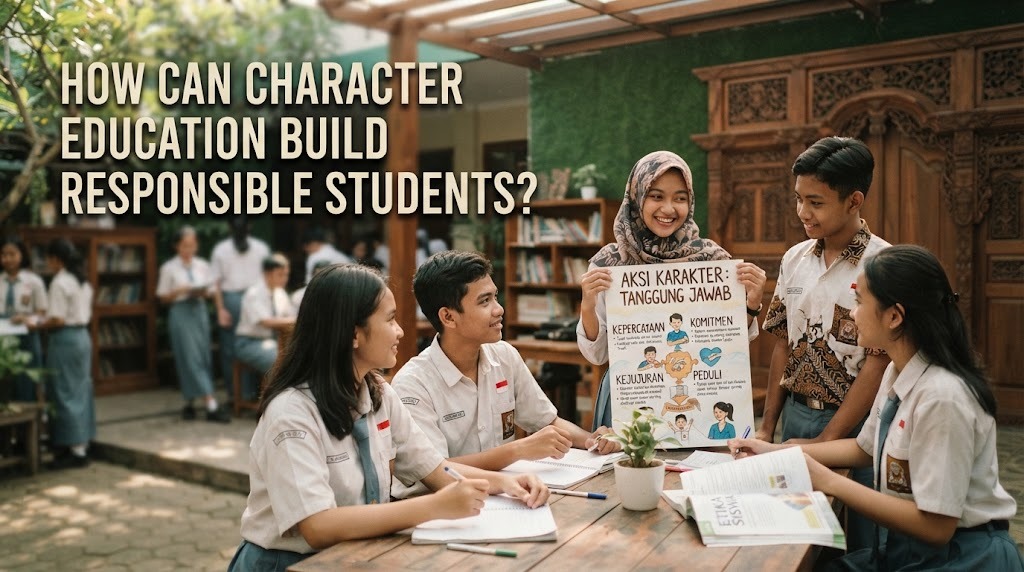
Character education plays an important role in helping students become responsible individuals. Education is not only about gaining academic knowledge, but also about learning how to behave properly and make good decisions. Through character education, students can develop values such as honesty, discipline, respect, empathy, and responsibility. These values can guide them in their daily activities at school, at home, and in society. Therefore, character education can become an important foundation for developing students who are ready to face future challenges.
TEACHING STUDENTS ABOUT RESPONSIBILITY
Character education helps students understand that every action has consequences and responsibilities. Students learn to complete assignments, follow school rules, take care of their belongings, and keep promises. These simple habits can gradually teach them how to become responsible for their actions. Teachers can give students clear duties and allow them to experience the results of their choices. This approach helps students understand that responsibility is not only a rule but also an important part of daily life.
Students also need opportunities to practice responsibility independently. For example, they can be responsible for completing group tasks or maintaining cleanliness in the classroom. Small responsibilities can build stronger habits when students practice them consistently. When students make mistakes, teachers can guide them to understand what went wrong instead of immediately solving the problem for them. This process can help students become more mature and accountable.
DEVELOPING DISCIPLINE AND GOOD HABITS
Discipline is one of the important values developed through character education. Students can learn discipline by arriving at school on time, completing assignments according to deadlines, and following classroom rules. These habits teach students how to manage their time and prioritize important tasks. Consistent discipline can also help students become more organized in their academic and personal activities. Over time, these habits can become part of their daily behavior.
Teachers and parents can support discipline by providing clear expectations and positive examples. Students should understand the reason behind rules, rather than simply following them because they are afraid of punishment. When students understand the benefits of discipline, they are more likely to practice it voluntarily. Discipline can also help students develop persistence when they face difficult assignments or challenging situations. As a result, they can become more dependable in different environments.
BUILDING HONESTY AND INTEGRITY
Character education can teach students that honesty and integrity are essential parts of responsible behavior. Students may face situations where telling the truth is difficult, such as admitting a mistake or receiving a low score. Learning to be honest helps them develop trust with teachers, friends, and family members. It also teaches them to accept the consequences of their actions instead of blaming others. These lessons can influence how they behave in future academic and professional environments.
Integrity means doing the right thing even when nobody is watching. Students who understand this value are more likely to avoid cheating, plagiarism, and other dishonest behaviors. Honest behavior builds trust, which is important in friendships, teamwork, and future careers. Teachers can encourage integrity by creating a classroom environment where students feel safe admitting mistakes. This can help students see mistakes as opportunities to learn and improve.
ENCOURAGING RESPECT AND EMPATHY
Responsible students need to understand that their behavior can affect other people. Character education teaches respect and empathy, allowing students to consider other people's feelings and perspectives. They can learn to listen when others speak, respect different opinions, and avoid harmful words or actions. These skills are especially important when students work with classmates who have different personalities or ideas. Respectful behavior can create a safer and more positive learning environment.
Empathy also helps students respond appropriately when someone is experiencing difficulties. Instead of ignoring a classmate's problem, they can offer support or ask how they can help. Understanding other people's feelings can reduce unnecessary conflicts and encourage cooperation. Teachers can develop empathy through discussions, teamwork, and activities that require students to understand different perspectives. These experiences can help students become more caring and socially responsible.
TEACHING STUDENTS TO MAKE GOOD DECISIONS
Responsible students need the ability to make thoughtful decisions. Character education can help them consider different choices and think about the possible consequences before acting. For example, students can learn to decide whether a particular online activity is safe, useful, or appropriate. They can also learn to think carefully before responding to conflicts with classmates. This skill allows students to become less dependent on others when solving everyday problems.
Good decision making is connected to self-control and critical thinking. Students who can control their emotions are more likely to pause and think before reacting. Teachers can provide real-life situations and ask students to discuss possible solutions. Through these activities, students can learn that responsible decisions should consider both personal needs and the effects on others. This prepares them to handle more complex choices as they grow older.
CREATING A RESPONSIBLE SCHOOL ENVIRONMENT
A school environment can strongly influence students' character development. Teachers and school staff can demonstrate responsible behavior through punctuality, fairness, honesty, and respect. Students are more likely to follow positive behavior when they see adults practicing the same values. Schools can also create activities that encourage cooperation, leadership, community service, and teamwork. Such activities give students practical opportunities to practice character values.
Rules are also important for creating a responsible learning environment. However, rules should be applied fairly and consistently so students understand that responsibility applies to everyone. Students can be encouraged to participate in maintaining classroom cleanliness, helping classmates, and taking care of school facilities. These activities can teach them that being responsible also means contributing to the community. A positive school culture can therefore strengthen the lessons taught through character education.
THE ROLE OF PARENTS AND TEACHERS
Parents and teachers have an important role in helping students develop responsible behavior. Young people learn from examples, so adults should demonstrate the values they expect students to follow. Parents can teach responsibility through simple activities such as organizing personal belongings, completing household tasks, and keeping promises. Teachers can reinforce the same values through assignments, classroom rules, and group activities. Cooperation between home and school can make character education more consistent.
Students also need guidance and encouragement when they make mistakes. Excessive punishment may not help them understand why their behavior was wrong. Instead, adults can explain the consequences and encourage students to find better solutions. This approach allows students to learn from their experiences while developing accountability. With consistent support from parents and teachers, students can gradually become more responsible and independent.
CONCLUSION
Character education can build responsible students by teaching them important values such as responsibility, discipline, honesty, respect, empathy, and self-control. These values help students manage their behavior, make thoughtful decisions, and understand the consequences of their actions. Responsibility develops through consistent practice and positive examples, not through lessons alone. Schools, teachers, and parents should work together to provide students with opportunities to practice good character in real situations. With strong character education, students can become responsible, trustworthy, respectful, and independent individuals who are prepared for their future.
Recent Posts

Bagaimana Sistem SKS pada Program Kuliah... 22.11.2026/35 View

How Does Technology Make Daily Evaluation... 21.11.2026/69 View

Apa Strategi Menghadapi Kesenjangan antara Kompetensi... 21.11.2026/69 View

Mengapa Inventaris Aset Penting bagi Kelancaran... 21.11.2026/67 View

When Should Musicians Join a Record... 21.11.2026/68 View
