

How Can Character Education Help Prevent Bullying Behavior?
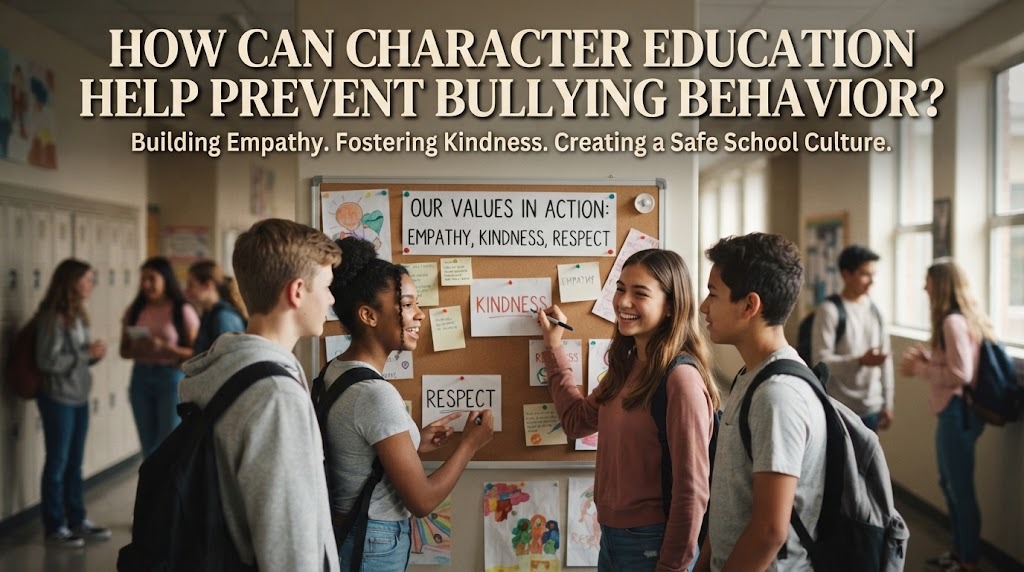
Character education can play an important role in preventing bullying behavior in schools and other social environments. Bullying can involve repeated harmful behavior, such as physical aggression, insults, threats, social exclusion, or harmful behavior through digital platforms. It can affect students' sense of safety, relationships, and ability to participate comfortably in school activities. Character education focuses on values such as respect, empathy, kindness, responsibility, and fairness. When these values are practiced consistently, students can develop healthier ways to treat and interact with others.
TEACHING RESPECT FOR OTHERS
Respect is one of the basic values that can help prevent bullying. Students need to understand that every person deserves to be treated with dignity, regardless of differences in appearance, ability, interests, background, or opinions. Character education can teach students to communicate without insulting or humiliating others. Teachers can demonstrate respectful behavior through their own interactions with students. When respect becomes part of the school culture, harmful behavior may become less socially acceptable.
Students can practice respect through daily classroom activities. They can learn to listen when someone is speaking, avoid offensive jokes, and express disagreements politely. Group activities can also teach students to appreciate different contributions and abilities. These simple behaviors can reduce situations where students feel excluded or targeted. Over time, repeated respectful actions can become positive social habits.
DEVELOPING EMPATHY AND COMPASSION
Empathy helps students understand how their words and actions may affect other people. A student who develops empathy may be more likely to think about another person's feelings before making a hurtful comment or action. Character education can introduce empathy through stories, discussions, role-playing, and real-life examples. Students can be encouraged to imagine how they would feel if they were treated unfairly. This can help them recognize why bullying behavior can cause serious emotional harm.
Compassion takes empathy one step further by encouraging students to respond with care and support. Students can learn to help classmates who are isolated, upset, or having difficulties. Teachers can praise supportive behavior and show students that kindness is valuable. When students become more willing to help one another, there may be fewer opportunities for bullying to continue unnoticed. Empathy and compassion can create a stronger sense of belonging within the school community.
TEACHING KINDNESS AND INCLUSION
Kindness can help create an environment where students feel accepted and supported. Character education can encourage students to include others in conversations, activities, and group work. Simple actions such as inviting a classmate to join a group or offering help can make a meaningful difference. Students can learn that being kind does not require a major effort. Small positive actions repeated every day can influence the overall atmosphere of a classroom.
Inclusion is also important because students who feel excluded may become more vulnerable to negative social experiences. Schools can organize activities that encourage students to interact with different classmates instead of forming isolated groups. Teachers can pay attention to students who are frequently left out or treated unfairly. Students should understand that differences do not make someone less valuable. A culture of inclusion can make classrooms safer and more welcoming.
BUILDING RESPONSIBILITY FOR ACTIONS
Character education can teach students that they are responsible for their choices and behavior. Students need to understand that harmful actions can affect other people, even when they claim that they were only joking. Learning responsibility can encourage students to think about the consequences of their behavior. When students make mistakes, they can be guided to acknowledge the problem and take appropriate steps to correct it. This approach helps develop accountability rather than simply focusing on punishment.
Responsibility also applies to students who witness bullying. They can learn that they should not encourage, record, share, or support harmful behavior. Instead, they can seek help from a trusted adult or use appropriate school reporting systems. Students should not be expected to confront a dangerous situation alone. Responsible bystanders can help create a safer environment by refusing to support bullying and seeking appropriate assistance.
DEVELOPING POSITIVE COMMUNICATION
Poor communication can sometimes contribute to misunderstandings and conflicts between students. Character education can teach positive communication skills, including active listening, polite disagreement, and respectful expression of emotions. Students can learn how to explain their feelings without attacking another person. They can also learn to ask questions instead of making harmful assumptions. These skills can help students manage disagreements before they become more serious.
Teachers can provide opportunities for students to practice communication through group discussions and problem-solving activities. When conflicts happen, students can be guided to listen to different perspectives. They can learn that disagreements do not automatically justify insults or aggression. Healthy communication allows students to solve problems without using harmful behavior. This can contribute to a more peaceful school environment.
TEACHING CONFLICT RESOLUTION
Conflicts are a normal part of social relationships, but students need to learn how to handle them safely. Character education can introduce conflict resolution skills that help students manage disagreements constructively. Students can learn to identify the problem, listen to each other, and look for fair solutions. They can also learn when it is necessary to ask a teacher or another trusted adult for help. These skills can reduce the chance that ordinary disagreements develop into harmful behavior.
Conflict resolution should not be used to suggest that a student experiencing bullying is responsible for stopping the bullying alone. Bullying requires appropriate adult intervention and school action when necessary. Students can be taught safe ways to report concerns and support classmates. Schools should also have clear rules and procedures for responding to bullying. Combining character education with effective school policies provides stronger protection for students.
ENCOURAGING POSITIVE ROLE MODELS
Teachers and other adults can influence student behavior through positive role modeling. Students observe how adults communicate, respond to mistakes, and treat people who have different opinions. Teachers who consistently demonstrate patience, fairness, respect, and kindness provide examples that students can follow. School leaders and staff should also respond to bullying concerns seriously and fairly. This shows students that respectful behavior is an important part of the school community.
Parents can also support these values at home. They can talk with children about respect, empathy, kindness, and responsible behavior. Parents can encourage children to discuss problems instead of responding with aggression. Consistent messages from school and home can make character education stronger. When adults work together, students receive clearer guidance about how to treat others.
CREATING A SAFE SCHOOL CULTURE
Character education is most effective when it becomes part of the entire school culture. Schools should make it clear that bullying, harassment, and harmful behavior are not acceptable. Students need to know where they can report concerns and which adults they can trust. Teachers and school staff should pay attention to signs of repeated harmful behavior and respond appropriately. A safe environment allows students to focus on learning while developing healthy relationships.
Schools can also recognize and encourage positive student behavior. Celebrating cooperation, kindness, respect, and helpful actions can show students which behaviors are valued. However, rewards should not replace clear rules and appropriate responses to bullying. Students need both positive guidance and reliable protection when problems occur. By combining character education, adult support, clear expectations, and effective intervention, schools can work toward reducing bullying behavior.
CONCLUSION
Character education can help prevent bullying behavior by developing values and skills that encourage students to treat others with respect and care. Respect, empathy, kindness, inclusion, responsibility, communication, and conflict resolution can help students build healthier relationships. However, character education should not be the only strategy used to address bullying. Schools also need clear policies, trained adults, safe reporting systems, and appropriate intervention when bullying occurs. By creating a consistent culture of respect and safety, schools can help students become more caring, responsible, and supportive members of their community.
Recent Posts

Bagaimana Sistem SKS pada Program Kuliah... 22.11.2026/35 View

How Does Technology Make Daily Evaluation... 21.11.2026/69 View

Apa Strategi Menghadapi Kesenjangan antara Kompetensi... 21.11.2026/69 View

Mengapa Inventaris Aset Penting bagi Kelancaran... 21.11.2026/67 View

When Should Musicians Join a Record... 21.11.2026/68 View
