

How Can Character Education Help Students Face Future Challenges?
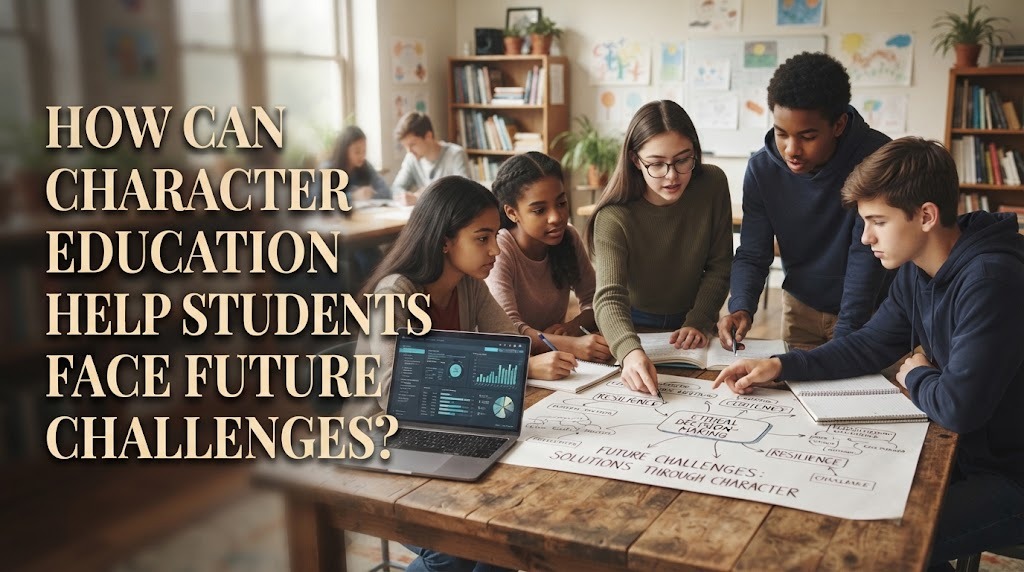
Character education plays an important role in preparing students for the challenges they may face in the future. Academic knowledge is important, but students also need good attitudes, strong values, responsibility, and social skills. The future may bring changes in technology, education, workplaces, and society. Because of this, students need more than knowledge to adapt successfully. Character education helps students develop personal qualities that support them in different situations.
DEVELOPING RESPONSIBILITY AND INDEPENDENCE
Character education teaches students to understand the importance of responsibility in their daily lives. Students learn to complete assignments, follow rules, manage their time, and accept the results of their decisions. These habits can help them become more independent as they grow older. Independence is important because future challenges often require people to make decisions without always depending on others. By practicing responsibility at school, students can become more prepared for future study, work, and personal responsibilities.
Character education also encourages students to understand that every action has a consequence. When students make mistakes, they can learn to admit them and find ways to improve. This process helps develop a stronger sense of accountability. Responsible students are more likely to complete tasks carefully and keep their promises. These qualities can become valuable habits in their future lives.
BUILDING RESILIENCE AND CONFIDENCE
Future challenges may include failure, competition, unexpected changes, and difficult situations. Character education can help students develop resilience, which means the ability to recover and continue after facing problems. Students learn that failure does not always mean they are incapable. Instead, failure can become an opportunity to learn, reflect, and improve. This mindset can help students remain motivated when they experience difficulties.
Character education can also strengthen self-confidence. When students understand their strengths and learn from their weaknesses, they can become more comfortable facing new situations. Confidence helps students express their ideas and make decisions more calmly. It also encourages them to try new opportunities without being controlled by fear of failure. As a result, students can become more prepared to face challenges in education, careers, and everyday life.
IMPROVING PROBLEM SOLVING SKILLS
The future will require students to deal with problems that may not have simple answers. Character education encourages critical thinking, patience, and responsibility when students face difficult situations. Instead of immediately giving up, students can learn to identify problems and consider possible solutions. They can also learn to think about the effects of their decisions on themselves and others. These habits support better problem solving skills.
Students who practice good character are more likely to approach challenges with a positive and thoughtful attitude. They can listen to different opinions before making decisions. They can also learn from previous experiences and use those lessons when facing new problems. This ability is useful in both personal and professional situations. Therefore, character education can support students in becoming careful, flexible, and solution-oriented individuals.
STRENGTHENING COMMUNICATION AND TEAMWORK
Many future challenges require people to work with others. Character education helps students develop respect, empathy, cooperation, and good communication. These values teach students how to listen to others, express opinions politely, and appreciate different perspectives. Such skills are important when students work in groups or participate in community activities. They can also become valuable skills in future workplaces.
Teamwork becomes easier when students understand the importance of trust and mutual respect. Students learn that successful cooperation requires everyone to contribute and take responsibility. They may also learn how to manage disagreements without creating unnecessary conflict. These experiences prepare students to work with people who have different backgrounds, opinions, and working styles. Good communication and teamwork can help students build stronger relationships in the future.
PREPARING STUDENTS FOR A CHANGING WORLD
Technology and society continue to change, so students need the ability to adapt. Character education can develop values such as curiosity, discipline, openness, and willingness to learn. These qualities encourage students to continue developing their skills instead of depending only on what they already know. Students who are willing to learn can respond more positively when new technologies or working methods appear. This makes character education relevant to the changing demands of the future.
Adaptability is also important because students may follow different career paths than they originally expect. They may need to learn new skills, change their plans, or face unfamiliar environments. Strong character can help them remain responsible and positive during these changes. Lifelong learning becomes easier when students have discipline and a willingness to improve. Therefore, character education can help students become more prepared for an uncertain but promising future.
DEVELOPING ETHICAL DECISION MAKING
Future challenges are not only about academic or professional success. Students may also face situations that require them to choose between right and wrong. Character education teaches important values such as honesty, fairness, integrity, and respect. These values can guide students when they need to make difficult decisions. Ethical decision making helps students consider not only what is beneficial for themselves but also what is fair to others.
Strong moral values can become an important foundation for students as they enter adulthood. For example, honesty can help them avoid cheating, while responsibility can encourage them to complete their duties properly. Integrity can also help them remain consistent with their values even when facing pressure. These qualities are valuable in school, relationships, workplaces, and society. By developing ethical character, students can become people who make responsible choices in the future.
CONCLUSION
Character education helps students prepare for future challenges by developing qualities that cannot be gained from academic knowledge alone. It builds responsibility, independence, resilience, confidence, problem solving, communication, teamwork, adaptability, and integrity. These qualities can help students respond to change and overcome difficulties more effectively. Character education also encourages students to make ethical decisions and respect other people. With strong character and useful knowledge, students can become more prepared to face future education, careers, technology, and social challenges.
Recent Posts

Bagaimana Sistem SKS pada Program Kuliah... 22.11.2026/35 View

How Does Technology Make Daily Evaluation... 21.11.2026/69 View

Apa Strategi Menghadapi Kesenjangan antara Kompetensi... 21.11.2026/69 View

Mengapa Inventaris Aset Penting bagi Kelancaran... 21.11.2026/67 View

When Should Musicians Join a Record... 21.11.2026/68 View
