

How Can Character Education Prepare Students To Become A Quality Generation?
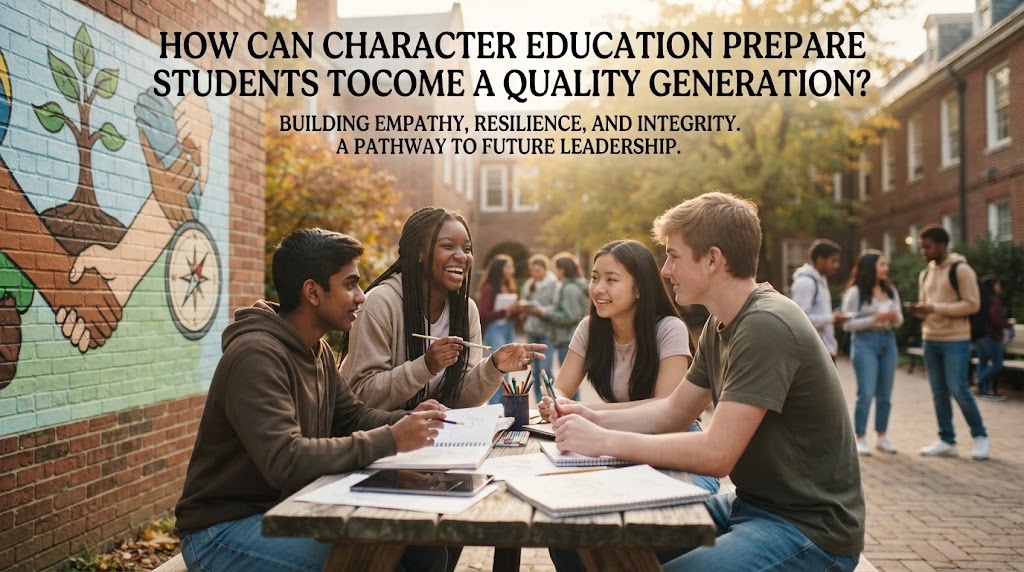
Character education is an important part of preparing students for their future. Education should not only focus on academic knowledge but also help students develop good attitudes, values, and responsible behavior. Students with strong character can make better decisions, work well with others, and face challenges with confidence. These qualities are useful in school, family life, society, and the workplace. Therefore, character education can help prepare students to become a quality generation that contributes positively to the future.
DEVELOPING RESPONSIBILITY
Character education teaches students to understand the importance of responsibility. Students learn that every action has consequences and that they should complete their duties properly. Simple activities such as finishing assignments, following school rules, and taking care of personal belongings can build responsible habits. Teachers and parents can also give students opportunities to make decisions and accept the results of those decisions. These experiences help students become more independent and dependable.
Responsibility is also important for students' future lives. A responsible person can be trusted to complete tasks and keep promises. This quality is valuable when students enter higher education or the workplace. Students who practice responsibility from an early age are more prepared to manage their time and obligations. As a result, character education helps create young people who are reliable and accountable.
BUILDING HONESTY AND INTEGRITY
Honesty is another important value in character education. Students need to understand that telling the truth is important even when they are afraid of making mistakes. For example, students should avoid cheating, copying other people's work, or hiding mistakes. Teachers can encourage honesty by creating a learning environment where students feel safe to admit their difficulties. This approach helps students understand that mistakes can become opportunities to learn.
Honesty also builds integrity, which means acting according to good values even when nobody is watching. Students with integrity are more likely to make fair and responsible decisions. This quality can help them gain trust from friends, teachers, family members, and future colleagues. Integrity is especially important when students face situations that require strong moral judgment. By practicing honesty regularly, students can develop a character that supports long-term success.
IMPROVING DISCIPLINE
Discipline helps students manage their time, behavior, and responsibilities. Character education can teach students to arrive on time, follow schedules, complete tasks, and respect rules. These habits may seem simple, but they can have a strong influence on students' future behavior. Students who understand the purpose of discipline are more likely to follow rules because they recognize their benefits. Discipline can also help students remain focused when they face difficult tasks.
Strong discipline does not mean that students must be controlled all the time. Instead, students should gradually learn self-discipline and understand how to control their own choices. They can learn to set goals, organize activities, and avoid unnecessary distractions. These abilities are useful when students have greater freedom in college, work, and adult life. Therefore, character education can prepare students to become more organized and consistent individuals.
DEVELOPING EMPATHY AND RESPECT
A quality generation needs to understand the importance of empathy and respect. Character education teaches students to recognize that other people may have different feelings, backgrounds, opinions, and needs. Students can practice empathy by listening to others and offering help when someone experiences difficulties. Respect can be shown through polite communication, accepting differences, and avoiding harmful behavior. These values help students build healthier relationships.
Empathy and respect are also important for creating a peaceful society. Students who understand other people's perspectives may be less likely to judge or discriminate against them. They can learn to solve disagreements through dialogue and cooperation instead of anger or violence. These skills will be useful when students work with people who have different ideas in the future. As a result, character education helps students become more caring and socially responsible members of society.
STRENGTHENING CRITICAL THINKING
Character education can also support critical thinking by encouraging students to consider the consequences of their choices. Students should not simply follow others without thinking about whether an action is right or wrong. They can be taught to ask questions, examine information, and consider different points of view. This is especially important when students receive large amounts of information through digital media. Good character helps students use their knowledge responsibly.
Critical thinking also supports wise decision-making. Students may face peer pressure, misleading information, or difficult choices in everyday life. By thinking carefully before acting, they can reduce the risk of making harmful decisions. Combining critical thinking with strong values can help students choose actions that are both logical and responsible. This combination is important for preparing students to face complex future challenges.
BUILDING CONFIDENCE AND INDEPENDENCE
Character education can help students develop self-confidence and independence. Students need to believe that they can learn from mistakes and improve their abilities. Teachers can support this development by giving students opportunities to express opinions, solve problems, and take part in activities. When students are trusted with responsibilities, they can gradually become more confident in making decisions. Confidence can encourage them to face challenges instead of avoiding them.
Independence also means knowing when to ask for help. A strong student does not need to solve every problem alone. Instead, an independent person understands personal limitations and seeks appropriate support when necessary. Character education can teach students to balance self-reliance with cooperation. This balance is useful for their academic development and future careers.
PREPARING STUDENTS FOR THE WORKPLACE
Character education can prepare students for the world of work by developing qualities that employers and organizations value. Academic knowledge is important, but workers also need communication, teamwork, discipline, responsibility, and adaptability. Students can practice these qualities through group projects, school organizations, classroom activities, and community programs. These experiences allow students to understand how their behavior affects other people. They also help students become more prepared for professional environments.
The workplace can present different challenges, including deadlines, teamwork problems, changing responsibilities, and communication difficulties. Students who have developed strong character are better prepared to respond to these situations in a positive way. They can remain professional, respect colleagues, and take responsibility for their work. Character education therefore supports both career readiness and personal growth. It helps students understand that success is not only about achievement but also about how they achieve it.
ENCOURAGING SOCIAL RESPONSIBILITY
A quality generation should care about the community and society around them. Character education can teach students that they have responsibilities not only to themselves but also to other people. Activities such as community service, environmental projects, and school volunteering can give students practical experience in helping others. These activities encourage cooperation and develop a sense of social responsibility. Students can learn that small positive actions can create meaningful changes.
Social responsibility also encourages students to become active citizens. They can learn to respect public spaces, follow rules, protect the environment, and contribute to their communities. These behaviors help create a society based on cooperation, respect, and mutual care. Students who develop these values may become adults who are willing to participate in solving social problems. In this way, character education can contribute to building a better future.
ADAPTING TO FUTURE CHALLENGES
The future will bring changes in technology, education, communication, and employment. Students therefore need more than academic knowledge to handle these changes. Character education can develop adaptability, perseverance, and a willingness to learn. Students who are open to learning can adjust when they encounter new situations or unfamiliar responsibilities. These qualities can help them remain productive even when circumstances change.
Students also need resilience when facing failure or disappointment. Character education can teach them that failure does not necessarily mean the end of their efforts. Instead, difficulties can become opportunities to evaluate mistakes and try again. Students who develop resilience are more likely to continue working toward their goals. This mindset can help them face future challenges with greater confidence and determination.
CONCLUSION
Character education plays an important role in preparing students to become a quality generation. It develops important values such as responsibility, honesty, discipline, empathy, respect, confidence, critical thinking, and resilience. These qualities help students manage their education, relationships, future careers, and responsibilities in society. Academic knowledge remains important, but strong character helps students use that knowledge in a responsible and meaningful way. By building character from an early age, schools, families, and communities can help prepare young people to become capable, responsible, and positive contributors to the future.
Recent Posts

Bagaimana Sistem SKS pada Program Kuliah... 22.11.2026/35 View

How Does Technology Make Daily Evaluation... 21.11.2026/69 View

Apa Strategi Menghadapi Kesenjangan antara Kompetensi... 21.11.2026/69 View

Mengapa Inventaris Aset Penting bagi Kelancaran... 21.11.2026/67 View

When Should Musicians Join a Record... 21.11.2026/68 View
