

How Can Cities Reduce Traffic Congestion Without Expanding Roads?
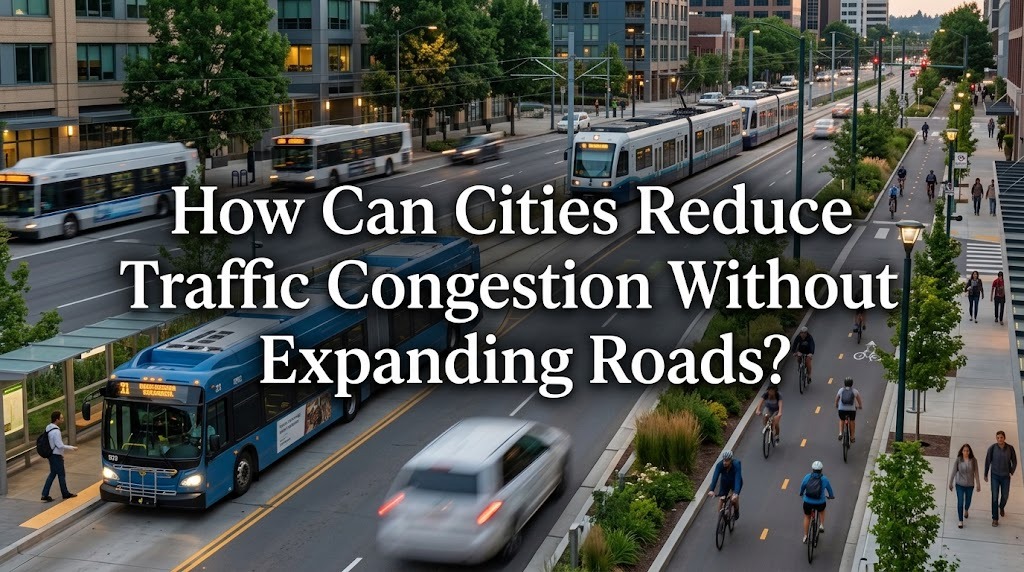
Traffic congestion is a growing challenge in many cities, affecting travel time, air quality, economic productivity, and people's daily lives. Building wider roads may seem like an easy solution, but it often encourages more people to drive, eventually creating congestion again. Cities need more sustainable ways to manage existing transportation infrastructure and reduce unnecessary vehicle trips. Improving public transportation, encouraging alternative mobility, using smart traffic technology, and developing better urban planning can help reduce congestion without expanding roads. These strategies can make cities more efficient, accessible, and environmentally friendly.
IMPROVING PUBLIC TRANSPORTATION SERVICES
One of the most effective ways to reduce traffic congestion without expanding roads is to improve public transportation. Reliable buses, trains, and other mass transit services can carry many passengers using less road space than individual cars. Cities should provide frequent schedules, affordable fares, comfortable vehicles, and convenient routes that connect residential areas with workplaces, schools, and commercial centers. When public transportation becomes dependable and accessible, more people may choose it instead of driving private vehicles.
Public transportation should also be integrated so passengers can move easily between different services. For example, bus routes can connect residential neighborhoods to railway stations, while clear schedules and convenient ticketing systems make transfers easier. Dedicated bus lanes can help buses avoid traffic delays without requiring additional road construction. Governments can also improve station safety, accessibility, and passenger information to encourage greater use. These improvements help existing roads transport more people efficiently.
ENCOURAGING WALKING, CYCLING, AND CARPOOLING
Cities can reduce traffic congestion by making walking and cycling safer and more convenient. Many short journeys are made using cars or motorcycles even when the destinations are relatively close. Well-maintained sidewalks, protected bicycle lanes, safe crossings, and secure bicycle parking can encourage people to choose alternatives for these trips. As more residents walk or cycle, the number of motor vehicles on busy roads may decrease.
Another useful strategy is promoting carpooling and shared transportation. When several people travel to the same workplace or educational institution, sharing one vehicle can reduce the number of vehicles entering congested areas. Employers can support carpooling by creating ride-sharing programs, providing priority parking for shared vehicles, or helping employees coordinate their journeys. Flexible working hours and remote work can also reduce the number of commuters traveling simultaneously. Together, these measures can lower traffic demand without increasing road capacity.
USING SMART TECHNOLOGY TO MANAGE TRAFFIC
Modern technology can improve traffic flow by helping cities manage existing roads more efficiently. Intelligent traffic light systems can adjust signal timing based on real-time traffic conditions, reducing unnecessary waiting at intersections. Traffic sensors and monitoring cameras can identify bottlenecks, detect incidents, and help traffic managers respond more quickly. Navigation applications can also inform drivers about congestion and suggest alternative routes when appropriate.
However, technology must be used carefully to avoid moving congestion from one neighborhood to another. If every driver follows the same alternative route, smaller streets may become crowded and create safety problems for residents. Cities should coordinate traffic signals across connected roads and combine digital monitoring with effective incident management. They can also provide accurate public transportation information through mobile applications and digital displays. These solutions help make better use of existing infrastructure rather than relying on costly road expansion.
IMPROVING URBAN PLANNING AND LAND USE
Better urban planning can reduce the need for people to travel long distances every day. When housing, workplaces, schools, shops, and public services are located far apart, residents often depend on motor vehicles for basic activities. Cities can encourage mixed-use development, where different facilities are available within the same neighborhood. This approach makes walking, cycling, and short public transportation journeys more practical.
Transit-oriented development is another useful approach. It concentrates housing, businesses, and essential services around public transportation stations, allowing residents to reach more destinations without driving. Cities can also improve connections between neighborhoods and reduce barriers that make walking or cycling difficult. Planning should consider affordable housing and access to essential services so that lower-income residents are not pushed into distant areas with limited transportation options. Over time, these measures can reduce unnecessary trips and make urban mobility more sustainable.
MANAGING VEHICLE USE AND PARKING DEMAND
Cities can reduce traffic congestion by managing when, where, and how private vehicles are used. Parking management is particularly important because drivers searching for available spaces can add unnecessary traffic to busy streets. Governments can introduce clear parking rules, enforce restrictions against illegal parking, and adjust parking fees according to local demand. Providing convenient park-and-ride facilities near public transportation can also encourage commuters to leave their vehicles outside crowded city centers.
In some locations, congestion pricing or vehicle restrictions can reduce traffic during the busiest periods. Congestion pricing charges vehicles for entering designated areas at particular times, encouraging some travelers to use public transportation, share rides, or travel at different times. However, these policies should be introduced only after considering their effects on workers, residents, businesses, and people with disabilities. Accessible transportation alternatives and appropriate exemptions may be necessary to ensure fairness. The goal is not simply to prevent people from driving but to reduce unnecessary vehicle trips and use limited road space more effectively.
CONCLUSION
Cities can reduce traffic congestion without expanding roads by managing transportation demand and improving the efficiency of existing infrastructure. Better public transportation, safer walking and cycling facilities, carpooling, smart traffic systems, and effective urban planning can help reduce dependence on private vehicles. Parking management and carefully designed vehicle restrictions can further improve traffic flow when suitable alternatives are available. These solutions require cooperation between governments, businesses, transportation providers, and residents. By prioritizing efficient and sustainable mobility, cities can create less congested streets, improve air quality, and provide a better quality of life for their communities.
Recent Posts

Bagaimana Sistem SKS pada Program Kuliah... 22.11.2026/54 View

How Does Technology Make Daily Evaluation... 21.11.2026/83 View

Apa Strategi Menghadapi Kesenjangan antara Kompetensi... 21.11.2026/81 View

Mengapa Inventaris Aset Penting bagi Kelancaran... 21.11.2026/78 View

When Should Musicians Join a Record... 21.11.2026/82 View
