

How Can Color Blindness Symptoms Be Identified Early?
Color blindness is a vision condition that makes it difficult for someone to distinguish certain colors accurately. This condition is also known as color vision deficiency and can affect how individuals recognize colors in everyday activities. Some people are born with color blindness, while others develop it later because of eye diseases, certain medications, or changes in the visual system. Recognizing color blindness symptoms early is important because it helps individuals understand their visual condition and receive appropriate eye examinations.
In many cases, color blindness does not cause complete vision loss or make everything appear black and white. Instead, individuals may have difficulty distinguishing specific colors, especially red and green. Because the symptoms can be subtle, some people do not realize they have a color vision problem until they encounter difficulties at school, work, or during daily activities.
UNDERSTANDING THE EARLY SYMPTOMS OF COLOR BLINDNESS
One of the earliest signs of color blindness is difficulty distinguishing particular colors that most people can recognize easily. Individuals may confuse red with green, blue with purple, or certain shades of brown and green. The specific colors that are difficult to recognize depend on the type of color vision deficiency. These differences may become more noticeable when colors have similar brightness or appear under poor lighting conditions.
Another possible symptom is difficulty identifying colors in everyday situations. For example, someone may struggle to recognize colored objects, distinguish information on color-coded charts, or select matching clothing. Some individuals may also describe certain colors differently from other people. However, these experiences do not automatically mean someone has color blindness because lighting, screen quality, and individual color preferences can also influence color recognition.
RECOGNIZING DIFFICULTIES IN DISTINGUISHING RED AND GREEN
Red-green color blindness is the most common type of inherited color vision deficiency. People with this condition may have difficulty distinguishing red and green shades or recognizing differences between colors that contain similar visual components. Some individuals may confuse red with brown, green with yellow, or certain shades of orange with green. The severity of these difficulties varies from person to person.
These symptoms can become noticeable during ordinary activities. For instance, someone may struggle to identify red and green indicators on electronic devices or have difficulty interpreting color-coded maps. Children may also experience challenges when learning colors at school or completing activities that require matching different shades. Parents and teachers should pay attention when a child repeatedly confuses certain colors, especially if the problem occurs consistently rather than occasionally.
OBSERVING COLOR RECOGNITION PROBLEMS IN DAILY ACTIVITIES
Color blindness symptoms can often be identified through repeated difficulties in everyday situations. Individuals may have trouble choosing clothes with matching colors or distinguishing certain fruits based on their appearance. They may also struggle to read charts, diagrams, and educational materials that rely heavily on color differences. These difficulties can become more noticeable when activities require quick and accurate color identification.
Children may show different signs because they are still developing their ability to recognize and name colors. They might frequently choose incorrect colors when drawing, coloring pictures, or identifying objects. However, incorrect color naming alone is not enough to confirm color blindness. A proper examination is necessary to distinguish a genuine color vision deficiency from limited color knowledge or other learning difficulties.
IDENTIFYING COLOR BLINDNESS IN CHILDREN AT AN EARLY AGE
Early identification of color blindness in children is important because color recognition plays a role in learning and development. Children with color vision deficiencies may have difficulty following classroom instructions that use colored materials, understanding diagrams, or completing assignments involving color identification. These challenges may sometimes be mistaken for a lack of attention or poor learning ability. Therefore, parents and teachers should observe whether a child repeatedly experiences difficulties with particular color combinations.
Parents can pay attention to how children identify colors during daily activities, such as drawing, playing with colored objects, and sorting toys. If a child consistently confuses certain colors, parents can consider arranging an eye examination. However, children should not be diagnosed based only on informal observations or home activities. A professional color vision assessment provides more reliable information and helps determine whether further evaluation is necessary.
UNDERSTANDING THE DIFFERENCE BETWEEN INHERITED AND ACQUIRED COLOR BLINDNESS
Color blindness can be inherited or acquired during a person's lifetime. Inherited color blindness is usually present from birth and often results from genetic differences affecting the cone cells in the retina. These cells contain light-sensitive pigments that help the eyes recognize different colors. Because inherited color vision deficiency is generally stable, individuals may not notice their condition until they encounter situations that require accurate color recognition.
Acquired color blindness develops after birth and may be associated with certain eye diseases, neurological conditions, injuries, or medication effects. Unlike inherited color blindness, acquired color vision problems may appear suddenly or gradually become worse over time. Individuals may notice that colors look different, become less vivid, or are increasingly difficult to distinguish. Sudden changes in color perception should be evaluated by an eye care professional because they may indicate an underlying medical condition.
GETTING AN EYE EXAMINATION TO CONFIRM COLOR BLINDNESS
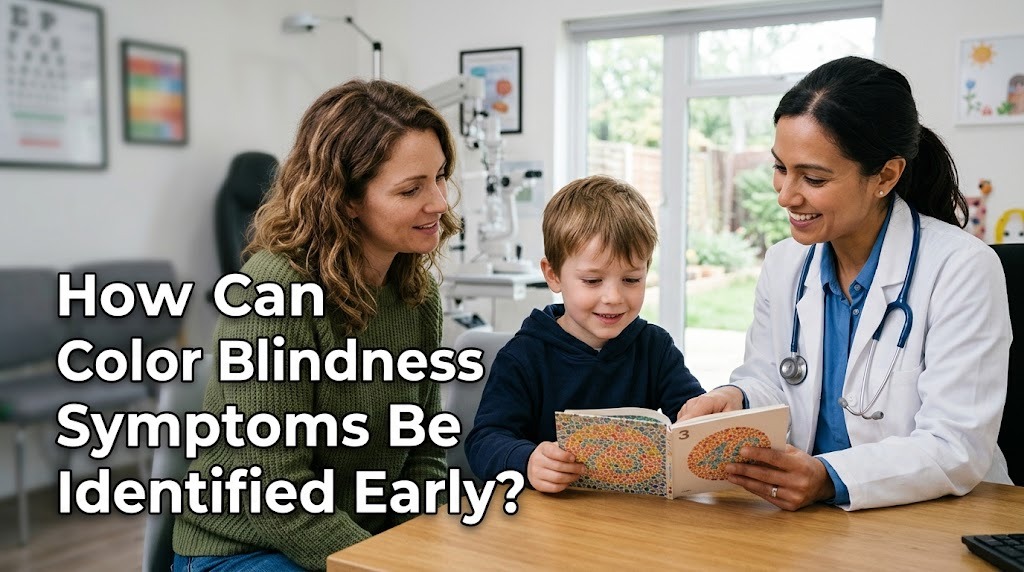
Observing early symptoms is useful, but a professional eye examination is necessary to confirm whether someone has color blindness. One commonly used examination is the Ishihara test, which uses plates containing colored dots arranged into numbers or patterns. Individuals are asked to identify the numbers or shapes they can see. Their responses help eye care professionals identify possible red-green color vision deficiencies.
Other examinations may be recommended depending on the individual's symptoms and medical history. The Farnsworth D-15 test evaluates how well someone can arrange colored objects according to their similarities. Specialized instruments, such as an anomaloscope, can provide more detailed information about certain types of color vision deficiency. If color vision problems develop unexpectedly, the examiner may also investigate possible eye or neurological conditions. Accurate diagnosis helps determine the appropriate next steps and whether additional treatment or monitoring is needed.
CONCLUSION
Color blindness symptoms can be identified early by observing repeated difficulties in distinguishing certain colors, especially red and green. Other signs include problems recognizing colored objects, interpreting color-coded information, and matching different shades during everyday activities. Parents and teachers should pay attention to consistent color recognition difficulties in children because early identification can support their learning and development. However, these symptoms alone cannot confirm color blindness. A professional eye examination is the most reliable way to determine the type of color vision deficiency and identify possible underlying causes.
Recent Posts

Bagaimana Sistem SKS pada Program Kuliah... 22.11.2026/42 View

How Does Technology Make Daily Evaluation... 21.11.2026/72 View

Apa Strategi Menghadapi Kesenjangan antara Kompetensi... 21.11.2026/74 View

Mengapa Inventaris Aset Penting bagi Kelancaran... 21.11.2026/70 View

When Should Musicians Join a Record... 21.11.2026/73 View
