

How Can Communities Establish an Active and Sustainable Tourism Awareness Group?
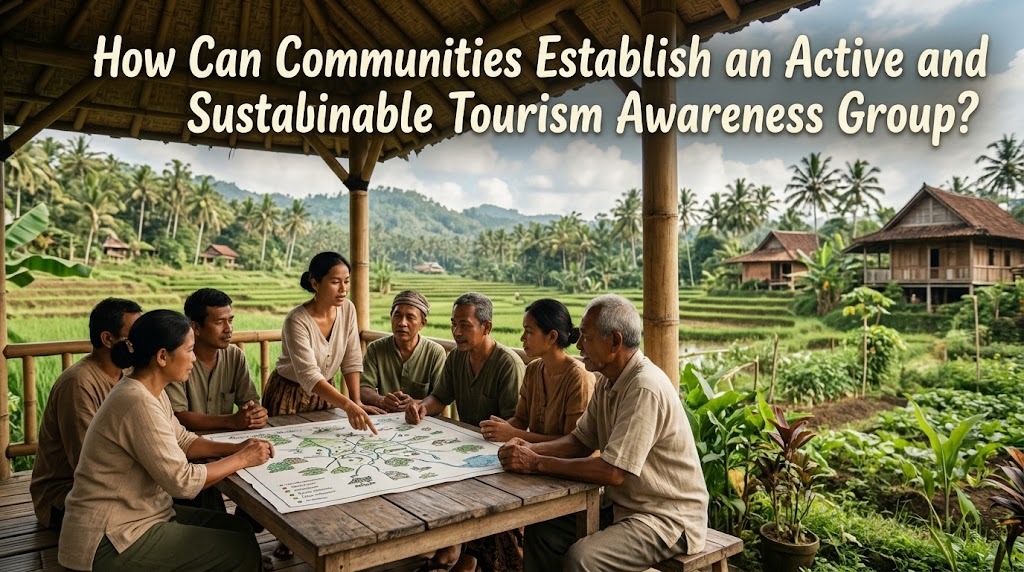
Village tourism has great potential to improve local economic development, preserve cultural heritage, and create new opportunities for residents. However, developing a successful tourism destination requires more than attractive natural resources or interesting cultural traditions. Communities need an organized group that can manage tourism activities, encourage public participation, and maintain the quality of local attractions. A Village Tourism Awareness Group, commonly known as Pokdarwis in Indonesia, provides a platform for residents to work together in developing their village as a tourism destination. Establishing an active and sustainable group requires clear planning, strong leadership, effective cooperation, and continuous community involvement.
BUILDING COMMUNITY AWARENESS AND SUPPORT
The first step in establishing a successful Village Tourism Awareness Group is building awareness among local residents about the importance of tourism development. Communities need to understand that tourism is not only about attracting visitors but also about creating economic opportunities and preserving local resources. Village leaders can organize meetings, discussions, and social activities to introduce the benefits of tourism development. These activities help residents recognize the potential of their village and understand how they can contribute. Strong community awareness creates a foundation for cooperation and long-term participation.
In addition, establishing a tourism awareness group should involve different members of the community, including young people, business owners, cultural leaders, farmers, and local residents. Their involvement can bring different ideas, experiences, and skills into tourism development. Communities should also be given opportunities to express their expectations and concerns before the group begins operating. This approach helps prevent misunderstandings and encourages a sense of shared responsibility. When residents support the group's objectives, tourism programs are more likely to receive consistent participation.
FORMING AN ORGANIZED AND EFFECTIVE MANAGEMENT STRUCTURE
A clear organizational structure is essential for ensuring that a Village Tourism Awareness Group can operate effectively. The group should have a management team with defined positions, responsibilities, and duties. These positions may include a chairperson, secretary, treasurer, and members responsible for specific tourism activities. Each member should understand their role to prevent overlapping responsibilities and confusion during program implementation. An organized structure also makes it easier to coordinate activities and evaluate the group's performance.
The selection of management members should consider their commitment, leadership abilities, communication skills, and willingness to work with the community. Leadership should encourage transparency, cooperation, and equal opportunities for participation. Regular meetings are also necessary to discuss progress, identify problems, and establish future priorities. Important decisions should involve relevant members rather than depending entirely on one individual. With effective organizational management, the group can maintain its activities and build stronger relationships with other stakeholders.
ESTABLISHING CLEAR VISIONS AND SUSTAINABLE PROGRAMS
Every Village Tourism Awareness Group needs a clear vision and mission to guide its activities. The vision should describe the type of tourism destination the community wants to develop in the future. Meanwhile, the mission should explain the practical steps needed to achieve that goal. These objectives should consider the village's tourism potential, community needs, environmental conditions, and available resources. Clear directions help the group avoid activities that do not support its main development priorities.
After establishing its vision and mission, the group should prepare realistic tourism programs with measurable targets. Activities may include destination maintenance, cultural events, environmental campaigns, visitor services, and local product promotion. The programs should be arranged according to community priorities and available funding. It is also important to create short-term and long-term plans so that development can continue gradually. Through consistent planning and evaluation, the group can maintain its activities and achieve more sustainable results.
IMPROVING MEMBERS' SKILLS AND KNOWLEDGE
The success of a tourism awareness group depends greatly on the abilities and knowledge of its members. Managing a tourism destination requires various skills, including communication, hospitality, leadership, financial management, marketing, and problem-solving. Members should understand how to welcome visitors, provide accurate information, and respond to tourist needs. They also need knowledge about destination maintenance, safety procedures, and local cultural preservation. These abilities help improve service quality and create positive experiences for visitors.
To strengthen these capabilities, village communities can participate in training programs, workshops, and tourism development activities. Training can be provided by village governments, tourism offices, educational institutions, or professional tourism organizations. Practical activities such as guiding visitors, managing tourism events, and promoting local products can also improve members' experience. Young people can contribute through digital marketing and creative content production. Continuous learning allows the group to adapt to changes in tourism trends and maintain professional management standards.
STRENGTHENING COOPERATION WITH LOCAL GOVERNMENTS AND BUSINESSES
A Village Tourism Awareness Group cannot develop a sustainable tourism destination by working alone. Cooperation with village governments is important because local authorities can provide administrative support, development facilities, funding opportunities, and relevant policies. The group can communicate its development plans to village officials and propose programs that support local tourism priorities. This partnership helps ensure that tourism activities are included in broader village development planning. It also creates opportunities to access resources that may not be available within the community.
Cooperation with local businesses is equally important because tourism development involves many economic activities. Small businesses can provide food, accommodation, transportation, souvenirs, and other services for visitors. Tourism groups can help promote these businesses and encourage cooperation among local entrepreneurs. Partnerships with schools, universities, and tourism organizations can also provide training, research, and professional assistance. Through strong collaboration, tourism activities can create wider economic benefits and strengthen the local business environment.
MAINTAINING TRANSPARENCY AND EVALUATING GROUP PERFORMANCE
Transparency and accountability are important for maintaining community trust in a Village Tourism Awareness Group. The management team should provide clear information about financial activities, tourism income, expenses, and the use of available resources. Financial reports should be prepared regularly and communicated to relevant members and stakeholders. Open communication helps prevent misunderstandings and reduces the risk of conflicts within the organization. It also encourages members to take greater responsibility for the group's activities.
In addition, the group should regularly evaluate its programs to determine whether its objectives have been achieved. Evaluation can examine visitor numbers, tourist satisfaction, community participation, local business income, and environmental conditions. Feedback from residents and visitors can provide useful information for improving tourism services. If certain programs are unsuccessful, the group should identify the problems and make necessary adjustments. Consistent evaluation helps maintain organizational effectiveness and ensures that tourism development continues to provide long-term benefits.
CONCLUSION
Establishing an active and sustainable Village Tourism Awareness Group requires strong community awareness, effective organizational management, clear development plans, and continuous improvement of members' skills. Cooperation with village governments, local businesses, and other stakeholders also plays an important role in supporting tourism activities. Furthermore, transparency and regular evaluation help maintain public trust and ensure that development programs remain effective. By applying these principles, communities can build a tourism awareness group that operates consistently, protects local resources, and creates economic opportunities. Strong community involvement is the foundation for developing sustainable village tourism that benefits present and future generations.
Recent Posts

Bagaimana Sistem SKS pada Program Kuliah... 22.11.2026/37 View

How Does Technology Make Daily Evaluation... 21.11.2026/70 View

Apa Strategi Menghadapi Kesenjangan antara Kompetensi... 21.11.2026/73 View

Mengapa Inventaris Aset Penting bagi Kelancaran... 21.11.2026/68 View

When Should Musicians Join a Record... 21.11.2026/71 View
