

How Can Communities Revive Regional Languages That Are Losing Speakers?
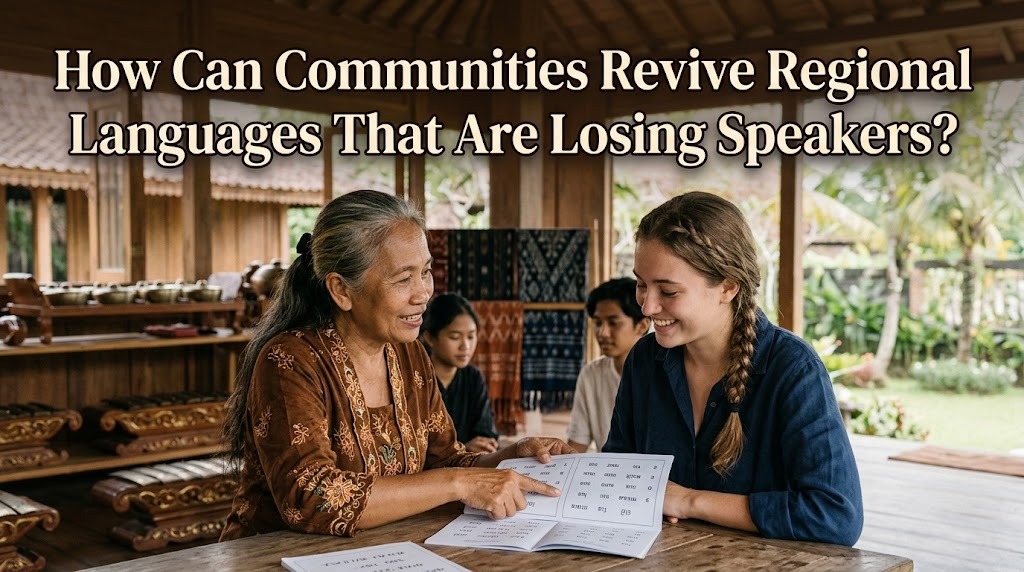
Regional languages are an important part of cultural identity, local history, and community life. They preserve traditional knowledge, unique expressions, folk stories, and values that have been passed down through generations. However, some regional languages are losing speakers because younger generations increasingly use more widely spoken languages in their daily communication. When fewer children learn a language at home, the language may gradually disappear from everyday life. Communities can help revive regional languages by encouraging daily use, teaching younger generations, documenting linguistic knowledge, and creating opportunities for people to speak them together. Successful revitalization requires long-term cooperation between families, schools, local leaders, and native speakers.
ENCOURAGING THE USE OF REGIONAL LANGUAGES AT HOME
Families play a central role in reviving regional languages because children often learn their first language through everyday conversations. Parents and grandparents can introduce local vocabulary, greetings, expressions, and simple sentences during ordinary activities. Conversations during meals, family gatherings, and household routines provide natural opportunities to practice the language. Children can also learn traditional songs and stories from older family members. Regular use at home helps regional languages become a natural part of children's daily lives.
Families do not need to teach every grammatical rule at once to make progress. They can begin with familiar words and gradually introduce more complex conversations as children become comfortable. Older speakers can explain the meanings of traditional expressions and show how they are used in different situations. Families should encourage children patiently rather than criticize mistakes or force them to learn too quickly. When children associate regional languages with positive experiences and meaningful relationships, they may become more motivated to continue learning.
ORGANIZING COMMUNITY LANGUAGE CLASSES
Community language classes can provide learning opportunities for people who did not grow up speaking their regional language. These classes may be organized in community centers, libraries, cultural institutions, or other accessible locations. Lessons can cover pronunciation, vocabulary, sentence construction, everyday conversations, and local expressions. Native speakers and experienced teachers can help learners understand how the language is used naturally. Community classes make regional language learning more accessible to people of different ages and backgrounds.
The lessons should reflect the needs of the local community. Beginners may benefit from simple conversations and practical vocabulary, while more advanced learners can study traditional literature, storytelling, or public speaking. Classes can also include games, songs, and role-playing activities to make learning enjoyable. Flexible schedules and affordable learning materials may encourage more people to participate. By providing consistent instruction and opportunities to practice, community classes can help rebuild language skills among new generations of speakers.
INVOLVING SCHOOLS AND YOUNGER GENERATIONS
Schools can contribute to language revitalization by introducing regional languages through lessons, cultural projects, and extracurricular activities. Students can learn local vocabulary, traditional stories, songs, and expressions that reflect their community's heritage. Teachers may invite native speakers or cultural practitioners to explain language use and local customs. Students can also interview older residents and present their findings through classroom projects. School activities can connect younger generations with regional languages and the people who preserve them.
Learning should extend beyond memorizing words for examinations. Students need opportunities to use the language in conversations, performances, storytelling sessions, and creative assignments. Schools can organize language clubs or cultural events where students practice with their classmates. They can also encourage students to create short videos, posters, or digital stories using regional languages. These activities help demonstrate that local languages remain useful and relevant in modern education and everyday life.
DOCUMENTING WORDS AND STORIES FROM OLDER SPEAKERS
Older community members often possess valuable knowledge about regional vocabulary, pronunciation, oral traditions, and expressions that younger people rarely hear. Communities can record interviews, conversations, folk stories, songs, and traditional explanations with the speakers' permission. These recordings can be stored in local archives, libraries, or carefully managed digital collections. Written transcripts and translations can make the materials easier for learners and researchers to understand. Documenting the knowledge of fluent speakers helps preserve linguistic resources that might otherwise be lost.
Documentation should involve the community rather than treating native speakers simply as sources of information. Participants should understand how their recordings will be stored, shared, and used. Some stories or expressions may be private, sacred, or inappropriate for public distribution, so community preferences must be respected. Teachers and language experts can review the materials to improve accuracy and provide useful learning resources. Although documentation cannot replace everyday communication, it creates an important foundation for teaching and revitalization.
USING DIGITAL TECHNOLOGY TO REACH MORE LEARNERS
Digital technology can help communities share regional languages with people who live far from their ancestral homes. Social media posts, educational videos, online dictionaries, podcasts, and language-learning applications can introduce vocabulary and pronunciation in accessible formats. Short videos featuring everyday conversations may be particularly useful for beginners. Digital platforms also allow younger speakers to create content that connects local languages with contemporary interests. Technology can make regional languages more visible and provide new opportunities for learning and practice.
Communities can work with schools, universities, and technology developers to produce reliable digital materials. Recordings should include accurate meanings, appropriate pronunciation, and information about local language variations. Where possible, resources should also be available offline so that people with limited internet access can use them. Online groups can provide spaces for learners to ask questions and practice with more experienced speakers. However, digital content is most effective when it encourages people to speak the language in real life rather than replacing direct communication entirely.
BUILDING PRIDE AND CREATING OPPORTUNITIES TO SPEAK
People are more likely to learn a regional language when they see it as valuable and relevant. Communities can promote positive attitudes by celebrating local literature, music, traditional knowledge, and the achievements of regional-language speakers. Public events, storytelling competitions, cultural exhibitions, and language festivals can provide opportunities to hear and use local languages. Community leaders and respected public figures can also encourage language learning by using regional languages appropriately in their activities. Building pride in a regional language can motivate people to learn it and pass it on to future generations.
Revitalization should also create practical reasons to use the language regularly. Community groups can encourage regional-language conversations at gatherings, cultural workshops, local events, and family activities. Businesses and cultural tourism initiatives may use local expressions in appropriate signs, explanations, or educational materials. These opportunities help demonstrate that regional languages can contribute to community life and cultural development. Progress may take time, particularly when few fluent speakers remain, so communities should set realistic goals and recognize small achievements. With continued support, new speakers can gradually expand the number of people who understand and use the language.
CONCLUSION
Communities can revive regional languages that are losing speakers by encouraging family conversations, organizing language classes, involving schools, documenting older speakers' knowledge, and using digital technology. Building pride and creating regular opportunities to speak are equally important for making revitalization sustainable. A regional language is more likely to survive when children learn it and community members use it in everyday life. These efforts require patience, reliable learning resources, and cooperation between generations. By working together, communities can restore the use of regional languages and preserve the cultural knowledge connected to them.
Recent Posts

Bagaimana Sistem SKS pada Program Kuliah... 22.11.2026/49 View

How Does Technology Make Daily Evaluation... 21.11.2026/77 View

Apa Strategi Menghadapi Kesenjangan antara Kompetensi... 21.11.2026/78 View

Mengapa Inventaris Aset Penting bagi Kelancaran... 21.11.2026/74 View

When Should Musicians Join a Record... 21.11.2026/79 View
