

How Can Companies Conduct Employee Performance Evaluations Objectively and Effectively?
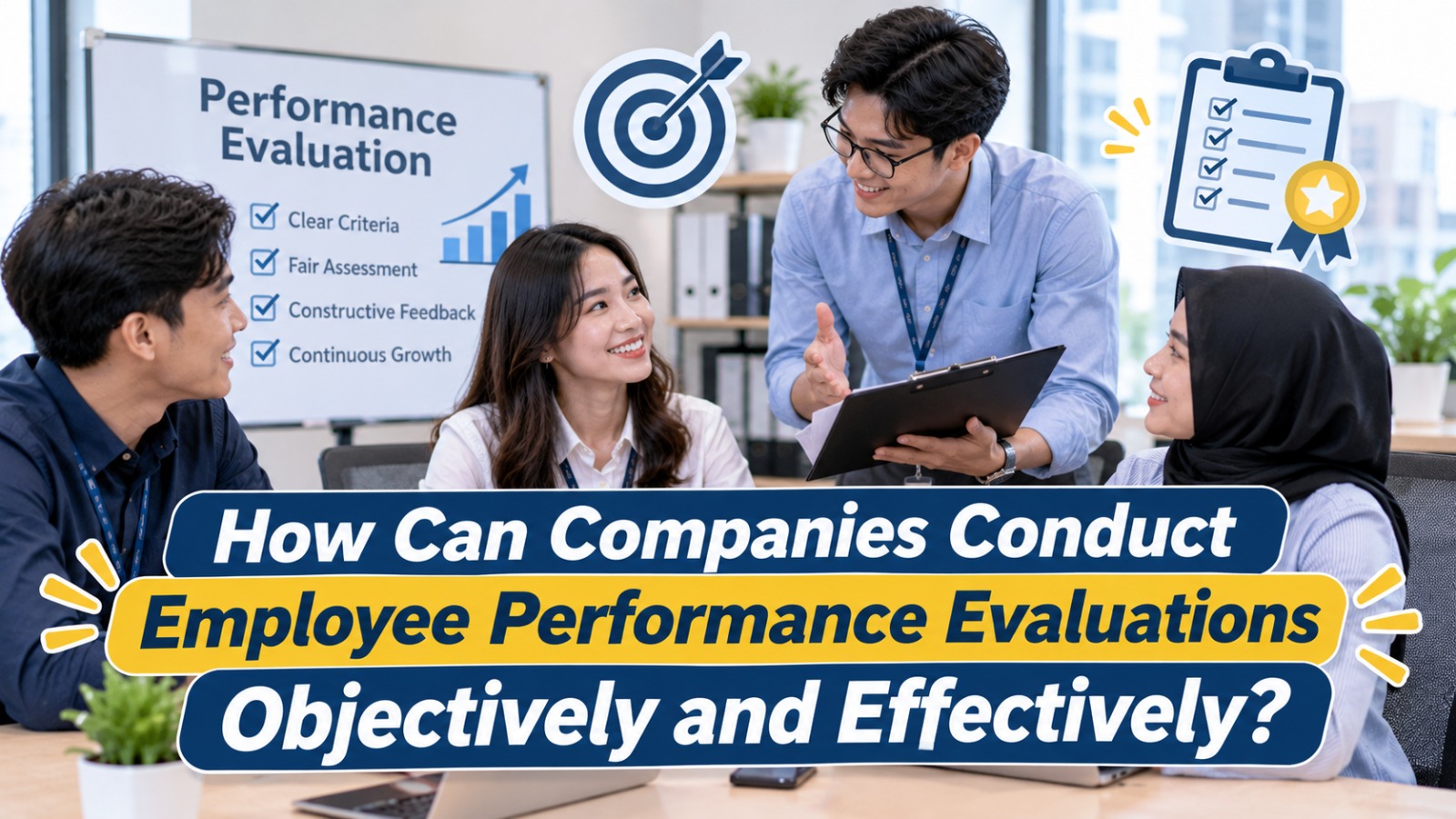
Employee performance evaluations are an important part of managing human resources in a company. Through this process, companies can understand how well employees perform their responsibilities, achieve work targets, and contribute to organizational goals. However, conducting evaluations is not always easy because personal opinions, unclear standards, and communication problems can influence the results.
An effective evaluation should be based on measurable performance indicators, clear standards, and reliable evidence rather than personal preferences. Companies also need to ensure that employees understand how their performance is assessed and receive useful feedback for improvement. By applying a fair and structured evaluation process, organizations can improve employee productivity, strengthen professional development, and create a healthier working environment.
ESTABLISH CLEAR PERFORMANCE STANDARDS
The first step in conducting an objective employee performance evaluation is establishing clear performance standards. Companies need to determine what employees are expected to achieve based on their positions, responsibilities, and organizational goals. These standards should include measurable indicators such as work quality, productivity, attendance, teamwork, and the ability to complete tasks on time.
Each employee should understand the expectations before the evaluation period begins. Managers must communicate the targets, assessment criteria, and expected results clearly so that employees know what they need to accomplish. When performance standards are consistent and transparent, employees have a better opportunity to demonstrate their abilities, while managers can evaluate their work more fairly.
USE MEASURABLE PERFORMANCE INDICATORS
Companies should use measurable performance indicators to reduce subjective judgments during employee evaluations. These indicators provide concrete information about how employees perform their responsibilities. For example, sales employees can be evaluated through sales targets, customer satisfaction, and the number of successful transactions. Meanwhile, administrative employees may be assessed based on document accuracy, task completion, and work efficiency.
Using relevant data helps managers understand employee performance more accurately. However, companies should not depend on numerical results alone because some important contributions cannot always be measured through numbers. Factors such as problem-solving abilities, communication, initiative, and collaboration should also be considered. Combining quantitative and qualitative indicators allows organizations to develop a more complete understanding of employee performance.
AVOID PERSONAL BIAS IN THE EVALUATION PROCESS
Personal bias is one of the biggest challenges in employee performance evaluations. Sometimes, managers unintentionally give higher assessments to employees they know well or have positive personal relationships with. On the other hand, employees who have different working styles or communication preferences may receive lower evaluations despite achieving good results.
To prevent this problem, companies should establish standardized assessment procedures that apply equally to everyone. Managers need to focus on work achievements, professional behavior, and documented evidence instead of personal relationships or individual preferences. They should also receive training to recognize common evaluation biases, such as favoritism, the halo effect, and the tendency to judge employees based on recent events.
Another effective approach is involving more than one evaluator when necessary. Feedback from supervisors, colleagues, and relevant team members can provide additional perspectives. This approach helps companies produce more balanced assessments and reduces the influence of individual opinions.
PROVIDE CONSTRUCTIVE FEEDBACK AND OPEN COMMUNICATION
An effective performance evaluation should not only focus on giving scores or identifying mistakes. Companies also need to provide constructive feedback that helps employees understand their strengths and areas requiring improvement. Managers should explain the reasons behind their assessments and provide specific examples of employee achievements or performance challenges.
Open communication is equally important because employees need opportunities to express their opinions, discuss difficulties, and explain situations that may have affected their work. Evaluation meetings should become two-way discussions rather than conversations in which managers simply deliver judgments. By listening to employee perspectives, companies can identify workplace problems and find appropriate solutions.
Feedback should also include practical recommendations and achievable improvement targets. Instead of simply telling employees to improve their productivity, managers can suggest better time management, additional training, or adjustments to work processes. This makes the evaluation more useful because employees receive clear guidance on how to develop their professional abilities.
APPLY TECHNOLOGY AND CONDUCT REGULAR EVALUATIONS
Technology can help companies conduct employee performance evaluations more efficiently and consistently. Digital performance management systems allow organizations to record work achievements, monitor progress, organize evaluation documents, and track employee development. These systems also make it easier for managers to compare performance results with previously established targets.
However, companies should ensure that the technology they use supports fair decision-making. Performance data must be accurate, relevant, and protected from unauthorized access. Automated evaluation systems should not replace human judgment entirely because certain aspects of employee performance require context, professional understanding, and direct communication.
In addition, evaluations should be conducted regularly rather than only once a year. Periodic performance reviews allow managers to identify problems earlier and provide timely guidance. Regular discussions also help employees understand whether they are making progress toward their targets. With consistent monitoring, companies can respond to performance challenges before they negatively affect overall productivity.
CONCLUSION
Conducting employee performance evaluations objectively and effectively requires clear standards, measurable indicators, consistent assessment procedures, and constructive communication. Companies must ensure that every employee receives a fair evaluation based on actual performance rather than personal preferences or unsupported assumptions.
By reducing evaluation bias, using appropriate technology, and providing regular feedback, organizations can create a more transparent performance management system. Ultimately, objective employee evaluations benefit both employees and companies because they support professional development, improve productivity, strengthen teamwork, and help organizations achieve their long-term goals.
Recent Posts

How Does Technology Make Daily Evaluation... 21.11.2026/63 View

Apa Strategi Menghadapi Kesenjangan antara Kompetensi... 21.11.2026/64 View

Mengapa Inventaris Aset Penting bagi Kelancaran... 21.11.2026/60 View

When Should Musicians Join a Record... 21.11.2026/59 View

Daily Evaluation or Daily Planning Which... 21.11.2026/67 View
