

How Can Companies Evaluate The Success Of Out-Of-Town Business Trips?
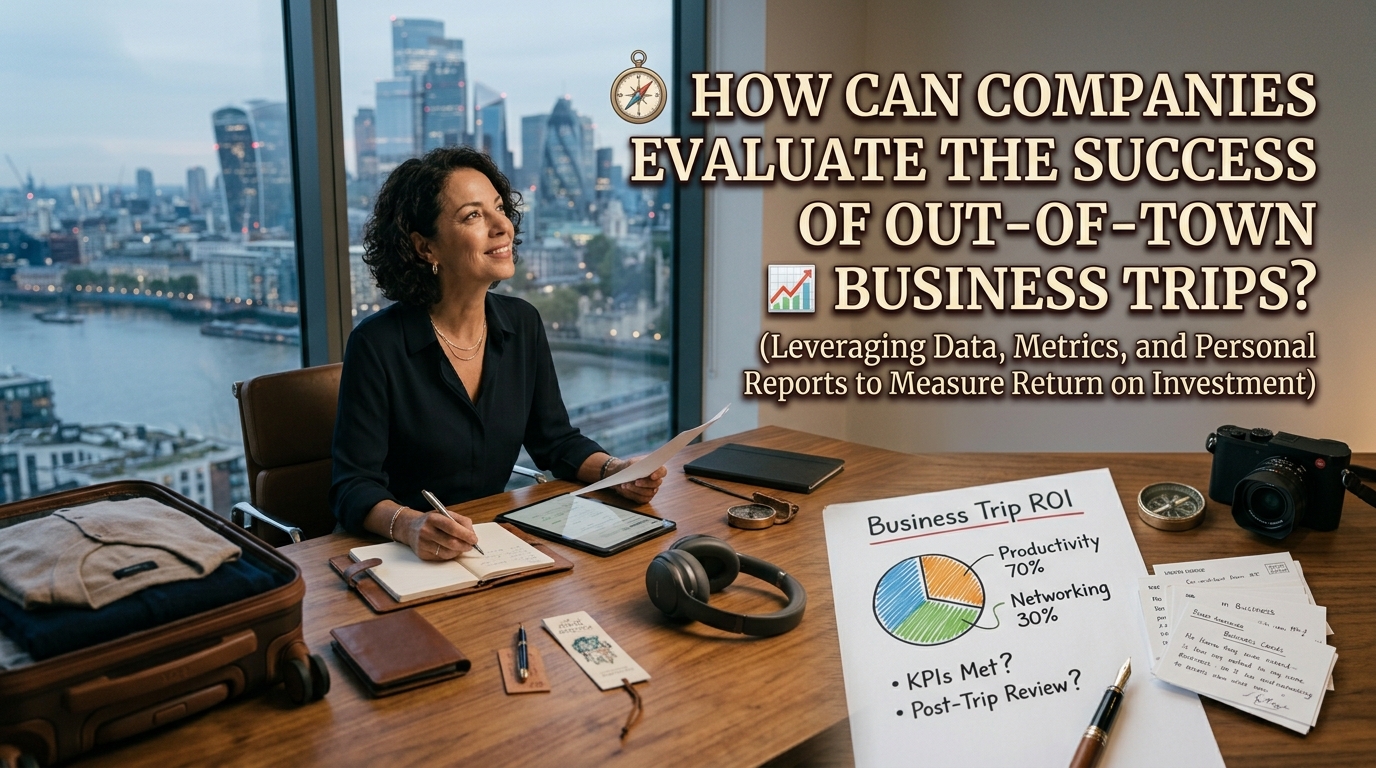
Out-of-town business trips help companies build partnerships, meet clients, attend professional events, and explore new business opportunities. However, organizing a trip does not automatically mean that it has achieved its goals. Companies need to evaluate the results to understand whether the time, money, and effort spent were worthwhile. This evaluation also helps managers identify problems and improve future travel plans. Measuring business trip success involves reviewing objectives, costs, outcomes, and employee performance.
SET CLEAR OBJECTIVES BEFORE THE TRIP
Companies should establish clear objectives before employees leave for an out-of-town business trip. These objectives may include securing a new client, negotiating a business agreement, attending training, or strengthening relationships with business partners. Managers should explain what employees are expected to achieve and how the results will be measured. For example, a sales employee may be asked to meet several potential customers and identify new sales opportunities. Clear objectives provide a reliable standard for evaluating the success of a business trip.
The objectives should be realistic, specific, and relevant to the company's needs. Companies can set measurable targets, such as the number of client meetings completed or proposals submitted. However, not every trip will produce immediate financial results, especially when the purpose is to build relationships or gather information. In these situations, managers should also consider progress toward longer-term goals. Defining expectations in advance makes the final evaluation more accurate and useful.
REVIEW THE RESULTS AND ACHIEVEMENTS
After employees return, companies should compare the actual results with the objectives established before the trip. Managers can review meeting records, completed assignments, new contacts, business proposals, and agreements reached during the journey. Employees should provide a clear summary of their activities and explain which targets were achieved. If some goals were not completed, they should identify the reasons and suggest possible solutions. Comparing planned objectives with actual achievements helps companies understand the real value of the trip.
Companies should also consider benefits that may take time to appear. For example, a meeting with a potential partner might lead to a contract several months later rather than immediately after the trip. Training or industry events may also provide knowledge that improves future work performance. Therefore, evaluation should include both immediate outcomes and possible long-term benefits. This approach prevents companies from judging a trip only by its short-term financial results.
CALCULATE BUSINESS TRIP COSTS AND RETURNS
Financial evaluation is an important part of measuring business trip success. Companies should review transportation, accommodation, meals, local travel, registration fees, and other approved expenses. Employees should submit receipts and expense reports according to company procedures. Managers can then compare the total spending with the value or benefits generated by the trip. Effective cost evaluation helps companies determine whether travel expenses were reasonable and supported business objectives.
When financial benefits can be measured, companies may calculate the return on investment, commonly known as ROI. This calculation compares the financial gain attributable to the trip with its cost, although it can be difficult to separate the trip's contribution from other business activities. For example, a new contract may result from several factors, including previous communication and the company's reputation. Not every benefit can be expressed in money, so companies should also consider improved knowledge, stronger relationships, and future opportunities. A balanced evaluation combines financial results with other meaningful business benefits.
COLLECT EMPLOYEE AND CLIENT FEEDBACK
Feedback from employees can reveal whether a business trip was organized effectively. Employees may report problems with transportation, scheduling, accommodation, or communication that affected their work. They can also explain which activities were useful and which arrangements could be improved. Companies may collect this information through short surveys, written reports, or follow-up discussions. Employee feedback helps managers identify practical improvements for future business trips.
Client and business partner feedback can provide another useful perspective. Companies may ask whether meetings were productive, communication was clear, and the proposed solutions addressed the client's needs. This feedback can help managers assess relationship quality and identify opportunities for further cooperation. However, feedback should be interpreted alongside actual results because satisfaction alone does not always indicate business success. Combining different perspectives creates a more complete evaluation.
MEASURE PRODUCTIVITY AND TIME MANAGEMENT
Companies should evaluate whether employees used their travel time efficiently and completed their planned activities. Managers can review the number of meetings attended, tasks completed, deadlines met, and follow-up actions identified. They should also consider whether the schedule allowed enough time for transportation, preparation, and unexpected delays. A productive business trip achieves important objectives without wasting unnecessary time or resources.
Technology can support this process by helping employees manage calendars, track expenses, organize meeting notes, and communicate with colleagues. Digital records also make it easier to compare planned schedules with completed activities. However, productivity should not be measured only by the number of meetings or tasks completed. The quality of discussions, decisions made, and progress toward business goals are equally important. Companies should use a combination of quantitative results and qualitative observations to evaluate employee productivity fairly.
IMPROVE FUTURE BUSINESS TRAVEL PLANS
The final step is to use the evaluation results to improve future business trips. Managers should identify successful practices, recurring problems, and unnecessary expenses. For example, they may choose more efficient transportation, adjust meeting schedules, or introduce clearer expense-reporting procedures. If certain types of trips consistently produce limited benefits, companies can reconsider their objectives or explore online meetings as an alternative. Evaluation is most valuable when the findings lead to practical improvements.
Companies should also maintain records of travel costs, outcomes, and feedback over time. These records help managers identify patterns and determine which trips provide the greatest value. Comparing similar trips can reveal opportunities to improve budgeting, scheduling, and employee preparation. Travel policies should be updated when business needs or working conditions change. Through regular evaluation, companies can make better decisions and ensure that future travel supports their overall business strategy.
CONCLUSION
Companies can evaluate the success of out-of-town business trips by reviewing objectives, measuring achievements, calculating expenses, collecting feedback, and assessing productivity. They should consider both immediate outcomes and long-term benefits instead of focusing only on financial returns. The most successful business trips deliver meaningful results, use resources responsibly, and support company goals. By documenting lessons learned and improving future plans, companies can make business travel more efficient and valuable.
Recent Posts

Bagaimana Sistem SKS pada Program Kuliah... 22.11.2026/57 View

How Does Technology Make Daily Evaluation... 21.11.2026/86 View

Apa Strategi Menghadapi Kesenjangan antara Kompetensi... 21.11.2026/84 View

Mengapa Inventaris Aset Penting bagi Kelancaran... 21.11.2026/82 View

When Should Musicians Join a Record... 21.11.2026/86 View
