

How Can Companies Improve Product Quality Through Operations Management?
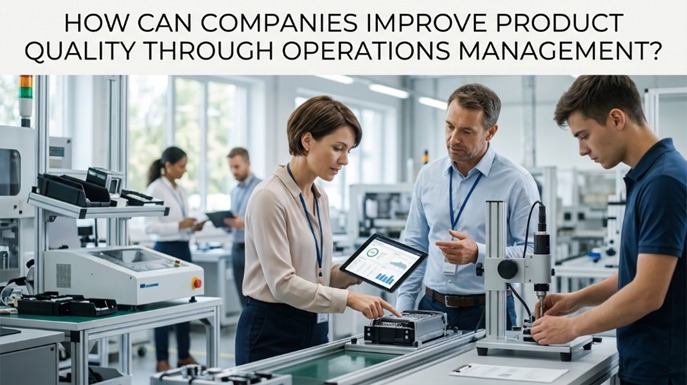
Product quality is one of the most important factors influencing customer satisfaction and business success. Customers expect products to be safe, reliable, durable, and consistent with their needs. If a company frequently produces defective products, it may lose customer trust, face higher costs, and damage its reputation. Therefore, businesses need effective strategies to maintain and improve product quality.
One important way to achieve this is through operations management. It helps companies organize production activities, manage resources, monitor processes, and maintain quality standards. With proper planning and continuous improvement, businesses can reduce errors and deliver products that meet customer expectations. So, how can companies improve product quality through operations management? Here are several effective approaches.
1. ESTABLISHING CLEAR QUALITY STANDARDS
Companies need clear quality standards to ensure that every product meets established requirements. These standards may cover product dimensions, materials, durability, safety, appearance, and functionality. By setting specific requirements, employees can understand what is expected at each stage of production. Consistent quality standards also reduce differences between products, making it easier to maintain customer satisfaction.
Operations managers should communicate these standards to employees, suppliers, and other relevant departments. They must also ensure that quality requirements are realistic, measurable, and aligned with customer expectations. For example, a furniture manufacturer may establish standards for wood strength, surface finishing, and product dimensions. Clear standards provide a foundation for consistent production quality.
2. IMPROVING PRODUCTION PLANNING
Effective production planning helps companies organize materials, employees, equipment, and schedules before manufacturing begins. Without proper planning, production activities may become disorganized, increasing the risk of mistakes and inconsistent product quality. Operations managers need to ensure that each production stage has sufficient resources and follows the correct procedures. This helps prevent unnecessary delays and production errors.
A well-prepared production plan also allows businesses to identify potential problems before they affect the final product. For example, managers can check whether materials are available, machines are ready, and employees have the necessary skills. Good production planning creates a more controlled manufacturing process, allowing companies to maintain quality while meeting production targets.
3. IMPLEMENTING EFFECTIVE QUALITY CONTROL
Quality control is an important part of operations management because it helps companies identify defects and ensure that products meet established standards. Inspections can be conducted when raw materials arrive, during manufacturing, and before finished products are distributed. This approach helps businesses detect problems at different stages instead of waiting until customers report them.
Companies can use visual inspections, measurements, functional tests, and laboratory testing depending on the type of product. For example, an electronics manufacturer may test product performance and electrical safety before packaging. When defects are discovered, managers should investigate their causes and take corrective action. Effective quality control reduces defective products and helps maintain customer confidence.
4. PROVIDING EMPLOYEE TRAINING AND DEVELOPMENT
Employees play a major role in determining the quality of products. Workers who understand production procedures, equipment operation, and quality requirements are more likely to perform their tasks correctly. Therefore, companies should provide regular training to improve employee knowledge and technical skills. Training should also explain workplace safety and the importance of following standard operating procedures.
In addition, managers should encourage employees to report problems and suggest improvements. Workers who directly handle production activities may notice issues that are difficult to identify through routine inspections. A skilled and quality-conscious workforce helps prevent errors and supports consistent production results. Employee development is therefore an important investment in long-term product quality.
5. MAINTAINING MACHINES AND PRODUCTION EQUIPMENT
Production equipment has a direct impact on product quality. Machines that are damaged, poorly calibrated, or inadequately maintained can produce inconsistent results and increase the number of defective products. Operations managers should establish regular maintenance schedules to ensure that equipment remains in good working condition. This includes cleaning, inspection, lubrication, calibration, and replacing worn components when necessary.
Companies can also apply preventive maintenance to identify potential equipment problems before breakdowns occur. For example, a food manufacturing company may regularly inspect temperature-control systems to ensure that products are processed under appropriate conditions. Well-maintained equipment improves production consistency, reduces downtime, and helps protect product quality.
6. SELECTING HIGH-QUALITY RAW MATERIALS
The quality of finished products depends heavily on the materials used during production. Poor-quality raw materials can create defects, reduce product durability, and affect safety. Therefore, companies need to establish clear supplier requirements and evaluate materials before accepting them. Operations managers should ensure that purchased materials meet technical specifications and relevant quality standards.
Businesses should also develop reliable relationships with suppliers who can consistently provide suitable materials. Regular supplier evaluations, incoming inspections, and material testing can help prevent problems from entering the production process. Choosing appropriate raw materials is an essential step in producing reliable and high-quality products. It also reduces the risk of waste and costly rework.
7. USING TECHNOLOGY TO MONITOR PRODUCTION QUALITY
Technology helps companies monitor production activities more accurately and efficiently. Digital monitoring systems, sensors, automated inspection tools, and data analytics can provide useful information about production performance. These technologies help managers identify unusual changes, detect defects, and respond to problems more quickly. They can also reduce human errors in repetitive inspection tasks.
For example, automated inspection systems in manufacturing can identify surface defects or incorrect product dimensions. Production data can also reveal patterns that indicate recurring quality problems. However, technology should support rather than completely replace appropriate human supervision. Using suitable technology improves monitoring accuracy and helps businesses make better quality-related decisions.
8. APPLYING CONTINUOUS IMPROVEMENT METHODS
Product quality should not be treated as something that only needs to be checked at the end of production. Companies need to evaluate their processes regularly and look for opportunities to improve them. One widely used approach is Kaizen, which focuses on making small, continuous improvements involving employees at different levels. This method encourages businesses to identify inefficiencies and solve problems step by step.
Another approach is Total Quality Management (TQM), which emphasizes quality across the entire organization rather than assigning responsibility only to the inspection department. Employees, managers, and suppliers can all contribute to improving quality. Continuous improvement helps companies prevent recurring problems and maintain better production standards over time.
9. REDUCING PRODUCTION ERRORS AND WASTE
Production errors often lead to defective products, wasted materials, additional labor costs, and delayed deliveries. Operations management helps businesses identify activities that create unnecessary waste and increase the possibility of mistakes. Managers can review production workflows, standardize work procedures, and improve the arrangement of equipment and materials. These actions make production processes more organized and easier to control.
Companies can also apply Lean Management principles to eliminate activities that do not add value to the final product. For example, improving material storage can reduce damage, while simplifying workflows can prevent unnecessary handling. Reducing waste and production errors improves both product quality and operational efficiency. It also helps companies use their resources more effectively.
10. MONITORING CUSTOMER FEEDBACK AND PRODUCT PERFORMANCE
Customer feedback provides valuable information about how products perform after they reach the market. Companies can collect feedback through surveys, reviews, complaint reports, warranty claims, and customer service interactions. This information helps managers understand whether products meet customer expectations and identify problems that may not appear during internal inspections.
Businesses should analyze feedback carefully and use the findings to improve product design, materials, and manufacturing procedures. For example, repeated complaints about a product component may indicate that the material or production method needs to be changed. Listening to customers helps companies connect quality improvements with real market needs. It also strengthens customer relationships and supports long-term business growth.
CONCLUSION
Companies can improve product quality through operations management by establishing clear standards, improving production planning, implementing quality control, and developing employee skills. Other important actions include maintaining equipment, selecting reliable raw materials, using technology, and applying continuous improvement methods.
However, product quality is not achieved through inspection alone. It requires consistent attention throughout the entire production process, from purchasing materials to delivering finished products. By combining effective management, employee involvement, and regular performance evaluation, companies can produce more reliable goods, reduce defects, and build stronger customer trust.
Recent Posts

Bagaimana Sistem SKS pada Program Kuliah... 22.11.2026/12 View

How Does Technology Make Daily Evaluation... 21.11.2026/63 View

Apa Strategi Menghadapi Kesenjangan antara Kompetensi... 21.11.2026/64 View

Mengapa Inventaris Aset Penting bagi Kelancaran... 21.11.2026/61 View

When Should Musicians Join a Record... 21.11.2026/59 View
