

How Can Companies Improve Their Operational Efficiency?
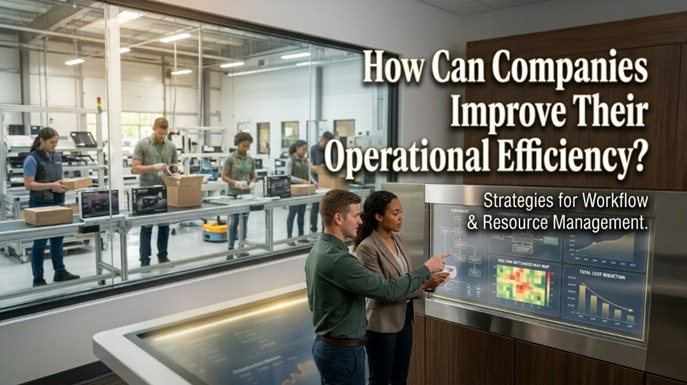
In today's competitive business environment, companies need to manage their activities effectively to achieve long-term success. Every business depends on various processes, including production, employee management, inventory control, distribution, and customer service. When these activities are not properly organized, companies may experience unnecessary costs, wasted time, and declining productivity.
This is why operational efficiency is important for every organization. It refers to a company's ability to use available resources effectively while achieving the best possible results. By improving operational efficiency, businesses can reduce waste, optimize workflows, maintain product quality, and deliver better services to customers.
However, improving efficiency requires more than simply reducing expenses. Companies must develop appropriate strategies, use technology effectively, and continuously evaluate their performance. Here are several practical ways companies can improve their operational efficiency.
1. EVALUATING EXISTING BUSINESS PROCESSES
The first step toward improving operational efficiency is understanding how current business processes work. Companies need to examine their daily activities to identify unnecessary procedures, repeated tasks, delays, and activities that consume excessive resources.
Managers can evaluate workflows by observing employee activities, reviewing operational reports, and collecting feedback from different departments. This information helps businesses understand which processes are working effectively and which require improvement. By identifying operational weaknesses early, companies can develop more appropriate solutions and create simpler and more productive workflows.
2. IMPLEMENTING THE RIGHT TECHNOLOGY
Technology plays an important role in improving modern business operations. Companies can use digital tools to automate repetitive tasks, organize information, monitor performance, and improve communication between departments.
For example, Enterprise Resource Planning (ERP) systems can connect different business functions through a centralized platform. Inventory software can help monitor stock levels, while accounting applications can simplify financial recording. Choosing technology based on actual business needs allows companies to save time, reduce manual errors, and improve operational accuracy.
3. IMPROVING EMPLOYEE SKILLS AND PRODUCTIVITY
Employees have a direct influence on how efficiently business activities are performed. Even with advanced equipment and well-designed systems, companies may struggle to achieve good results if employees lack the necessary knowledge and skills.
Businesses should provide regular training, clear work instructions, and opportunities for professional development. Managers also need to assign responsibilities according to employees' abilities and provide constructive feedback. When employees understand their roles and receive proper support, they can work more effectively and contribute to higher productivity and better operational performance.
4. OPTIMIZING RESOURCE ALLOCATION
Every business has limited resources, including employees, equipment, raw materials, time, and financial capital. Operational efficiency improves when companies allocate these resources according to their actual priorities and requirements.
For example, manufacturers can arrange production schedules to reduce machine idle time and avoid unnecessary material consumption. Service companies can organize employee shifts based on customer demand to prevent overstaffing or understaffing. Effective resource allocation helps businesses avoid waste and achieve maximum value from available resources.
5. STRENGTHENING INVENTORY MANAGEMENT
Poor inventory management can create serious operational problems. Excessive stock increases storage costs, while insufficient inventory can interrupt production and delay customer orders.
Companies should monitor inventory levels regularly and establish appropriate purchasing schedules. They can also use inventory management systems to track incoming and outgoing goods, identify fast-moving products, and reduce the risk of stock shortages. With better inventory control, businesses can maintain smoother operations and balance product availability with storage costs.
6. IMPROVING COMMUNICATION BETWEEN DEPARTMENTS
Effective communication is essential for coordinating business activities. When departments do not share information properly, companies may experience misunderstandings, duplicated work, delayed decisions, and operational mistakes.
Businesses can improve communication by establishing clear reporting procedures, organizing regular meetings, and using shared digital platforms. For example, the purchasing department should communicate with production teams to ensure that raw materials are available when needed. Strong communication helps employees understand their responsibilities and supports better coordination across the organization.
7. APPLYING QUALITY CONTROL PROCEDURES
Operational efficiency does not mean completing tasks as quickly as possible while ignoring quality. Companies must ensure that their products and services meet established standards while minimizing defects and unnecessary rework.
Quality control can be implemented through regular inspections, performance monitoring, standard operating procedures, and customer feedback evaluations. Businesses should also identify the causes of recurring problems rather than simply correcting individual mistakes. By maintaining consistent standards, companies can reduce waste, avoid additional expenses, and improve product quality and customer satisfaction.
8. REDUCING UNNECESSARY OPERATIONAL COSTS
Controlling operational costs is another important strategy for improving efficiency. Businesses need to understand which expenses contribute directly to their activities and which can be reduced without affecting essential operations.
Managers can review energy consumption, transportation expenses, material usage, maintenance costs, and administrative procedures. For example, improving equipment maintenance can prevent expensive breakdowns, while optimizing delivery routes can reduce transportation expenses. The objective is not simply to spend less but to use business budgets more effectively without sacrificing quality.
9. USING DATA TO SUPPORT BUSINESS DECISIONS
Accurate data helps companies understand their operational performance and make better decisions. Information about production output, delivery times, inventory turnover, employee productivity, and operating costs can reveal important business trends.
Companies should establish relevant Key Performance Indicators (KPIs) to measure whether their operational targets are being achieved. For example, managers can monitor production time, defect rates, order fulfillment rates, and operating expenses. By analyzing these measurements regularly, businesses can identify problems, evaluate improvement strategies, and make more informed operational decisions.
10. IMPLEMENTING CONTINUOUS IMPROVEMENT
Operational efficiency requires ongoing attention because business needs and market conditions can change over time. Companies should regularly review their procedures and identify opportunities to improve performance.
One useful method is the Plan-Do-Check-Act (PDCA) cycle. Businesses first plan an improvement, implement the proposed change, evaluate its results, and take further action based on the findings. This method encourages employees and managers to solve problems systematically rather than relying on temporary solutions. Through continuous improvement, companies can maintain efficient processes and adapt more effectively to future challenges.
11. BUILDING A CULTURE OF OPERATIONAL EFFICIENCY
Improving operational efficiency should not be the responsibility of managers alone. Every employee can contribute by following procedures, identifying problems, sharing suggestions, and using company resources responsibly.
Companies should encourage teamwork and create an environment where employees feel comfortable proposing improvements. Management can recognize useful contributions and communicate the importance of efficiency throughout the organization. When operational improvement becomes part of the company culture, employees are more likely to maintain productive habits and support long-term business goals.
CONCLUSION
Companies can improve their operational efficiency by evaluating existing processes, adopting suitable technology, developing employee skills, and optimizing resource allocation. Other important strategies include strengthening inventory management, improving communication, implementing quality control, and using data to support business decisions.
However, operational efficiency cannot be achieved through a single improvement. It requires consistent evaluation, effective leadership, and cooperation across departments. By applying the right strategies and encouraging continuous improvement, companies can reduce unnecessary costs, increase productivity, maintain quality, and build a stronger competitive position in the business environment.
Recent Posts

Bagaimana Sistem SKS pada Program Kuliah... 22.11.2026/21 View

How Does Technology Make Daily Evaluation... 21.11.2026/63 View

Apa Strategi Menghadapi Kesenjangan antara Kompetensi... 21.11.2026/65 View

Mengapa Inventaris Aset Penting bagi Kelancaran... 21.11.2026/62 View

When Should Musicians Join a Record... 21.11.2026/59 View
