

How Can Companies Recover From Reputation Damage?
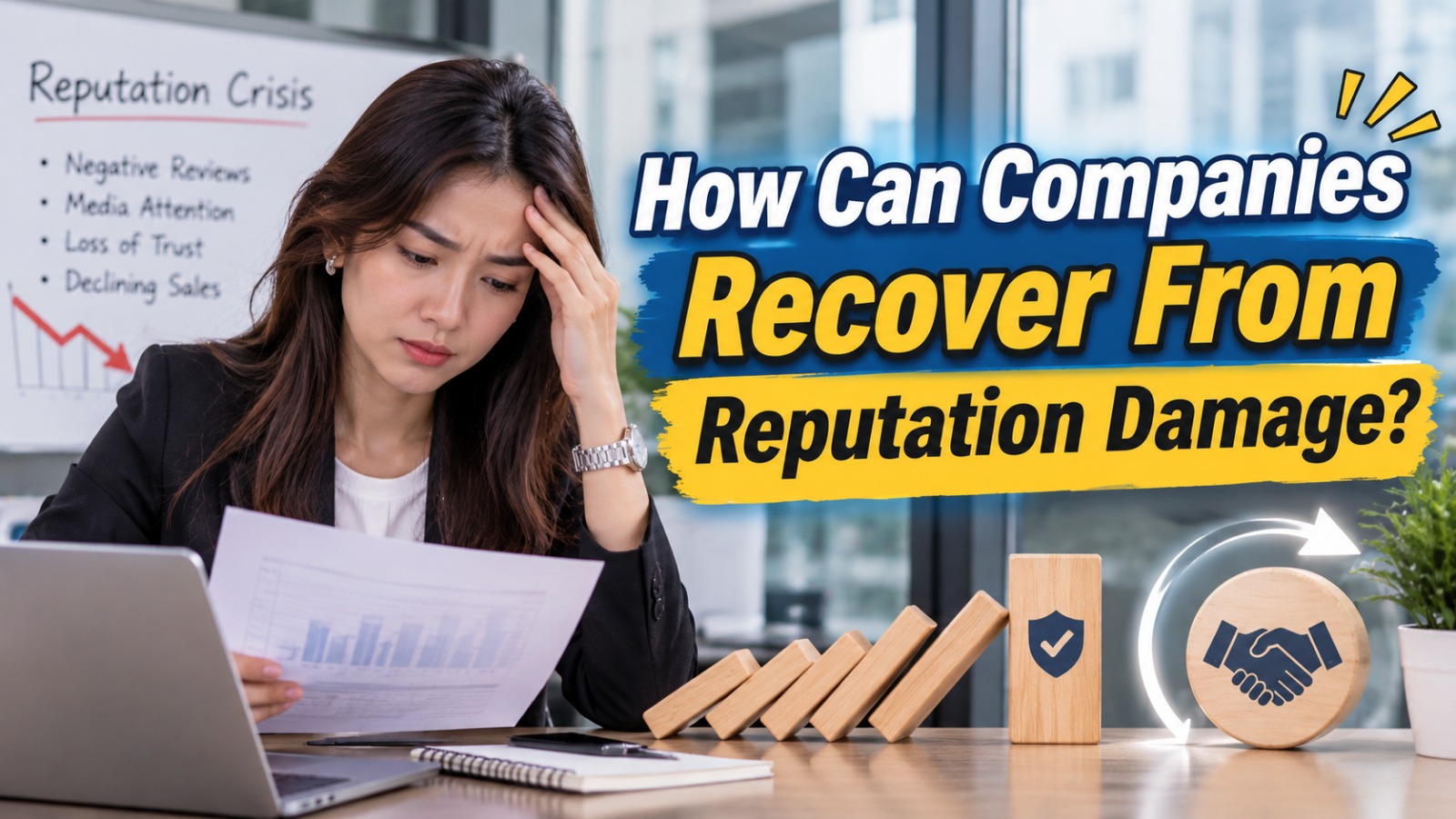
Reputation damage can create serious challenges for companies, affecting customer trust, sales performance, employee confidence, and business relationships. It may occur because of poor customer service, product failures, misleading information, unethical practices, data breaches, or negative public attention. When these problems become widely known, people may begin questioning whether a company is reliable and responsible.
Recovering from reputation damage requires more than publishing an apology or making temporary changes to public communication. Companies need to understand the causes of the problem, take responsibility, and demonstrate meaningful improvements. A consistent recovery strategy can help rebuild trust and establish a stronger foundation for long-term business relationships.
IDENTIFY THE CAUSE OF REPUTATION DAMAGE
The first step toward recovery is understanding what caused the negative public perception. Companies should examine customer complaints, employee feedback, media coverage, online reviews, and internal records to identify the main issues.
A clear assessment helps management distinguish between isolated incidents and deeper organizational problems. For example, repeated complaints about delayed deliveries may indicate weaknesses in inventory management or logistics. Identifying the actual cause allows companies to develop solutions that address the problem instead of focusing only on its public image.
TAKE RESPONSIBILITY FOR THE PROBLEM
Companies should acknowledge their mistakes when their actions have caused harm or disappointment. Avoiding responsibility, blaming customers, or ignoring complaints can make the situation worse and reduce public confidence.
Taking responsibility means explaining what happened, recognizing the impact on affected stakeholders, and showing a willingness to make improvements. Management should communicate honestly without making unsupported statements or promises. This approach demonstrates that the company understands the seriousness of the situation.
COMMUNICATE OPENLY AND HONESTLY
Clear communication is essential during the reputation recovery process. Customers, employees, investors, and business partners need accurate information about the situation and the actions being taken.
Companies should use appropriate communication channels, such as official websites, social media accounts, press statements, and direct customer notifications. Updates should be consistent and based on verified information. If an investigation is still ongoing, the company should explain what is known and what remains uncertain rather than presenting assumptions as facts.
PROVIDE A SINCERE PUBLIC APOLOGY
A sincere apology can be an important part of rebuilding damaged relationships. It should recognize the problem, acknowledge its impact, and communicate the company's commitment to correcting the situation.
However, an apology should not become a substitute for real action. Customers may lose confidence if a company repeatedly apologizes without changing the practices that caused the problem. A meaningful apology should therefore be supported by specific corrective measures and clear communication about the progress being made.
IMPLEMENT REAL OPERATIONAL IMPROVEMENTS
Reputation recovery depends on whether a company can correct the weaknesses behind the damage. Management should review relevant procedures, employee training, quality standards, customer service systems, and internal controls.
For example, if defective products caused complaints, the company may need to improve quality inspections and supplier evaluation. If poor customer service created negative feedback, additional training and better complaint-handling procedures may be necessary. Operational improvements show that the organization is addressing the source of the problem.
RESPOND TO CUSTOMER COMPLAINTS PROFESSIONALLY
Customers who experience problems should receive appropriate attention and practical solutions. Companies can provide accessible complaint channels, respond within reasonable timeframes, and explain how issues will be handled.
Responses should remain respectful, even when feedback is critical. Depending on the circumstances, solutions may include refunds, replacements, repairs, service corrections, or other reasonable forms of assistance. Resolving individual complaints can help restore relationships and prevent similar experiences from affecting more customers.
REBUILD EMPLOYEE TRUST AND CONFIDENCE
Reputation damage can also affect employees, particularly when they feel uncertain about the company's direction or concerned about its workplace practices. Internal communication is therefore an important part of the recovery process.
Management should explain relevant changes, listen to employee concerns, and clarify expectations for future conduct. Employees should receive appropriate guidance and training so they can support improved business practices. When internal actions become more consistent with company values, employees can contribute to rebuilding external trust.
STRENGTHEN TRANSPARENCY AND ACCOUNTABILITY
Companies need to demonstrate that they are willing to be evaluated through their actions. Transparent policies, clear reporting procedures, and responsible management practices can help prevent similar problems from occurring again.
Organizations should establish clear responsibilities for monitoring improvements and handling future complaints. When appropriate, they can share progress reports with stakeholders to explain what has changed. Accountability makes recovery more credible because the company is not simply asking people to trust its promises.
MONITOR PUBLIC FEEDBACK AND REPUTATION
After implementing improvements, companies should regularly monitor how stakeholders respond. Online reviews, social media discussions, customer surveys, complaint records, and media coverage can provide useful information about changing public perceptions.
Businesses should look for recurring concerns as well as signs of improved customer satisfaction. They can also track indicators such as complaint resolution time, repeat purchases, customer retention, and service quality. Monitoring these results helps management determine whether recovery efforts are effective or require further adjustment.
DEVELOP A LONG-TERM REPUTATION MANAGEMENT PLAN
Recovering from reputation damage should lead to stronger prevention strategies. Companies need a clear plan for identifying risks, responding to complaints, communicating during crises, and maintaining ethical business practices.
The plan should include assigned responsibilities, communication procedures, employee training, and regular performance evaluations. Management should also review the plan as business conditions and stakeholder expectations change. A long-term approach helps organizations become better prepared for future challenges.
CONCLUSION
Companies can recover from reputation damage by identifying the cause of the problem, accepting responsibility, communicating honestly, and implementing meaningful improvements. Responding professionally to complaints and rebuilding employee confidence are also important parts of the process.
Most importantly, reputation recovery must be supported by consistent actions rather than temporary public relations efforts. By strengthening transparency, accountability, and service quality, companies can gradually rebuild stakeholder trust and create a more reliable business reputation.
Recent Posts

How Does Technology Make Daily Evaluation... 21.11.2026/63 View

Apa Strategi Menghadapi Kesenjangan antara Kompetensi... 21.11.2026/64 View

Mengapa Inventaris Aset Penting bagi Kelancaran... 21.11.2026/60 View

When Should Musicians Join a Record... 21.11.2026/59 View

Daily Evaluation or Daily Planning Which... 21.11.2026/67 View
