

How Can Creator Communities Help Members Find Collaboration Opportunities?
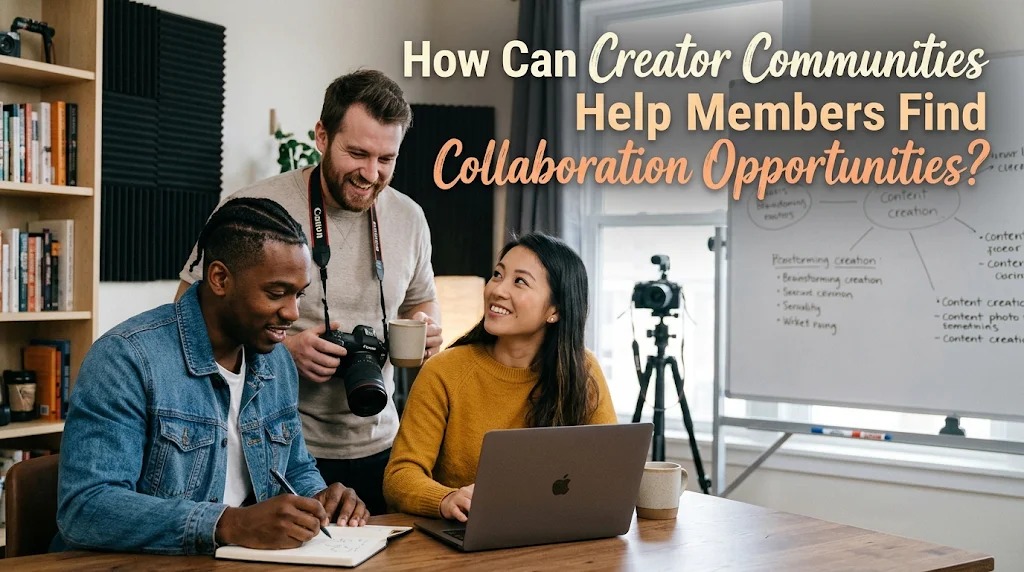
The digital creative industry continues to grow, creating more opportunities for individuals to share ideas, develop content, and work with other creators. However, finding the right collaboration partners can be challenging, especially for beginners who have limited experience and professional connections. One effective way to overcome this challenge is by joining a creator community.
Creator communities bring together people with different skills, interests, and creative backgrounds. Through regular interactions, members can discover potential partners, exchange knowledge, and participate in projects that match their abilities. These communities also provide opportunities to build professional relationships that may lead to long-term cooperation.
By creating a supportive environment, creator communities help members expand their networks and discover new possibilities in the digital industry. Collaboration can also improve content quality, strengthen personal branding, and create valuable professional experiences.
CONNECTING CREATORS WITH DIFFERENT SKILLS AND BACKGROUNDS
One of the main ways creator communities help members find collaboration opportunities is by connecting individuals with different skills and backgrounds. A community may include writers, graphic designers, photographers, video editors, musicians, and social media specialists. Each member brings unique knowledge that can support other creators in developing their projects.
For example, a content writer who wants to produce educational videos may need assistance from a video editor and graphic designer. By joining a creator community, the writer can connect with people who have the necessary abilities without having to search for partners independently. This makes the collaboration process more accessible and efficient.
Furthermore, interacting with people from different creative fields can introduce members to new perspectives and working methods. They can understand how different skills complement one another and identify opportunities to create projects together. As a result, skill diversity becomes an important advantage in building productive creative partnerships.
EXPANDING PROFESSIONAL NETWORKS THROUGH COMMUNITY INTERACTIONS
Creator communities provide valuable spaces for building professional networks through discussions, online meetings, workshops, and other activities. These interactions allow members to become familiar with one another's interests, experiences, and creative abilities. Over time, regular communication can develop into professional relationships.
For beginners, networking can be particularly beneficial because they may not yet have access to a wide professional circle. By participating in community discussions, they can introduce themselves, showcase their work, and connect with more experienced creators. These connections may provide information about projects, freelance opportunities, and potential partnerships.
In addition, community members can recommend one another when they discover opportunities that match specific skills. For instance, a creator who receives a project request may introduce another member who has relevant expertise. This type of professional connection creates mutual benefits and strengthens relationships within the community.
PROVIDING ACCESS TO COLLABORATIVE PROJECTS AND CREATIVE ACTIVITIES
Another important benefit of creator communities is the opportunity to participate in collaborative projects. Community organizers can introduce activities that encourage members to work together and combine their abilities. These activities may include digital campaigns, short video production, creative competitions, educational content, and social media projects.
Through these experiences, members can learn how to divide responsibilities, manage deadlines, communicate effectively, and complete shared objectives. For example, a collaborative video project may involve a scriptwriter, presenter, camera operator, and video editor. Each person contributes specific skills to produce content that would be more difficult to create individually.
Collaborative activities also help members build their portfolios with real project experience. They can use completed work to demonstrate their abilities to potential clients or employers. Therefore, practical collaboration is not only useful for producing content but also for improving professional readiness.
ENCOURAGING KNOWLEDGE SHARING AND SKILL DEVELOPMENT
Collaboration opportunities become more valuable when members are willing to share their knowledge and experiences. Within a creator community, individuals can learn from people who have different levels of expertise. Experienced creators may provide guidance about content production, audience engagement, digital marketing, and creative tools.
For example, a beginner who wants to improve video content may receive advice from an experienced editor about lighting, sound quality, editing techniques, and storytelling. Meanwhile, a graphic designer may share tips about visual consistency and design applications. This exchange of information helps members improve their abilities while preparing for future collaborative projects.
Knowledge sharing also encourages members to develop skills outside their main areas of expertise. A writer may learn basic graphic design, while a photographer may develop an understanding of digital marketing. These additional abilities can make creators more flexible when working with different teams. Through continuous learning, community members become better prepared to handle creative challenges.
BUILDING TRUST AND DEVELOPING LONG-TERM PARTNERSHIPS
Trust is an essential foundation for successful collaboration. Creator communities allow members to become familiar with one another before starting professional projects. By observing how others communicate, complete tasks, and respond to feedback, individuals can identify potential partners who share similar values and work standards.
Community organizers can support this process by establishing clear communication guidelines and encouraging professional behavior. Members should respect agreements, meet deadlines, communicate openly, and appreciate each other's contributions. These habits help create positive working relationships and reduce misunderstandings during collaborative projects.
When successful collaborations are repeated, members may develop long-term partnerships. For example, a content creator and graphic designer who work well together may decide to collaborate regularly on digital campaigns or business projects. Such partnerships can create more stable opportunities and improve the quality of future work. Mutual trust and professional responsibility help maintain these relationships over time.
CREATING NEW CAREER AND BUSINESS OPPORTUNITIES
Creator communities can also help members discover opportunities beyond ordinary content collaboration. Through networking and shared projects, individuals may gain access to freelance assignments, brand partnerships, sponsorships, business ventures, and professional development programs. These opportunities can become valuable steps toward building a sustainable career in the creative industry.
For example, a member who consistently produces quality content may attract the attention of a business looking for promotional support. Another member may discover potential business partners who have complementary skills and similar entrepreneurial interests. These connections demonstrate how community participation can lead to opportunities that may not be easily accessible through individual efforts.
Additionally, creators can use their community networks to promote their services and strengthen their personal branding. Sharing achievements, creative portfolios, and professional experiences can help members establish credibility. However, they should maintain professional communication and focus on providing value rather than promoting themselves excessively. In this way, creator communities can support individual growth while contributing to the wider creative economy.
CONCLUSION
Creator communities help members find collaboration opportunities by connecting individuals with different skills, expanding professional networks, and providing access to collaborative projects. They also encourage knowledge sharing, improve creative abilities, and create an environment where members can build trust with potential partners.
Through active participation, creators can discover new professional connections, strengthen their portfolios, and explore career or business opportunities. Collaboration becomes more effective when members communicate openly, respect responsibilities, and support one another's development. A strong creator community does more than connect people; it creates opportunities for members to grow, innovate, and achieve success together.
Recent Posts

Bagaimana Sistem SKS pada Program Kuliah... 22.11.2026/35 View

How Does Technology Make Daily Evaluation... 21.11.2026/69 View

Apa Strategi Menghadapi Kesenjangan antara Kompetensi... 21.11.2026/70 View

Mengapa Inventaris Aset Penting bagi Kelancaran... 21.11.2026/67 View

When Should Musicians Join a Record... 21.11.2026/69 View
