

How Can Creator Communities Help Members Keep Up with Digital Trends?
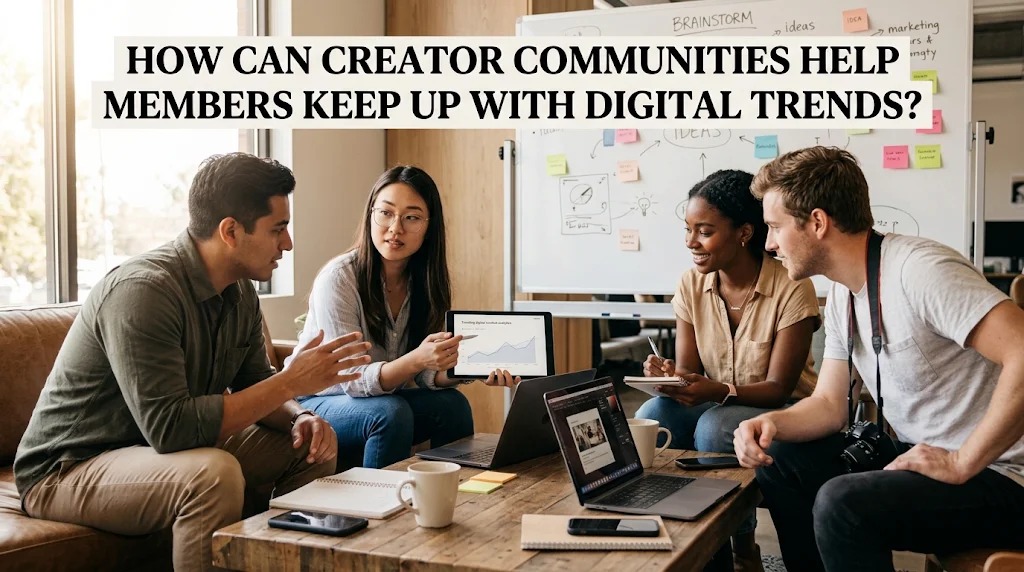
Digital technology continues to develop rapidly, changing how people create, distribute, and consume online content. New social media platforms, content formats, editing applications, and artificial intelligence tools regularly introduce different opportunities for content creators. These changes require creators to continuously update their knowledge and improve their abilities to remain relevant in the digital industry.
For beginners and experienced creators, keeping up with these developments can sometimes be challenging. Information about new trends is widely available, but understanding which developments are useful and how to apply them requires time and experience. One effective way to overcome this challenge is by joining a creator community.
Creator communities provide opportunities for members to exchange information, discuss emerging technologies, and learn from one another. Through collaboration and shared experiences, members can understand digital developments more effectively and discover creative strategies that support their growth.
SHARING INFORMATION ABOUT THE LATEST DIGITAL TRENDS
One of the main ways creator communities help members keep up with digital trends is through information sharing. Members often have different experiences with social media platforms, content formats, and digital technologies. By discussing their findings, they can introduce one another to developments that may influence the creative industry.
For example, a member may share information about new video formats, changes in social media features, or emerging content creation applications. Another member may explain how audience preferences are changing and what types of content are receiving attention. These discussions help individuals discover relevant information without having to research every development independently.
Furthermore, community members can share articles, tutorials, online discussions, and educational resources related to digital developments. However, information should be evaluated carefully before being accepted as accurate. By exchanging reliable information, creator communities can become valuable sources of digital knowledge and trend awareness.
PROVIDING LEARNING OPPORTUNITIES THROUGH WORKSHOPS AND DISCUSSIONS
Learning activities are important for helping creators understand new technologies and apply them to their work. Creator communities can organize online workshops, webinars, mentoring sessions, and group discussions that focus on current digital developments. These activities provide structured opportunities for members to improve their knowledge.
For instance, a community may organize a workshop about artificial intelligence tools for content creation. Participants can learn how to use these tools to generate ideas, organize research, improve writing processes, and develop visual concepts. Another workshop may focus on video editing techniques or digital marketing strategies.
Discussions also allow members to ask questions and share practical experiences. Beginners can receive guidance from experienced creators, while professionals can exchange insights about industry developments. Through continuous learning, members can improve their digital skills and become more confident when using new technologies.
INTRODUCING MEMBERS TO NEW DIGITAL TOOLS AND TECHNOLOGIES
Digital tools play an important role in modern content production. New applications and software can help creators develop ideas, edit videos, design graphics, manage projects, and analyze audience engagement. Creator communities help members discover these tools and understand how they can support creative activities.
For example, graphic designers can share information about design applications, while video creators can introduce editing software and production techniques. Writers may also exchange knowledge about research tools, writing applications, and search engine optimization. These experiences help members identify tools that match their needs and creative goals.
Artificial intelligence has also introduced new possibilities for content production. Creators can use AI-powered tools to support brainstorming, summarize information, generate initial concepts, and improve productivity. However, they should verify information, respect copyright, and maintain originality when using these technologies. Understanding the benefits and limitations of digital tools helps members make more informed technology choices.
ANALYZING SOCIAL MEDIA CHANGES AND AUDIENCE PREFERENCES
Social media platforms frequently introduce changes that influence how content is distributed and discovered. These changes may involve recommendation systems, advertising features, video formats, and audience interaction tools. Creator communities help members discuss these developments and understand their potential effects on content performance.
For example, members can compare their experiences with short-form videos, educational posts, live streaming, and other content formats. They can discuss which approaches generate meaningful engagement and how different audiences respond to particular topics. These discussions provide useful perspectives for improving content strategies.
In addition, community members can share experiences using platform analytics to evaluate audience behavior. Metrics such as views, watch time, comments, shares, and audience retention can help creators understand how their content performs. However, these measurements should be interpreted according to each platform's features and objectives. By understanding audience preferences and platform developments, creators can make better decisions when planning their content.
ENCOURAGING COLLABORATION TO EXPLORE EMERGING TRENDS
Collaboration provides another opportunity for members to understand and experiment with digital trends. When creators with different skills work together, they can combine their knowledge to develop new content ideas and explore unfamiliar technologies. This process can make learning more interesting and practical.
For example, a graphic designer and video editor can collaborate to create visually engaging educational content. Meanwhile, a digital marketer can help evaluate the project's target audience and promotional strategy. Each member contributes different expertise, allowing the team to understand various aspects of modern content production.
Creator communities can also organize trend-based challenges that encourage members to experiment with new formats or digital tools. These activities allow participants to test creative approaches, exchange feedback, and identify what works best for their audiences. Through creative collaboration, members can adapt to industry developments while building stronger professional relationships.
APPLYING DIGITAL TRENDS TO BUILD LONG-TERM CREATIVE DEVELOPMENT
Understanding digital trends is important, but creators also need to apply relevant developments to their long-term goals. Not every popular trend is suitable for every creator or audience. Therefore, community members should learn how to select trends that support their content identity and professional direction.
For example, an educational content creator may benefit from using interactive videos or visual storytelling rather than following unrelated entertainment trends. Similarly, a professional photographer may explore new editing technologies that improve workflow while maintaining the quality of their artistic work. These decisions help creators remain relevant without losing their unique identities.
Creator communities can support this process through discussions, feedback, and regular evaluations of creative projects. Members can review their progress, identify useful strategies, and adjust their approaches when digital conditions change. They should also prioritize originality, information accuracy, and audience trust when adopting new trends. By combining adaptability, creativity, and consistent improvement, creators can develop sustainable opportunities in the digital industry.
CONCLUSION
Creator communities help members keep up with digital trends through information sharing, educational activities, technology discussions, and collaborative projects. These interactions allow creators to understand emerging developments and discover practical ways to apply them to content production.
Furthermore, community participation helps members improve digital skills, understand audience preferences, and adapt to changes in social media platforms. However, following trends should not mean copying everything that becomes popular. Creators need to select relevant developments while maintaining originality and content quality. By learning and growing together, creator communities can help their members remain creative, adaptable, and competitive in the evolving digital industry.
Recent Posts

Bagaimana Sistem SKS pada Program Kuliah... 22.11.2026/35 View

How Does Technology Make Daily Evaluation... 21.11.2026/69 View

Apa Strategi Menghadapi Kesenjangan antara Kompetensi... 21.11.2026/69 View

Mengapa Inventaris Aset Penting bagi Kelancaran... 21.11.2026/67 View

When Should Musicians Join a Record... 21.11.2026/68 View
