

How Can Daily Activities Improve Logical Intelligence?
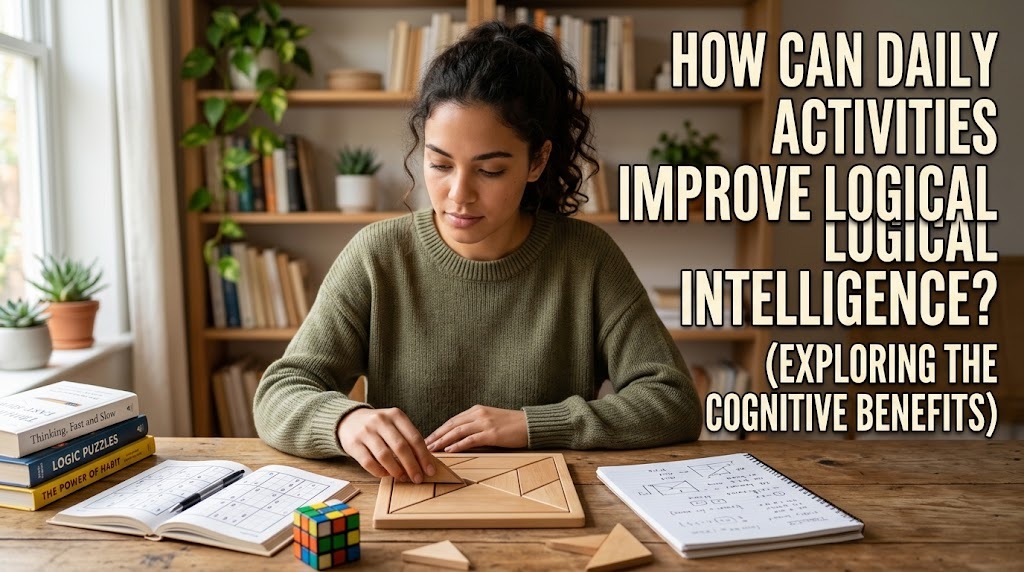
Logical intelligence is an important ability that helps people understand information, recognize patterns, and solve problems. It is often associated with mathematics, but it can also be used in many ordinary situations. Daily activities can provide simple opportunities to practice logical thinking without requiring complicated exercises. Activities such as organizing tasks, solving puzzles, comparing information, and planning schedules can encourage the brain to work systematically. With regular practice, these habits can gradually strengthen logical intelligence.
UNDERSTANDING LOGICAL INTELLIGENCE
Logical intelligence is the ability to reason, analyze information, recognize patterns, and understand relationships between different ideas. People use this ability when they try to understand why something happens or determine the most reasonable solution to a problem. Logical thinking involves more than memorizing information because it requires individuals to connect facts and draw conclusions. It can be useful in education, work, technology, and everyday decision making.
A person does not need to be an expert in mathematics to have logical intelligence. Reasoning skills can be developed through many different activities that require careful thought and analysis. For example, planning a daily schedule requires someone to consider time, priorities, and available resources. Similarly, deciding which route to take when traveling involves comparing distance, traffic, and other conditions. These simple activities can provide opportunities to practice logical reasoning.
PLANNING AND ORGANIZING DAILY TASKS
Planning daily activities is one simple way to practice logical thinking. When creating a schedule, people need to determine which tasks are most important and how much time each activity may require. Setting priorities encourages individuals to organize information and make reasonable decisions. They also need to consider deadlines and possible changes in their plans. This process requires several forms of logical reasoning.
Organizing tasks can also help people understand relationships between different activities. For example, one task may need to be completed before another task can begin. By identifying these connections, individuals can create a more practical sequence of activities. Breaking larger responsibilities into smaller steps can also make complex tasks easier to manage. Over time, this habit can strengthen systematic thinking.
PUZZLES GAMES AND PROBLEM SOLVING
Puzzles and strategy games can provide enjoyable ways to practice logical intelligence. Activities such as number puzzles, word puzzles, board games, and strategy-based challenges often require players to recognize patterns and think several steps ahead. Problem solving through games encourages the brain to search for relationships and possible solutions. Players may also need to change their strategy when their first approach does not work. This creates an opportunity to practice flexible logical thinking.
The important part is not simply completing a game but understanding the reasoning behind each decision. After solving a puzzle, a person can think about why a particular solution worked and why other approaches failed. This kind of reflection can strengthen analytical and problem-solving skills. Similar thinking can be applied to academic tasks and real-life situations. Therefore, recreational activities can also become useful learning opportunities.
READING AND EVALUATING INFORMATION
Reading regularly can also support logical intelligence when people actively analyze what they read. Instead of accepting every statement immediately, readers can ask questions about the main idea, supporting evidence, and relationships between different points. Comparing information from different sources can help individuals recognize similarities, differences, and possible inconsistencies. This habit is particularly useful when reading information online.
People can also practice identifying whether a conclusion is supported by sufficient evidence. For example, when reading an article, they can separate factual information from opinions or assumptions. Careful evaluation helps people develop stronger reasoning skills and become more aware of how conclusions are formed. These skills are useful for students when completing assignments and researching academic topics. They can also help people make more informed everyday decisions.
USING LOGICAL THINKING IN EVERYDAY DECISIONS
Many ordinary decisions require logical thinking, even when people do not realize it. Choosing which product to buy, planning a budget, preparing a trip, or deciding how to use free time can involve comparing several options. Considering price, quality, time, benefits, and possible consequences can help people make more reasonable choices. These activities provide natural opportunities to practice decision making.
People can improve this habit by avoiding impulsive decisions when a situation requires careful consideration. They can write down the available options and identify the advantages and disadvantages of each one. After making a decision, they can review the result and consider whether their reasoning was effective. Learning from previous decisions can gradually improve logical thinking and help individuals approach future situations more systematically.
CONCLUSION
Daily activities can play an important role in developing logical intelligence. Planning schedules, organizing tasks, solving puzzles, reading critically, and comparing different choices all require forms of logical reasoning. These activities can help people practice analyzing information, identifying patterns, solving problems, and considering consequences. The advantage is that these skills can be developed naturally through activities that are already part of everyday life.
Logical intelligence does not need to be developed through difficult exercises alone. Consistent practice and thoughtful reflection can gradually strengthen reasoning abilities. By making logical thinking part of daily routines, students and other individuals can become more organized, analytical, and careful when dealing with different problems. These abilities can support both academic activities and practical decisions in everyday life.
Recent Posts

Bagaimana Sistem SKS pada Program Kuliah... 22.11.2026/12 View

How Does Technology Make Daily Evaluation... 21.11.2026/63 View

Apa Strategi Menghadapi Kesenjangan antara Kompetensi... 21.11.2026/64 View

Mengapa Inventaris Aset Penting bagi Kelancaran... 21.11.2026/61 View

When Should Musicians Join a Record... 21.11.2026/59 View
