

How Can Demolition Waste Support New Product Development?
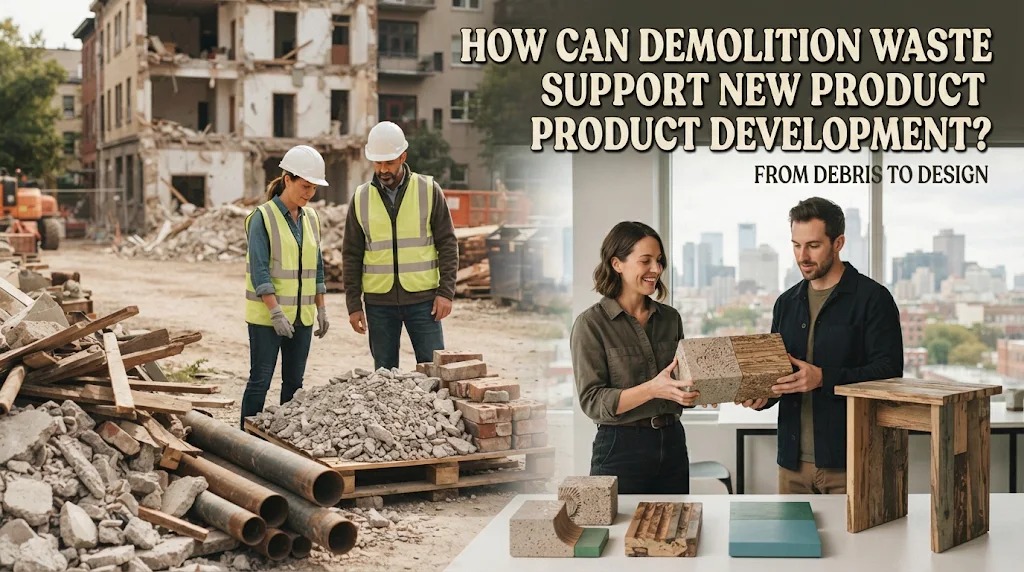
Demolition waste can support new product development by providing reusable and recyclable materials that can be transformed into valuable products. Building demolition often generates large amounts of concrete, bricks, wood, metal, glass, and other discarded materials. Instead of sending these resources directly to landfills, construction companies and manufacturers can process them into new products with different functions. This approach encourages innovation, reduces the demand for raw materials, and supports sustainable manufacturing practices.
RECYCLING CONCRETE INTO NEW CONSTRUCTION PRODUCTS
Concrete waste can become a valuable resource for developing new construction products. Through crushing, screening, and other processing methods, demolished concrete can be converted into recycled aggregates. These aggregates can be used in suitable concrete mixtures, paving blocks, road foundations, and drainage materials. Manufacturers can also develop innovative building products by combining recycled aggregates with other appropriate materials. This process helps reduce the consumption of natural stone and gravel while giving demolition waste a useful purpose.
TRANSFORMING WOOD WASTE INTO FURNITURE
Recovered wood from demolished buildings can be processed into furniture and decorative products. Old wooden doors, beams, flooring, and other components may be reused after inspection, cleaning, and treatment. Manufacturers can transform suitable timber into tables, chairs, shelves, wall decorations, and interior design elements. Reclaimed wood often has distinctive textures and appearances that create unique product designs. Using recovered timber also helps reduce the demand for newly harvested wood and minimizes construction waste.
DEVELOPING PRODUCTS FROM RECYCLED METALS
Metal waste from demolition projects can support the production of various new products. Materials such as steel, aluminum, and copper can be collected, sorted, and processed for recycling. Recovered metals may be used to manufacture building components, furniture frames, household equipment, and other metal products. Since many metals can be recycled repeatedly without losing their essential properties, they offer significant opportunities for sustainable product development. Proper sorting also helps manufacturers obtain cleaner materials for production.
CREATING DECORATIVE PRODUCTS FROM BRICKS AND TILES
Discarded bricks and tiles can become raw materials for creative decorative products. Intact bricks may be reused for garden pathways, landscape features, and decorative walls. Broken ceramic tiles can be processed into mosaic decorations, tabletops, wall art, and other interior design products. Manufacturers and designers can combine different colors, shapes, and textures to develop attractive products with unique characteristics. This approach adds value to materials that might otherwise be discarded.
PRODUCING NEW PRODUCTS FROM RECYCLED PLASTICS
Plastic waste generated during demolition and renovation can also support new product development. Suitable plastic materials, such as pipes, packaging, and other construction-related plastics, can be collected, separated, and processed into recycled plastic products. Depending on their composition and quality, these materials may be used to manufacture drainage components, construction panels, protective products, and other nonstructural items. Proper identification and processing are essential to ensure that recycled plastics meet the requirements of their intended applications.
ENCOURAGING INNOVATION IN SUSTAINABLE DESIGN
Demolition waste provides opportunities for designers, engineers, and manufacturers to explore new product concepts. By studying the properties of recovered materials, they can develop products that combine functionality, durability, and environmental benefits. For example, recycled concrete can inspire alternative paving materials, while reclaimed timber can become part of modern furniture collections. Collaboration between construction companies, recycling facilities, and product manufacturers can also create new business opportunities. These innovations encourage the development of products that use resources more efficiently.
REDUCING PRODUCTION COSTS AND RAW MATERIAL DEMAND
Using demolition waste as a secondary resource can help manufacturers reduce their dependence on newly extracted raw materials. Recovered materials may provide more affordable alternatives when collection, transportation, sorting, and processing costs are properly managed. This can support more efficient production and create additional economic value from discarded materials. However, manufacturers must consider material quality, processing expenses, and applicable safety standards before incorporating recovered resources into new products.
CONCLUSION
Demolition waste can support new product development through concrete recycling, reclaimed wood furniture, recycled metal products, decorative brick and tile applications, and recycled plastic manufacturing. These activities transform discarded materials into useful resources while encouraging creativity and innovation. With proper inspection, sorting, and processing, demolition waste can become a valuable part of sustainable production. This approach helps reduce landfill waste, conserve natural resources, and create new economic opportunities in the construction and manufacturing industries.
Recent Posts

How Does Technology Make Daily Evaluation... 21.11.2026/58 View

Apa Strategi Menghadapi Kesenjangan antara Kompetensi... 21.11.2026/60 View

Mengapa Inventaris Aset Penting bagi Kelancaran... 21.11.2026/56 View

When Should Musicians Join a Record... 21.11.2026/55 View

Daily Evaluation or Daily Planning Which... 21.11.2026/63 View
