

How Can Digital Education Systems Encourage Student Independence and Creativity?
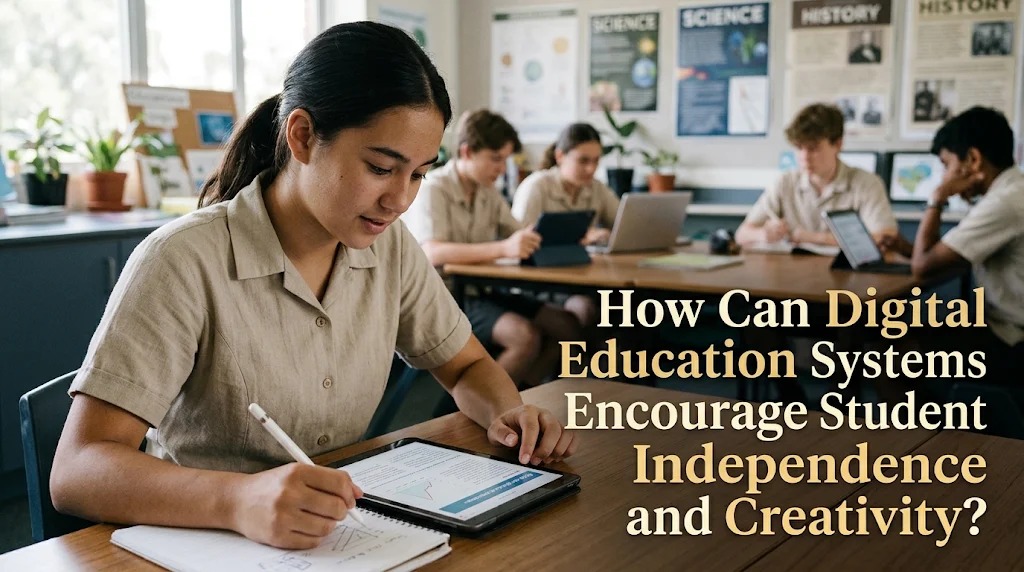
Digital education systems have become an important part of modern learning. The development of computers, smartphones, educational applications, and online learning platforms provides students with more opportunities to explore knowledge independently. Instead of depending entirely on teachers and printed textbooks, students can access various learning resources, complete interactive assignments, and develop new ideas through digital technology. These changes encourage students to become more active participants in their educational journey.
Digital education does not only make learning more accessible but also supports the development of important personal skills. Students can learn how to manage their study schedules, search for information, solve problems, and express their ideas through different digital tools. When used effectively, technology can encourage independent learning, creativity, critical thinking, and self-confidence. However, students still need proper guidance from teachers and parents to ensure that technology supports meaningful learning activities.
ENCOURAGING STUDENTS TO EXPLORE KNOWLEDGE INDEPENDENTLY
One of the main ways digital education systems encourage student independence is by providing easy access to educational information. Students can use digital libraries, online courses, educational websites, and instructional videos to explore subjects beyond classroom materials. They can search for explanations, compare different sources, and study topics according to their interests. This allows students to develop knowledge without always waiting for direct instructions from teachers. As a result, learning becomes a more active process that encourages curiosity and personal initiative.
Digital learning resources also allow students to study at their own pace. When they find a topic difficult, they can replay recorded lessons, read additional explanations, or complete practice exercises until they understand the material. Students who understand lessons quickly can explore more advanced information and develop their knowledge further. This flexibility helps them recognize their learning needs and take responsibility for their progress. Through independent exploration and self-directed learning, students become more confident in managing their educational activities.
DEVELOPING CREATIVITY THROUGH DIGITAL LEARNING TOOLS
Digital education systems provide various tools that allow students to express their creativity. They can create presentations, digital illustrations, educational videos, animations, podcasts, and other multimedia projects. These activities encourage students to transform information into creative products rather than simply memorizing lessons. For example, students can develop digital posters to explain environmental issues or create short educational videos about historical events. Such assignments provide opportunities to combine academic knowledge with imagination and practical skills.
Creative digital activities also help students explore different ways of presenting ideas. They can experiment with visual designs, storytelling techniques, audio materials, and interactive content to communicate information more effectively. Teachers can encourage this process by providing project-based assignments that allow students to develop their own approaches. However, students should focus on originality and understanding rather than simply copying content from digital sources. Digital creativity and innovative thinking can grow when students are encouraged to experiment, express opinions, and develop original solutions.
BUILDING SELF-DISCIPLINE AND RESPONSIBILITY IN LEARNING
Digital education requires students to develop discipline because many online learning activities involve greater personal responsibility. Students may need to organize study schedules, complete assignments independently, attend virtual classes, and manage deadlines. Without proper time management, they may become distracted by entertainment applications, social media, or unrelated online activities. Therefore, digital learning encourages students to recognize the importance of managing their time and maintaining concentration. These habits can support academic development and prepare them for future responsibilities.
Digital learning platforms can also help students monitor their educational progress. Some systems provide assignment reminders, progress reports, examination results, and learning activity records. Students can use this information to evaluate their performance and identify areas that require improvement. For example, they may realize that they need more practice in mathematics or better preparation before examinations. By regularly reviewing their progress, students can develop self-discipline, accountability, and learning consistency without depending entirely on external supervision.
IMPROVING CRITICAL THINKING AND PROBLEM-SOLVING SKILLS
Digital education systems provide opportunities for students to develop critical thinking by accessing different sources of information. When researching a particular subject, students can compare explanations, examine evidence, and identify differences between various perspectives. This process encourages them to question information instead of accepting every online statement as correct. Teachers can strengthen these skills by assigning research projects, online discussions, and activities that require students to evaluate information carefully. These learning experiences help students develop more logical and independent thinking.
Technology can also support problem-solving through interactive simulations, educational games, and digital exercises. For example, students can use virtual experiments to understand scientific processes or solve mathematical challenges through educational applications. These activities encourage them to test ideas, identify mistakes, and consider alternative solutions. Students learn that solving problems often requires patience, analysis, and repeated practice. Through critical thinking and problem-solving activities, digital education can prepare students to handle academic challenges and practical situations more effectively.
SUPPORTING COLLABORATION AND THE EXCHANGE OF IDEAS
Although digital education encourages independent learning, it also provides opportunities for students to collaborate with others. Online learning platforms allow students to participate in group discussions, share documents, and complete projects together. They can exchange opinions, provide feedback, and learn from different perspectives even when they are not in the same classroom. These activities help students understand that learning is not limited to individual study but can also develop through communication and cooperation.
Digital collaboration can also encourage creativity because students can combine different ideas to produce better results. For example, a group of students can work together to create a digital presentation, develop a simple educational application, or produce a video project. Each member can contribute different abilities, such as writing, designing, researching, and presenting information. Teachers can guide these activities by assigning clear responsibilities and encouraging equal participation. Through digital collaboration and knowledge sharing, students can develop teamwork, communication, and creative problem-solving skills.
PROVIDING TEACHER GUIDANCE AND RESPONSIBLE TECHNOLOGY USE
The success of digital education systems depends on how students use technology and the guidance they receive. Although digital platforms provide access to extensive information, students may encounter misleading content, inappropriate materials, or distractions. Some students may also become overly dependent on digital tools when completing assignments. Teachers therefore need to explain how to evaluate information, use educational applications responsibly, and maintain academic honesty. This guidance helps students benefit from technology without losing their ability to think independently.
Parents also have an important role in supporting responsible digital learning at home. They can help children establish study routines, manage screen time, and balance educational activities with physical and social activities. Schools should provide digital literacy programs so students understand online safety, privacy protection, and appropriate communication. Teachers should also encourage students to create original work rather than simply copying AI-generated or internet-based content. By combining teacher supervision, parental support, and digital literacy, schools can create a healthy learning environment that supports independence and creativity.
CONCLUSION
Digital education systems can encourage student independence and creativity by providing wider access to information, flexible learning resources, and opportunities to develop original ideas. Students can explore knowledge independently, manage their study schedules, create digital projects, and improve their critical thinking skills. Technology also supports collaboration and communication, allowing students to exchange ideas and develop creative solutions together.
However, digital technology must be used responsibly to achieve meaningful educational outcomes. Teachers and parents need to guide students in managing their time, evaluating online information, and maintaining academic honesty. Schools should also provide suitable digital facilities and effective learning strategies. By combining digital innovation with proper educational guidance, digital education systems can help students become more independent, creative, responsible, and prepared for future challenges.
Recent Posts

Bagaimana Sistem SKS pada Program Kuliah... 22.11.2026/31 View

How Does Technology Make Daily Evaluation... 21.11.2026/67 View

Apa Strategi Menghadapi Kesenjangan antara Kompetensi... 21.11.2026/66 View

Mengapa Inventaris Aset Penting bagi Kelancaran... 21.11.2026/64 View

When Should Musicians Join a Record... 21.11.2026/65 View
